

Overcooking This One Simple Thing Could Make Your Pasta Bitter
We may receive a commission on purchases made from links.
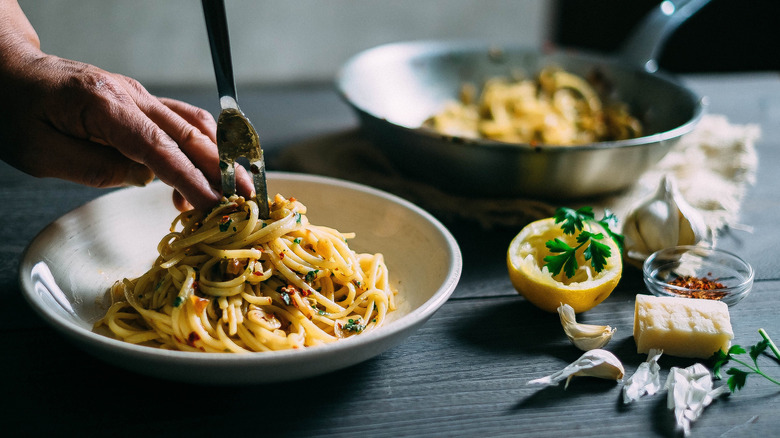
Crafting a truly wonderful pasta dish is an art that requires a deft and delicate touch. The best pasta dishes often rely on only a few basic ingredients, which must be handled well and combined in perfect concert. Aglio e olio, the simple Neapolitan dish, for example, relies at its core on the simple combination of garlic and oil. But if you aren't careful in your preparation, if you cook it a bit too long or too hot, that garlic can quickly turn from fragrant to bitter, ruining the dish.
For advice on how to avoid this fettuccine fiasco, we turned to Sarah Grueneberg, Chef and Owner of Chicago's Monteverde, and Author of "Listen to Your Vegetables." Her first piece of advice is to keep careful watch on your pan temperature. "If your pan is too hot," she explains, "the garlic goes from raw to burnt almost immediately."
Obviously, in a dish with as few ingredients as aglio e olio, that bitter, burnt garlic is going to stand out front and center, and throw everything off. But even when it is hidden by other ingredients, such as in a tomato-based sauce, bitter garlic is a flavor best avoided. The root of good cooking is getting the best out of every ingredient, after all. To accomplish this with garlic, Grueneberg suggests that you "use a low or moderate heat setting and slowly caramelize the garlic, which brings out the sweetness and minimizes any super bitter notes." It may take a couple of minutes longer in the pan, but the results are more than worth the extra time spent.
Cook garlic low and slow for the best results
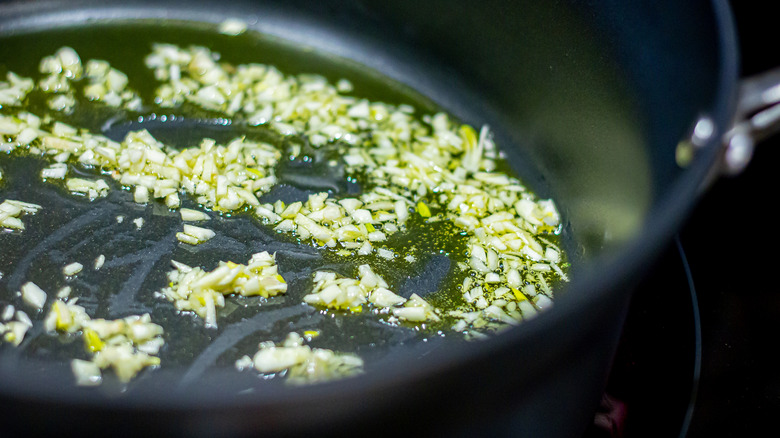
Depending on the exact dish, you may wish to cook your garlic to a slightly different degree. For example, Grueneberg mentions that some sauces benefit from garlic that has spent a little longer in the pan. "When making high acid sauces — like a white wine and shrimp or clams sauce or one that is tomato based," she suggests, "let the garlic get a little golden to balance the acidity." But you still want to make sure that you aren't overdoing that cook. If it gets too dark and starts to take on bitterness, she says it's best to start over.
Fortunately, heating oil and sauteing aromatics almost always come right at the beginning of a recipe, so you aren't losing a whole lot of time if you have to begin anew. That said, if you misjudge your cook by just a little bit and find a faint bitterness coming through when it is too late to start from scratch, it can seem like a disaster. Fortunately, Grueneberg has a trick that might help you to salvage such errors. "If you have a dish that is too salty or too bitter," she says, "adding a few squeezes of fresh lemon or vinegar helps balance the flavor." Just like how she suggests cooking the garlic a bit longer in acidic dishes, if you find that you have accidentally overcooked your garlic, a little hit of acidity can help bring it back together.
With garlic cooking tips as good as these, you have everything you need to take on not just aglio e olio and pomodoro sauce, but any of the garlic-based recipes out there.