

10 Different Ways To Cook A Potato, Explained
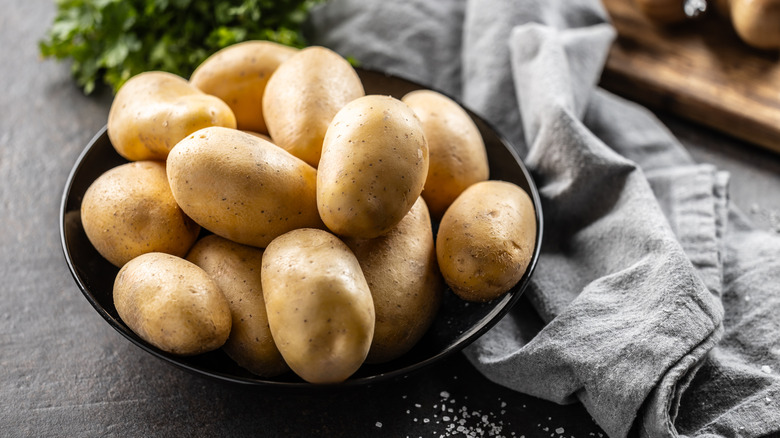
There's no denying the versatility of the humble potato. Humans have been cultivating these trusty staples for thousands of years, and that's means we've had plenty of time to experiment with different ways to prepare them. Potatoes bring sustenance to our plates and fit in seamlessly alongside an endless array of meats, veggies, and sauces. Plus, they're a great source of nutrients, being particularly rich in vitamins C and B6, as well as potassium. But, perhaps most importantly, potatoes are a vegetable you can never get bored of, and that's because there's such a diverse range of methods to choose from when it comes to cooking them up.
When prepping potatoes, no two techniques will yield the same result. Factors like your choice of cooking appliance, how the potatoes are sliced or diced, and what you pair them with will all contribute to the final outcome. Ultimately, there's a potato cooking style to suit every occasion, whether you're in the mood for a creamy mash or a batch of crispy roasted morsels. You can ensure they're perfectly peeled, or leave the skins on for a more rustic finish. Dowse them in fat to amp up the indulgence, or keep things light with a simple boiling method. However you like your potatoes, they're sure to turn your meal into something all-together more comforting. So, here are ten approaches to consider for your next potato-based creation.
Bake them to fluffy-crisp perfection
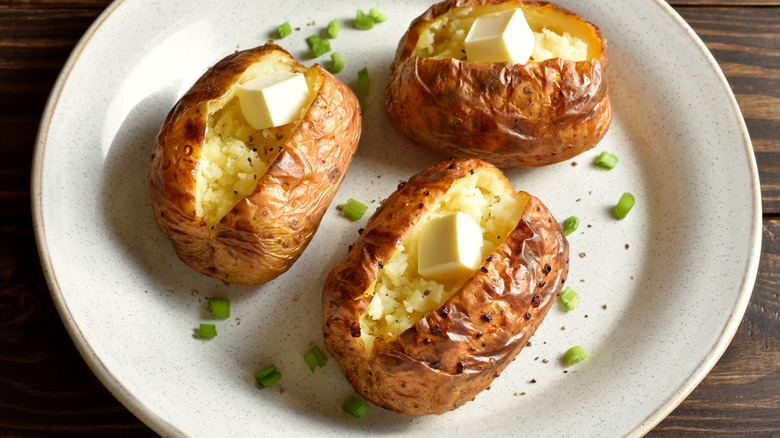
One of the most popular ways to cook potatoes is baking them whole in the oven. This is a delightfully hands-off approach, that involves zero peeling, and produces a gorgeous crispy outer skin and tender, fluffy middle. Baked potatoes can serve as a hearty lunch or dinner, perfect for piling with toppings like tuna, cheese, or chili, and the prep will take up mere minutes of your time.
There are a few handy tips that can help you achieve the ultimate tender-crisp baked potato. Firstly, it's important to select the right variety of potato. Russets are an ideal pick, since their starchiness and low moisture content makes their flesh super light and fluffy. The skin is just the right level of thickness, crisping up beautifully in the oven. Ensuring the potatoes are nice and dry after you've scrubbed them clean is also crucial to prevent any unwanted sogginess.
Before you bake the clean, dry potatoes, make sure to poke them a few times with a fork. This will allow steam to escape from the potatoes as the bake, so they don't crack, or worse, explode! Then, place the spuds onto a baking sheet and rub them with a little olive oil and salt. Around 425 degrees F, they'll take about 45 to 60 minutes to bake. To check for doneness, poke a fork into the centre of the potato. If it's sufficiently tender, it's ready to slice open, fluff up, and serve with your favorite toppings.
Whip up a creamy mash
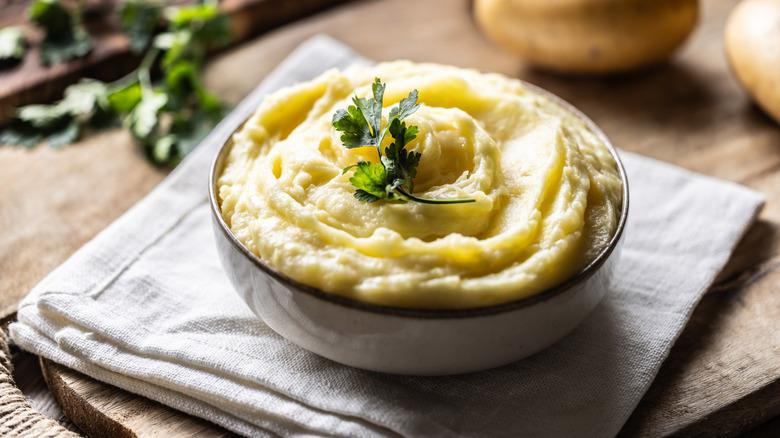
A smooth, creamy mash is a top-tier comfort food. Served alongside roasted meats, spread atop a cottage pie, or even used as the base of a classic bubble and squeak, mashed potatoes are a wholesome addition to any meal. With a few simple steps and the right equipment, you can ensure your mash comes out perfectly velvety and buttery every time.
Step one is peeling and dicing the potatoes into quarters. Yukon gold are an excellent choice here, known for their natural creaminess, while russets tend to be fluffier in texture. Next, add the prepared potatoes to a pot of cold, salted water. Starting them off in cold rather than already-boiling water helps the potatoes to cook more evenly, so each piece ends up perfectly fork-tender. Bring everything to a boil, and after around 15 minutes, the potatoes should be ready to drain. Another top tip at this point is to return the drained spuds to the pot and place this over the heat, shaking the potatoes for a couple of minutes to help any excess moisture evaporate and prevent sogginess.
Next up, you can get mashing. The absolute best way to do this is with a ricer, which will leave the potatoes ultra-smooth. While a traditional masher will suffice, this is more likely to leave you with lumps, and it's easier to over-mash, which might cause a gluey texture. The final step is stirring some butter and warm milk into the riced potatoes, and seasoning them to taste with salt and pepper.
Smash them
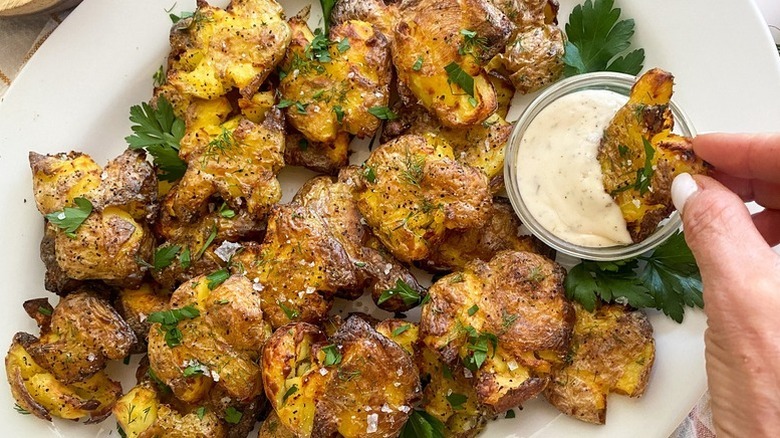
If crispiness is your goal, you have to try whipping up a batch of smashed potatoes. This method leaves the skins on, and combines boiling and baking to get the flesh super tender, and the outside gloriously crunchy.
Start by choosing the right potato. Small, evenly sized waxy varieties, such as Yukon golds or red potatoes will hold their shape and crisp up well. Avoid mixing sizes, since smaller spuds might overcook while larger ones stay too firm. Boil the whole potatoes until just fork-tender (about 10 minutes), then drain them thoroughly and let the steam escape, as any excess moisture will inhibit that crispiness. Then, toss the cooked potatoes with oil and seasonings. A mixture of garlic granules, salt, and pepper is ideal, but you could absolutely spice things up with a sprinkle of paprika or chili powder, or add some herbs like oregano, rosemary, or thyme.
Next comes the fun part. Place the seasoned spuds on a parchment-lined baking sheet, and smash each one firmly with the bottom of a glass until flattened. Make sure they aren't overlapping, then brush the potatoes with a little more oil and sprinkle over some extra seasoning, before baking them until beautifully crispy. Once out of the oven, finish the potatoes with fresh herbs such as parsley or dill to add a pop of color. They'll also taste incredible dunked into a creamy dip, such as an aromatic garlic aioli or herbed yogurt. Or, try drizzling them with a vibrant pesto sauce before serving.
Bake them hasselback style
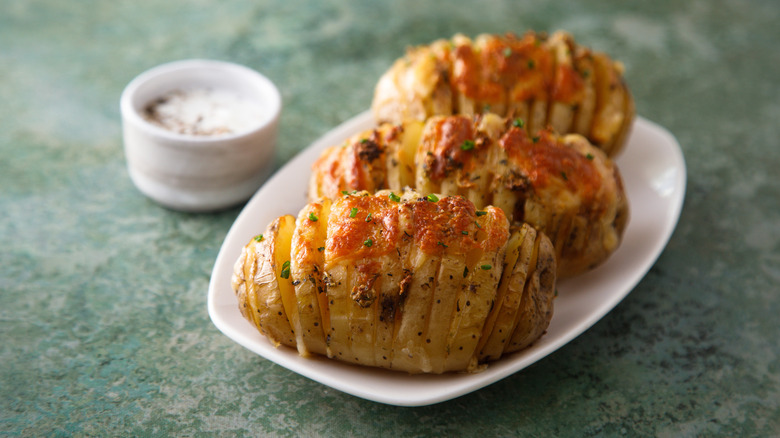
They might look impossibly fiddly, but hasselback potatoes are far easier to prepare than you'd think. Making thin downward cuts all the way along the length of the potato doesn't just make them look incredible, it also allows the oil and seasonings to seep into every nook and cranny, so every bite is packed with flavor. These cuts also help the potatoes to cook more evenly.
When slicing the potatoes (medium-sized Yukon golds or russets will work great), you'll need to ensure that the cuts don't go all the way through, as this would obviously result in a not-so-whole potato. And, there's a genius trick you can use to make this process a breeze. Just place two chopsticks parallel to each other on your cutting board, and put a potato in between them, so the longer sides of the potato are touching the chopsticks. Then, use a sharp paring knife to make the cuts, which should be about half a centimetre apart. As you cut, your knife will hit the chopsticks rather than the cutting board, leaving your potatoes neatly sliced but still completely in tact.
Once you've rubbed the sliced potatoes with oil and seasoned them well, simply bake them until the skin is golden brown and the middles are tender. There's also the option to brush them with extra oil or butter partway through cooking, for a crispier, more indulgent finish. And, those slits offer the perfect canvas for stuffing with extra such as cheese, herbs, or garlic.
Roast them in goose or duck fat
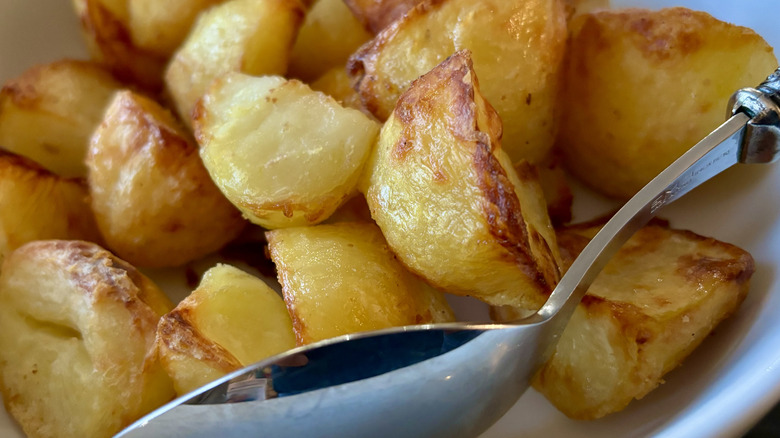
A fitting accompaniment to chicken, beef, or pork, roasted potatoes strike the perfect balance between crispiness and fluffiness. And, one of the best ways to guarantee perfect roasties is cooking them in goose or duck fat. Compared to your typical vegetable or canola oil, these animals fats have a far richer flavor, which adds a delicious depth to your potatoes. Duck and goose fats also have a high smoke point, so you'll have no problem turning up the oven temperature to achieve that all-important crunchy finish.
Large potatoes work best here, and to prep them for roasting, you'll peel them and chop them roughly into quarters, before parboiling them in salted water until just knife tender. Meanwhile, heat up the fat by spreading it in the bottom of a roasting tin and placing this into the oven. Once you've drained the potatoes, rough them up a little by giving them a good shake in the colander. This with help to create those amazing crispy edges later. Leaving them to steam for around ten minutes is also key, to remove any excess moisture and maximize fluffiness.
With the fat nice and hot, carefully add the roughed up potatoes to the roasting tin. This is a great time to throw in some garlic cloves or sprigs of herbs if desired. The potatoes will take about an hour to cook, with a few flips throughout to ensure they color evenly.
Turn them into homemade fries
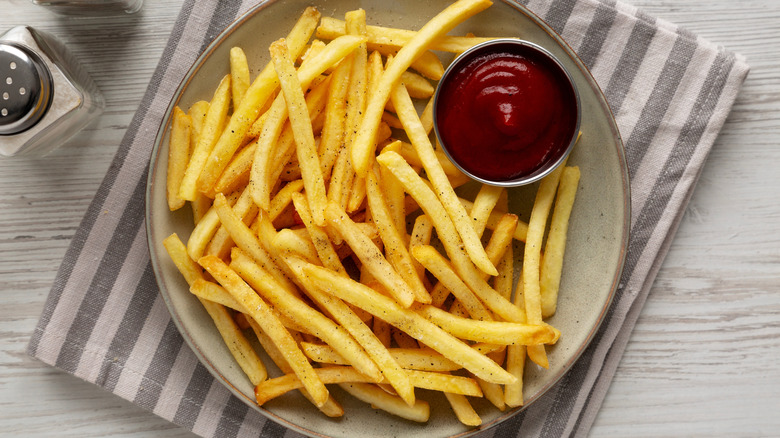
A plateful of crispy French fries makes everything better, and you can absolutely whip up these beauties at home. Floury or starchy potatoes like russets are the potato of choice for fries, as they crisp up much more readily than waxy varieties.
Peeling the potatoes is optional, but slicing them into uniform batons is key for even cooking. You can then choose to rinse or soak the potatoes in cold water to wash away some of the starch and boost the crunch. Some recipes take this a step further and blanch the batons in a mixture of water and vinegar. This helps to preserve the pectin present in the potatoes, making them more resistant to falling apart during frying. The acid also works to remove excess sugars, so the fries don't brown too much.
Once simmered or soaked, remove the potatoes from the water with a slotted spoon to prevent breakage. After thoroughly draining and letting them steam dry, deep-frying the potatoes twice will build that moreish crunch. The vegetable, canola, or peanut oil should be heated to around 400 F, and round one will cook the potatoes through without browning them. Then, let the fries cool for about 30 minutes to allow more of the internal moisture to escape. Finally, return them to the oil for the second round, to crisp up the exterior. After a quick drain, they're ready for seasoning and serving with your favorite sides and sauces.
Make a cheesy gratin
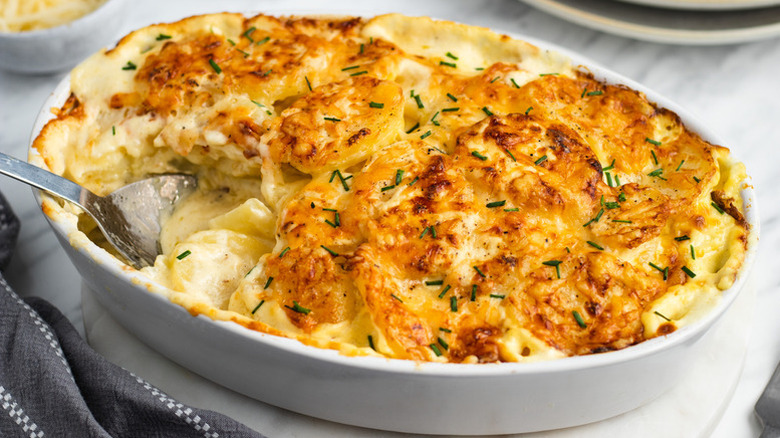
To take potatoes to new heights of indulgence, try cooking them with lashings of cheese. We're talking a rich, creamy gratin, which serves as an elegant side dish for everything from steak and fish to steamed greens and roasted veggies.
When crafting potatoes au gratin, the spuds should balance starchiness and firmness. Russets and Yukon golds are both ideal, but the former will absorb more liquid, so go for the latter if you want to keep things saucier. Peel (if desired) and slice the potatoes into thin rounds of no more than ¼-inch thick. There's no need for soaking here, as you want those starches intact, to help thicken the sauce. The slices get simmered in a garlic-infused mixture of milk and heavy cream, which tenderizes the potatoes and injects them with heaps of rich, aromatic flavor.
Spread half of the potatoes out in a baking dish, and pour over half of the cream mixture. Top them generously with grated Gruyere cheese and a sprinkling of salt and pepper, then repeat the steps, layering potatoes, liquid, and cheese. For the first hour or so of baking, cover the dish with foil. This will help the potatoes to soften and absorb the liquid. Then, you can remove the foil for the last 15-20 minutes to let the top brown and the sauce reduce, helping you avoid any unwanted soupiness. For a pop of freshness, try finishing the freshly-baked gratin with some chopped chives or parsley.
Boil them
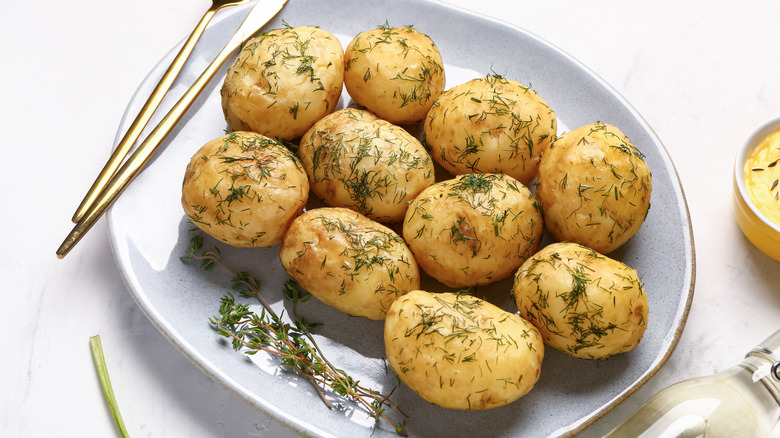
Boiling is an excellent cooking method for keeping your dinner prep hassle-free, and done right, it won't leave your potatoes bland or boring. Baby potatoes are the perfect candidates for this technique, since you can generally leave them whole and skip the peeling and chopping altogether. Just add them to a pot of cold, salted water, and bring everything to a boil. Reduce the heat to a simmer, and continue cooking until the potatoes are fork tender. This should take around 15 minutes. Once drained, the hot potatoes can then be combined with a medley of delicious ingredients, to transform them into a flavor-packed side dish.
Adding butter to the potatoes is a no brainer. This will really amp up the richness, coating each spud in a layer of velvety goodness, but feel free to switch this for olive oil or a plant-based alternative if preferred. A good pinch of salt and pepper is always welcomed, and fresh herbs will fit in brilliantly here too. Finely chopped dill, parsley, or chives taste particularly great with potatoes. You could also spice things up with a sprinkling of paprika or chili powder, or toss the potatoes with some sauteed shallots or garlic to infuse them with an extra dose of aromatic flavor.
Grate them and fry them
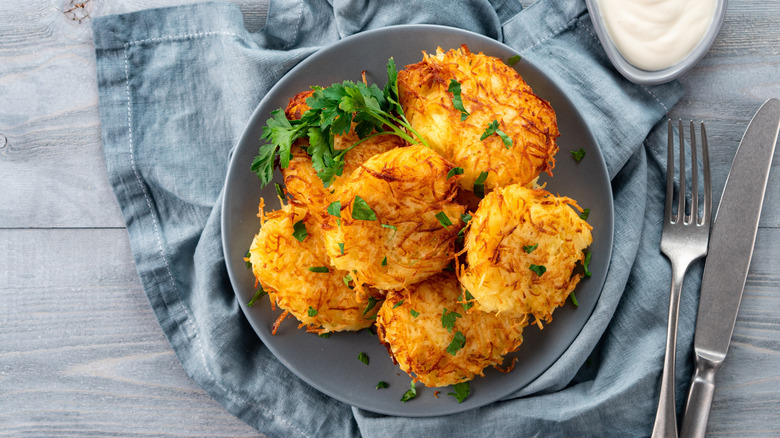
Turn potatoes in a crispy, brunch-worthy treat with the help of a grater and a hot skillet. Hash browns are a favorite for serving with bacon and eggs or dunking into a creamy dip, and you'll only need a handful of ingredients to make them. Start by coarsely grating the potatoes, and an onion too, then squeezing out as much moisture as possible from the veggies using a cheesecloth or thin dish towel. In a large bowl, combine the potato and onion with an egg, plus some salt and pepper, and mix well.
All that's left to do is take handfuls of the mixture, and fry them in hot oil, flattening them down into patties with a spatula as you go. They'll need around three minutes per side to reach crispy, golden perfection, and a quick drain on some kitchen paper before serving.
Fresh herbs are great for jazzing up hash browns, and a dollop of herbed sour cream or tangy ketchup on the side will take them to the next level. There's also the option to fry up a single, larger hash brown rather than individual patties, which is perfect for draping with folds of smoked salmon, or topping with a sunny-side up egg.
Thinly slice them to make your own potato chips
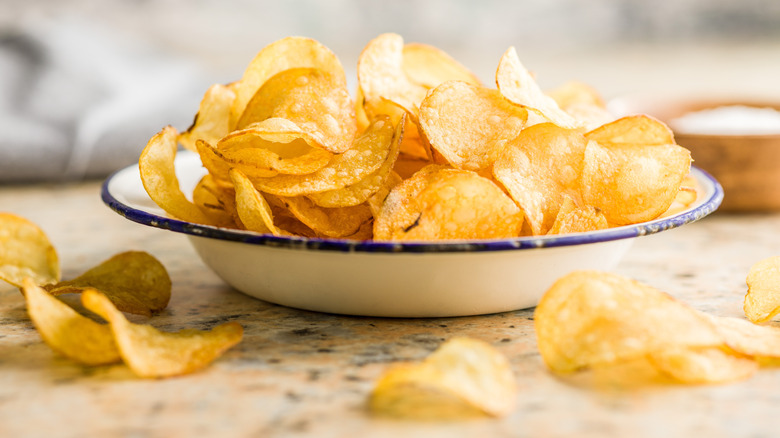
Homemade potato chips are a wonderfully wholesome way to indulge your snack cravings, without the unnecessary additives. And yes, you can absolutely get them just a crispy as your usual store-bought pick. Go for medium-sized potatoes, and leave the skins on, which retains more fiber and keeps things rustic. To get the potatoes nice and thin, it's best to use a mandoline slicer, as cutting them too thickly might result in a soggy texture. Transferring the slices to a bowl of cold water as you go will also prevent any browning. Once everything is sliced up, you'll need to soak the potatoes in a fresh batch of salted water for 30 minutes. This removes excess starch to guarantee crispiness.
After a final rinse and dry, you can deep-fry the slices in hot oil, working in batches. The oil temperature is crucial here, with a temperature of around 350-365 F being the sweet spot. This will cook the chips rapidly, whilst preventing them from absorbing too much oil or burning. The type of oil matters, too. Choose a neutral oil with a high smoke point, such as canola, vegetable, or peanut, so it stays stable at frying heat.
Let the golden, crunchy bites drain on some kitchen paper for a few minutes, then season them as you wish. This could be a simple toss with some salt and cracked black pepper, or a medley of spices like smoked paprika, cayenne pepper, garlic powder, and onion powder.