

The Butter Storage Vessel From Grandma's Kitchen Is Making A Comeback (And We're Here For It)

Home cooks may often be obsessed with the newest technology that promises to make their lives easier or their food taste better, but as something like a butter crock shows, there are still plenty of folks who will recommend your grandmother's old kitchen tools. The return of the butter crock is a simple marriage of taste, style, and functionality. Recent years have seen a turn away from seed oils and vegetable fats and a re-embracing of animal fats like butter and beef tallow, and butter crocks have naturally followed suit. These often handsome stoneware objects offer an extra pop of color and playful designs that are an easy way to add some personal charm to your kitchen without taking up much space. But most importantly, they solve a problem in a simple and ingenious way.
Butter crocks, which are also called butter bells or butter keepers, come from an era before refrigeration and were made to help preserve butter at room temperature. These containers come in two pieces. There is a larger bottom cup that some water is poured in and a smaller top cup that you fill with butter. The smaller cup gets placed face down into the water, with the butter hanging upside down. The water is intended to touch the butter directly, which creates an airtight seal that prevents the butter from spoiling. Because butter is mostly fat, it's already not prone to spoiling quickly, so this method can store butter at room temperature for up to a month safely.
Butter crocks are attractive storage containers that keep butter safe and soft
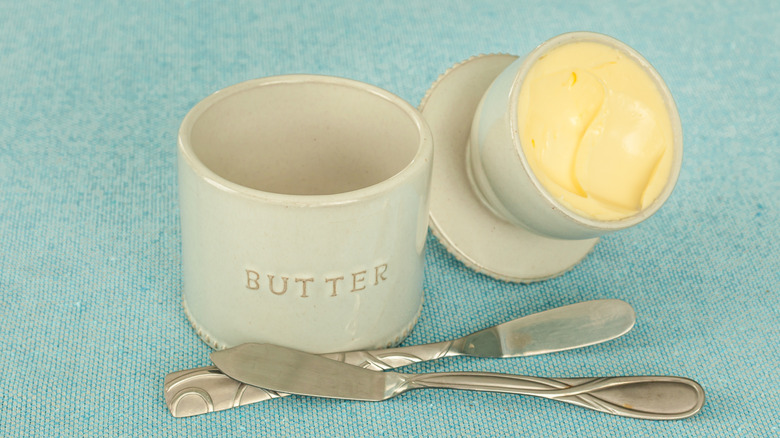
Anyone who loves some good grocery store butter knows that keeping it soft is the most frustrating part. Few have the patience to leave it out to come to temperature before spreading it on toast. While you can soften it in the microwave, that tends to melt butter more than anything, even at low power. Instead, having softened butter around is more useful for more than just making breakfast. Many baked goods require or turn out better when using room-temperature butter, so having it on hand at all times makes cookies or biscuits an even easier proposition.
Additionally, butter crocks work better than butter trays or dishes. While trays are better than nothing, they don't actually keep much air out, and butter should only be left out in them for up to two days. Crocks do require a little work, but not much. The water needs to be changed out to keep things fresh and should be replaced every two to three days. But that only takes seconds and is far easier than waiting for butter to soften on the counter every single time you use it.
Most of all, butter crocks are a reminder that sometimes a little extra effort is worth it for superior results. Their old-school charm of this vintage kitchen tool is the perfect antidote to a rushed morning routine. It's something a lot of our food culture could use a dose of.