

The Unexpected Way To Get Short Ribs That Fall Off The Bone
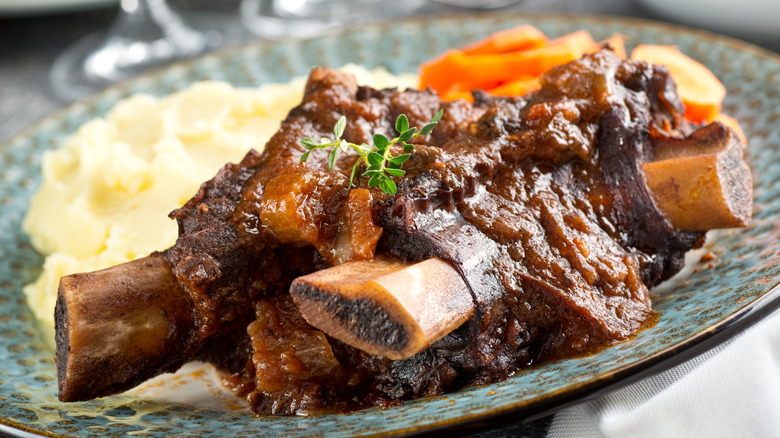
Tackling short ribs is a job for a slow cooker, which holds a gentle simmer for hours, coaxing the dish into the texture people dream about: toothsome meat that slips off the bone, with all the rigidity melting into a perfect base for a glossy, rich sauce. But what do you do after browning the meat and nestling it into the crock? We spoke to Scott Thomas, owner of The Grillin' Fools, who lays out the answer.
"Red wine, beef broth, and both can have butter added to add some richness," he explains, noting that beef tallow also fits the bill. "Add a few flavorizers like garlic cloves and some onion or shallots along with salt and pepper, and that's all you really need." Short ribs might look like a steak with extra bone, but they're built differently. Cut from the lower rib cage, they carry thick, durable layers of muscle, connective tissue, and fat, all woven around hefty bones. That structure means quick heat is all wrong for them. Drop them in a sizzling skillet, and the proteins in the meat will seize up, chewy and unyielding.
To appreciate them, you have to understand them and apply proper technique. "Let the liquid braise the meat all day and come back to some tender, beefy heaven," Thomas suggests. It's simple, but cooking this way both tenderizes the tough ribs and concentrates flavor. The bones contribute marrow, the broth builds body, and the aromatics perfume the meat from the inside out. The best way to honor the cut is to give it time. Low, slow, moist heat transforms all that toughness into tenderness, as collagen from the tendons, ligaments, and connective tissue unwinds into silky, saucy gelatin, the fat slowly rendering out and basting the muscle fibers from within.
The anatomy of braising
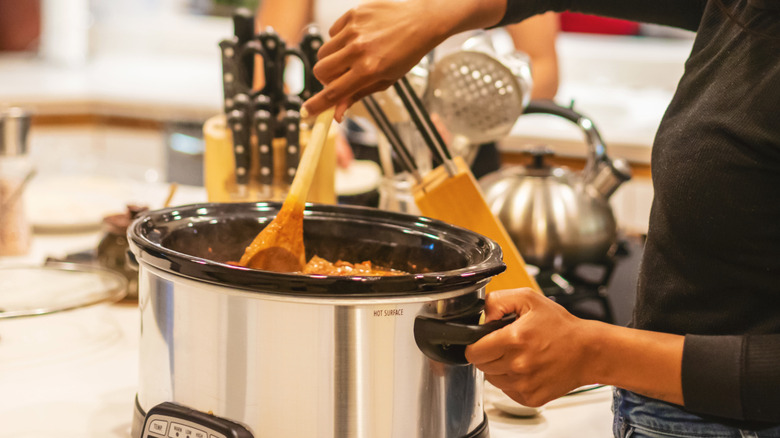
The "unexpected" part isn't that slow cookers work, because they're literally designed for braising meat for long periods, but that they can actually be better than an oven for this cut. Inside a sealed crock, evaporation is minimal, so the braising liquid doesn't cook away and the meat stays bathed in moisture. Oven braises are exposed to a larger area of dry heat, meaning more liquid loss and more babysitting, basting, and fussing to keep the pot topped up. A slow cooker holds everything gentle and steady, making it possible to walk away for the day and return to ribs still bathed in sauce, which can be especially useful on a weekday when you want dinner to cook itself while you're out.
The science behind that success lies in how the slow cooker maintains a consistent, sub-boiling temperature. Short ribs are loaded with sturdy connective tissue that only softens when held in that range (around 190 to 200 degrees Fahrenheit) long enough for collagen to melt into gelatin. Surrounding the ribs in liquid keeps heat transfer even and protects the meat from drying out, while giving fat time to render and blend into the sauce. This results in meat that clings to its structure just long enough to be plated atop a pillow of mashed potatoes before easing into fall-apart tenderness at the touch of a fork.
Thomas's advice shows how simple it can be. Wine adds acidity to balance fat, broth provides depth, butter or tallow enriches the liquid, and aromatics bring nuance. That's it. The ribs (and time) do the rest. An impenetrably dense, bony slab becomes a marry-me dish that feels generous, abundant, and deeply satisfying, with a little intention and a few minutes of hands-on work.