

9 Restaurant Chains That Went Bankrupt In 2025
American businesses are struggling right now. According to S&P Global, in July 2025, more than 70 major public and private companies filed for bankruptcy. That's the highest monthly total since 2020. The financial difficulties seem to span across industries, from healthcare companies to food distributors to clothing retailers. But arguably, the restaurant industry is among the worst hit.
As you'll see from reading through the list below, issues like COVID-19 closures, a cost-of-living crisis, and rising labor costs have left many once-popular restaurant chains with little option but to file for either Chapter 11 or Chapter 7 bankruptcy. The former allows companies to continue operating, with a chance to restructure and save the business, while the latter usually involves shuttering completely in a bid to pay off debts.
From barbecue chains to Mexican restaurants to Italian favorites, many restaurants were faced with the excruciating decision of filing for bankruptcy this year. Keep reading to learn more about which chains have shut for good, and which ones are still fighting for a place in the restaurant industry.
Sticky Fingers
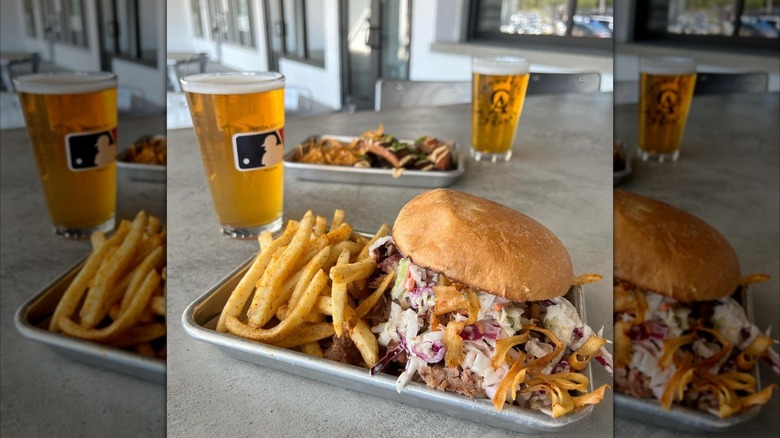
In March 2025, Sticky Fingers filed for Chapter 11 bankruptcy protection in an attempt to save the barbecue chain from closing its doors for good. It wasn't a major surprise for customers, many of whom agreed that the food just wasn't as good anymore, and the overall quality was lacking.
Things had been difficult for a while at the barbecue chain, which was founded back in the early 1990s by three South Carolina entrepreneurs who had been friends since seventh grade. In 1992, Jeff Goldstein, Todd Eischeid, and Chad Walldorf opened the first Sticky Fingers barbecue restaurant in Mount Pleasant. And for a while, things were good. By the early 2000s, that singular Charleston restaurant had grown into a restaurant chain with 15 locations in South Carolina, Florida, and Tennessee.
In the end, though, the three pals were overwhelmed by the responsibility of running such a big company and decided to sell Sticky Fingers to Quad-C Management in 2006. This was the beginning of a series of sales, which resulted in inconsistent leadership and a major drop in quality. Walldorf returned to the chain to try and turn things around in 2016, but four years later, COVID-19 hit, and the chain lost nine of its remaining 11 locations. Unfortunately for Sticky Fingers, bankruptcy couldn't save the chain either, and in September 2025, all surviving locations were closed.
Abuelo's
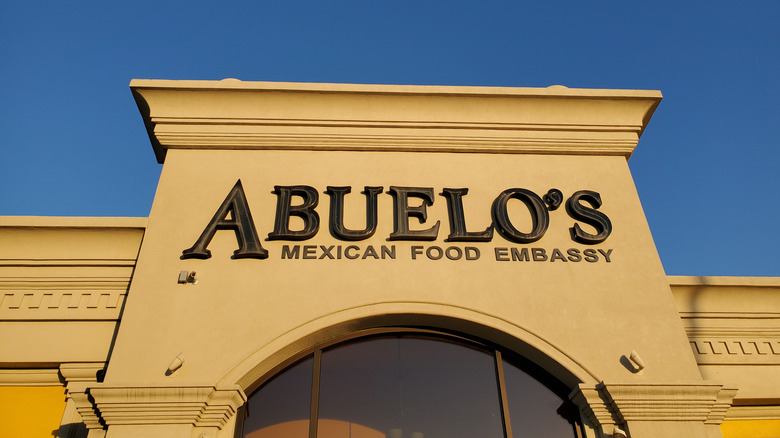
Bankruptcy doesn't always signal the end is on the horizon. In September 2025, Abuelo's also filed for Chapter 11 bankruptcy protection; however, the Mexican chain is confident that the move is not goodbye for its 16 locations in seven states.
Abuelo's was originally founded in Amarillo, Texas, back in the late 1980s. Again, it was the product of three entrepreneurs: James Young, Chuck Anderson, and Dirk Rambo. They wanted to create a family-friendly restaurant chain with a focus on fresh, high-quality, and affordable Mexican-style food. Lately, though, that mission has proved challenging.
Like much of the hospitality industry, Abuelo's has been facing rising costs of food and labor shortages, which have been worsened by a drop in sales as fewer Americans choose to dine out. Chatter on social media forums like Reddit, though, also reveals that many customers feel that Abuelo's, in particular, is overpriced. In a bid to save the brand, Abuelo's is taking bankruptcy as an opportunity to financially restructure. At the time of writing, its restaurants are operating as normal.
Planta
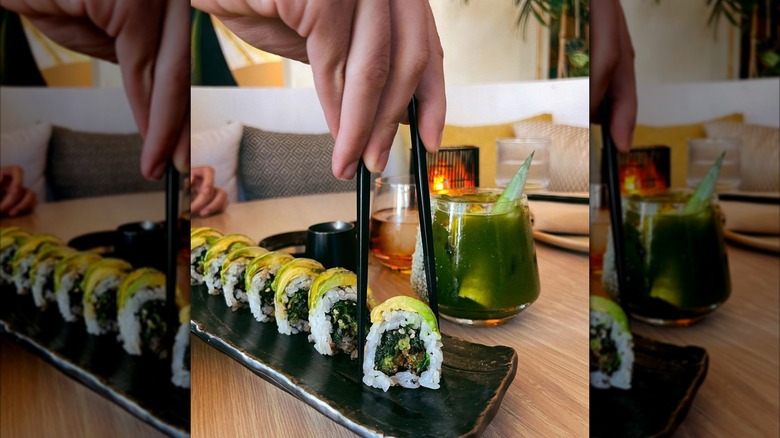
Planta is an example of a bankruptcy success story. The vegan chain filed for bankruptcy in May 2025, but managed to emerge from the crisis just a few months later.
A few years ago, Planta's financial decline likely would have come as a shock. The plant-based restaurant chain was founded by entrepreneur Steven Salm and chef David Lee in Toronto back in 2016 with a mission to provide diners with delicious, high-end, sustainable, vegan cuisine. For a while, it was thriving. It managed to consistently reel in both vegan and non-vegan customers; it evolved into a celebrity hotspot; and it expanded its three concepts, Planta Global, Planta Queen, and Planta Cocina, across North America.
But during the pandemic, Planta began to struggle. There were many factors that led to the decline of the chain, but ultimately, it comes back to the same old story again: Higher costs, fewer customers.After the 2025 bankruptcy filing, Planta's savior came in the form of one of its former investors, Anchorage Capital Group, which acquired the brand for $7.8 million. At the time of writing, Planta has eight surviving restaurants; 10 fewer than it did before the filing in May.
Opa! Authentic Greek Cuisine
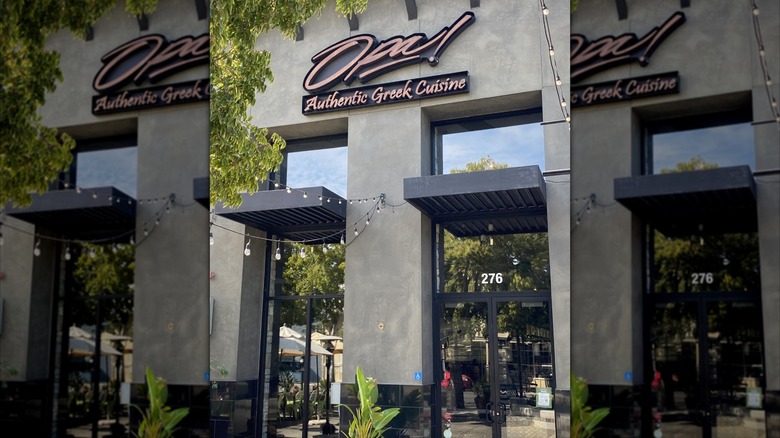
Since 2008, Opa! Authentic Greek Cuisine, commonly referred to as simply Opa!, has been providing Californians with, well, authentic Greek cuisine. For the better part of two decades, the chain supplied locals with a taste of the European hotspot's best dishes, like gyro platters, falafel, moussaka, and plenty of warm pita bread. At one point, it had seven locations across Santa Clara.
But in September 2025, the chain filed for Chapter 7 bankruptcy. Its website was shut down, its numbers were disconnected, and all of its remaining five locations shut their doors for good.
What went wrong? Well, it certainly wasn't that Opa! Authentic Greek Cuisine wasn't loved. On social media, customers have been lamenting the chain's ambience and its beloved bottomless mimosas, although a few did acknowledge that the food had declined in quality. The truth is, like many restaurants, Opa! simply couldn't survive rising food and labor costs amid low customer demand.
Bar Louie
Bar Louie started life as a simple neighborhood bar in Chicago, but in less than two decades, it grew to just under 50 locations. Why? People loved the concept: Bar Louie was one of the very first gastrobars, which basically means that since its founding, it has prioritized both high-quality drinks and food in the same setting.
By early 2020, Bar Louie's footprint had rocketed to 134 locations. But even before COVID-19 hit, things were rocky for the chain, which is now headquartered in Addison, Texas. In fact, in January 2020, it was forced to file for Chapter 11 bankruptcy protection amid cash flow problems. The bottom line was that it had grown too fast, and it couldn't keep any underperforming restaurants afloat. As a result of the filing, it closed around 38 locations before it was acquired by Antares Capital LP.
But this wasn't the end of the turmoil. In March 2025, Bar Louie filed for Chapter 11 bankruptcy protection once again, citing financial and operational difficulties. At the time, the gastrobar chain noted that business would continue as normal, but since then, it has shuttered at least 14 locations across the U.S.
On The Border
In 1982, Tex-Mex chain On The Border was founded in Dallas, with an aim to introduce more Americans to border-style cuisine. Think: mesquite-wood grills, fajitas, margaritas, and plenty of chips and guac. You get the picture. For the first few decades, On The Border experienced significant success, and by 2015, it had more than 150 restaurants in 33 states and three countries.
A decade on, though, and things aren't looking so good for the chain. At the time of writing, it still has more than 80 locations, but chatter online about the chain has been overwhelmingly negative, with social media users criticizing the quality of the food and the poor service. In March 2025, things reached rock bottom when On The Border filed for Chapter 11 bankruptcy protection.
In May 2025, it was revealed that Pappas Restaurants would be buying the chain after bidding for it at auction. The group hopes to act on aggrieved customers' concerns by improving the quality of the menu, modernizing operations, and focusing on overall guest experience.
Bravo Brio Restaurants
Bravo Brio Restaurants owns two popular American chains, Bravo! Italian Kitchen and Brio Italian Grille, and both are in serious trouble. In August 2025, the restaurant group filed for Chapter 11 bankruptcy protection in a bid to keep its business afloat. The crux of the problem? You've probably already guessed: declining customer demand and rising food and labor costs.
That's not all, though. Orlando-based Bravio Brio Restaurants, which also filed for Chapter 11 protection back in 2020, has been tackling extensive competition in the fast-casual restaurant space. It's also worth noting that the Italian restaurant market is particularly saturated. In 2023, there were nearly 60,000 Italian restaurants in the U.S., for example.
In an attempt to stay afloat, Bravo Brio Restaurants will now undergo major restructuring. Among other actions, it will aim to reduce operational costs and close underperforming locations, especially in areas like shopping malls, which are struggling the most as Americans continue to tighten the purse strings.
Bertucci's
Inspired by his grandmother, back in 1981, entrepreneur Joey Crugnale decided to open his own brick oven pizzeria in Somerville, Massachusetts. The restaurant, named Bertucci's Brick Oven Pizzeria, was a hit, thanks to its emphasis on traditional pizza-making techniques and fresh, quality ingredients. By the end of the decade, there were 14 Bertucci's locations. By 1992, there were 36 locations, and by 2017, there were nearly 60.
But despite this growth, Bertucci's has been struggling for a long time. In the 1990s, as it attempted to expand too rapidly, it experienced major financial losses. The 2000s didn't bring much more luck, as Bertucci's has filed for bankruptcy no less than three times. The most recent filing was in April 2025, citing the difficult economic conditions that the entire restaurant industry is currently facing.
But Bertucci's is nothing if not resilient. The restaurant chain is still open and operational, although it has closed several locations, including a spot in Greater Boston, another in Connecticut, and another in Rhode Island, since its April 2025 filing. According to its website at the time of writing, it is now down to 12 locations.
Hooters
When you think of Hooters, you likely think of two things: chicken wings and servers in tiny orange shorts. That is, of course, by design. The fast-food chain was founded in Clearwater, Florida, back in the early 1980s by six men who wanted somewhere to hang out with attractive women. It turns out, they weren't alone. By 1993, there were 100 Hooters restaurants. Despite controversy around the branding and business model, Hooters persisted. By 2025, Hooters had more than 300 franchised and company-owned locations.
But things are far from perfect. In March 2025, Hooters of America, the firm that runs the Hooters restaurants, filed for Chapter 11 bankruptcy protection. The issues it cited follow the same story as many others on this list: rising food and labor costs combined with slowing customer demand. The company pledged to stay open by improving operations and its finances, but did not mention any closures. However, in June 2025, in an apparent bid to stay afloat, it shuttered 30 restaurants.