

What To Keep In Mind When Choosing Fish For Your Stir-Fry

Choosing the perfect sauce, noodles, and veggies for your stir-fry is important, but the protein should be given equal consideration. Picks like chicken breast or pork tenderloin are relatively straightforward to add to the dish, but fish gets a little more complicated. We sat down with an expert who dished out her best tips for picking the right seafood for your stir fry.
The flavor is certainly a weighty subject when considering fish options, but texture is the first thing Allie Hagerty, Food Blogger at Seasoned and Salted and One Bowl Bakery, thinks of. "Use firm, meaty fish that won't flake apart in a hot wok or skillet," she advises. For Hagerty, seafood that mimics the heft of meat is often the best fish that holds up well to frying. "Monkfish, halibut, [and] swordfish all [have] steak-like textures, hold shape, and brown well. My absolute favorite is swordfish," she adds.
With high temperatures integral to getting the right finish in stir-frys, Hagerty says the natural moisture level of a fish is also important. "Center-cut salmon is fattier, so it stays juicy," she recommends. While fattier fish fares well in stir-frys, that doesn't mean the exterior of the fish should be wet. "Moisture is the enemy of browning, so blot the fish dry and keep marinades minimal," Hagerty states.
Don't use these fish in your next stir fry
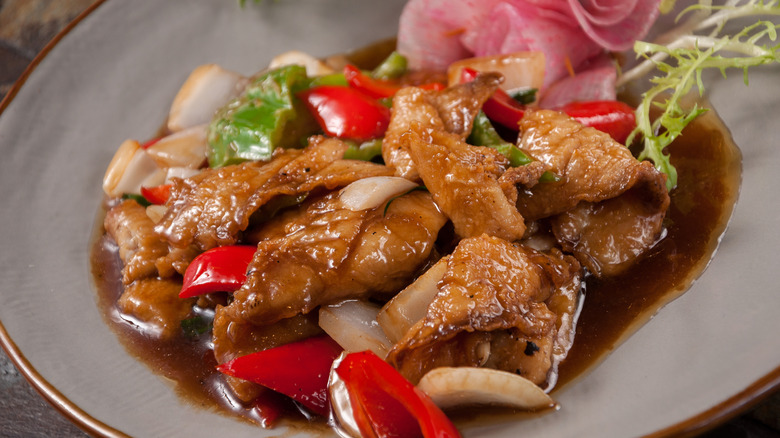
While there are plenty of fish options that Hagerty likes to use in stir-frys, there are two that she says to stay away from. "Avoid using delicate and flaky fish like cod and haddock for stir-frying, because they tend to break. Save those for gentle sauteing or steaming," she says. Other delicate white fish, like tilapia or pollock, are also best left out of stir-frys.
What's most relevant, however, is the method you use to cook the fish. "Pan-searing is helpful," says Hagerty. "You brown the fish cubes first, remove, stir-fry veg and sauce, then return fish for the final 30-60 seconds of cooking. High heat, quick flashes," she emphasizes. Searing the fish briefly allows it to develop a crisp crust, ensuring that the flesh doesn't fall apart during the stir-fry process. Plus, the veggies and other ingredients that are added to the wok or skillet afterwards are infused with the fish's flavor.
To ensure that the fish browns properly, use high heat and make sure that the surface is dry, as Hagerty mentioned. Marinating it too long or using tenderizing ingredients could make the fish overly soggy, but the right stir-fry sauce will give the dish enough flavor to render pre-seasoning unnecessary. Additionally, rich, hearty picks like salmon, red snapper, and sea bass bring their own fair share of boldness to the recipe.