

Why Cooking Fish Directly From The Freezer Can Be The Best Way To Do It
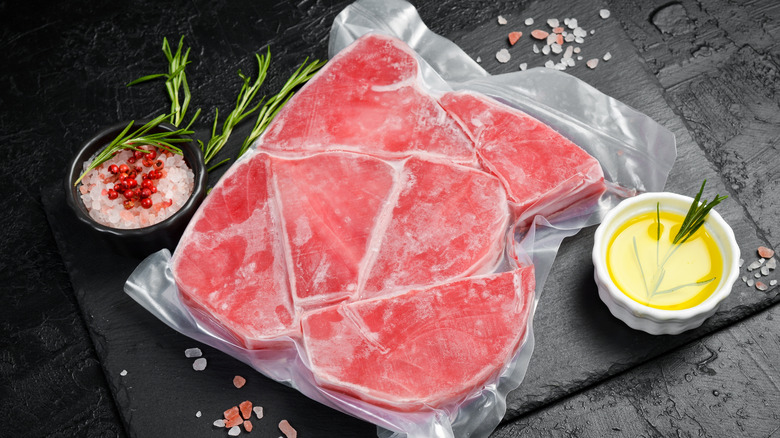
Unless you're one of those rare planners who remembers to move fish from the freezer to the fridge a full day in advance, chances are that you've occasionally found yourself 30 minutes from dinnertime staring at rock-hard filets. Maybe you've tried cooking them straight from frozen and ended up with a soggy, disappointing mess. However, cooking fish directly from the freezer is possible. It can even be the best way, depending on the texture you want.
According to Chef Jay Kumar, owner of LORE in Park Slope, Brooklyn, it's all about how you plan to cook the filets. "For a crispy skin and a more tender texture, it's best to cook the fish after it's been thawed," he said. Thawing is necessary for crisp skin because frozen fish releases excess moisture as it cooks, preventing it from crisping. "But, if you prefer a firmer texture, cooking from frozen will achieve that," he noted. It's perfectly fine to slow-roast, steam, or poach fish in a liquid or gravy while frozen since the added moisture helps filets cook evenly and keeps the flesh from drying out.
There are other reasons why frozen fish can be the better choice. Despite common myths that freezing diminishes flavor, texture, or nutrition, none of these are true. In reality, freezing locks in nutrients like protein and omega-3s, and if handled properly, even preserves taste and texture. While lean fish like tilapia often perform best straight from the freezer, the same approach can work with everyday favorites like salmon, too.
The best ways to cook fattier fish like salmon from frozen
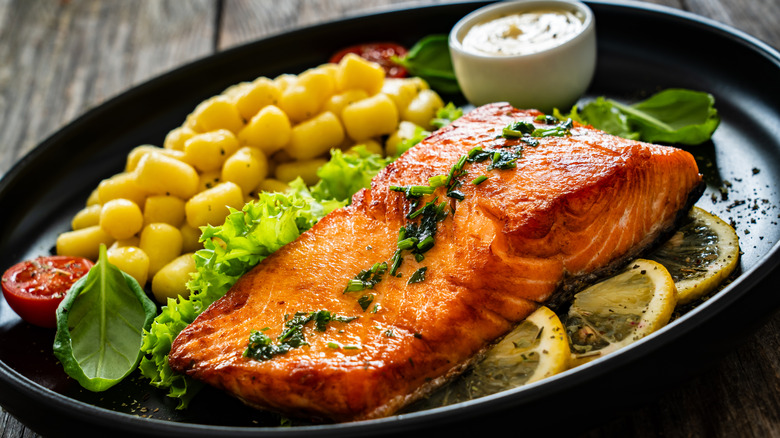
Salmon is the second-most consumed seafood in America after shrimp, and for good reason. As Chef Kumar points out, buying it frozen is not only convenient, but also better from a nutritional standpoint. "Cuts of salmon are flash-frozen at their freshest point," he said, noting that this process retains nutrients that might otherwise be lost during transportation. That said, cooking salmon without thawing it first can be slightly complicated, depending on what approach you take.
When baking (or poaching), the rule of thumb for cooking salmon is to increase cooking time by about 50%. Pan-frying, however, takes a little more care. While some experts recommend removing the skin before cooking frozen fish, this isn't essential. Simply rinse the filet to remove any ice on the surface, then pat it completely dry. Heat your pan over medium-heat, before placing a lightly oiled filet skin-side down, letting it cook completely before flipping. Then, add your seasoning and cover the pan to ensure the filet cooks evenly and fully. Chef Kumar recommends keeping a thermometer handy, too. "It's good to check the internal temperature if you are cooking the fish from frozen," he said, noting that the center should reach at least 145 degrees Fahrenheit.
The good news is that cooking frozen fish doesn't need to feel like a compromise. With a little patience and the right technique, frozen filets can go from a last-minute backup to the star of your dinner.