

Remember This Chef-Approved Tip For The Absolute Tastiest Oven-Baked Ribs
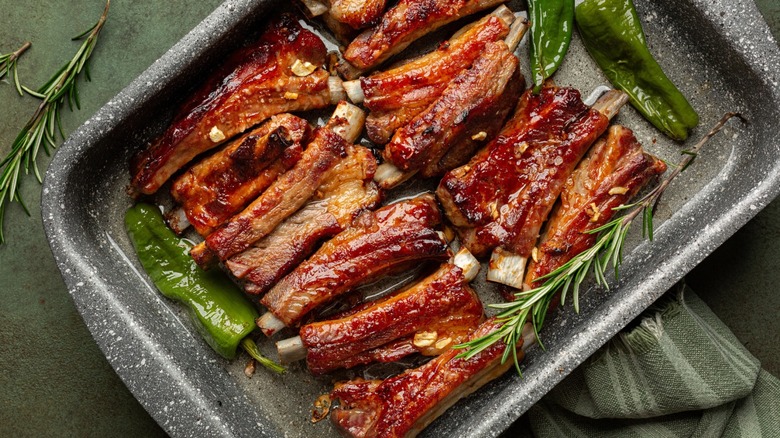
Who doesn't love a rack of ribs right off the grill, slathered in a delicious sauce, with tender, fall-off-the-bone meat? But grilling isn't the only way to make ribs. You can cook some of the tastiest ones you'll ever have right in the oven. One simple step is the key to ensuring that you're getting the best oven-baked ribs possible — brining.
Scott Thomas, owner of The Grillin' Fools, is an expert when it comes to all kinds of ribs, and he recently gave us the inside scoop on why you absolutely need to brine them. "Brining accomplishes two to three results," he says. "Brining will make meat more tender, more flavorful, and more juicy. Win, win, win." To set yourself up for the best result, remove the silver skin membrane before brining. Slipping the handle of a spoon between it and the meat allows it to pull away easily.
Thomas went into detail about how versatile your brine can be. "That liquid does not have to be simple water," he explains. "It can be apple juice (or cider, my favorite brine medium), beer, whiskey, coffee, tea, whatever." He explains that as long as you have a salty solution, you have an effective brine. "That will make the meat juicier," he continues. "The salt from the solution will also tenderize the meat. And if the liquid is something that has flavor (not water) it will add flavor to the meat."
How to brine your ribs
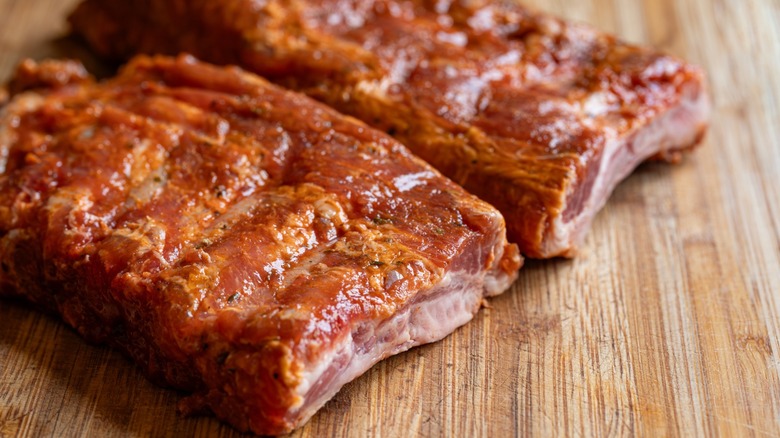
There are a few things you should know about brining ribs before cooking. The basic solution, according to Thomas, is a ratio of "one cup of salt per one gallon of water." For more flavor, swap water for other liquids. You can even use pickle juice — a brine you likely have on hand — that is loaded with salt and tangy flavor.
While almost any liquid works, and Thomas is a fan of using juices, not every kind of fruit will work. "Not citrus," the expert explains. "The citrus will cook the meat before you do." If you have ever made a ceviche, you know what he means. The acid in citrus breaks down protein and connective tissue in meat to tenderize it. But if it's allowed to brine too long, the meat becomes mushy and the texture is ruined. Pineapple has tenderizing enzymes that can make your meat fall apart, too. For pork ribs, apple, berry, and even grape juice lend great flavor.
When it comes to brining time, there's some flexibility. "Two to 12 hours," Thomas suggests. "Anything beyond 12 hours and you risk curing the meat. We want ribs, not ham." If you're not sure, err on the side of caution and reduce the time so you don't end up with cured meat. A five-hour brine with cider should be more than enough.
After the brining process, it's a simple matter of baking with whatever sauce or seasoning you want. Once you compare them to ribs you didn't brine, you'll never skip the step again.