

The Lipton Tea Myth That Had Consumers Thinking They Drank Worms
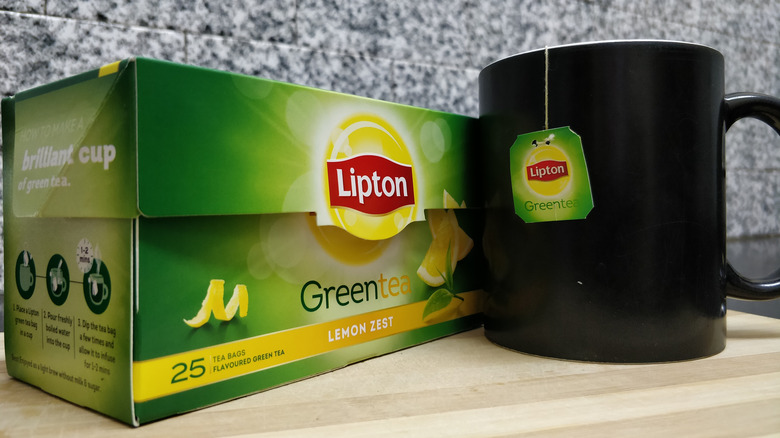
It's common to pour water from your kettle into a mug of tea and watch the water rise and change color. But, have you ever seen suspicious little shapes floating in your mug, perhaps making you think you were about to drink worms? If this has never happened to you, then it probably sounds very bizarre. However, for a time, there was a widespread myth that Lipton tea was infused with worms.
Lipton is the number one tea brand in the world, and in our roundup of 20 tea brands, we ranked it third best, overall. So, it's not a surprise that the popular company has had to field a rumor or two. In 2016, a video began circulating that quickly garnered hundreds of thousands of views. In the video, an unseen narrator opens a bag of Lipton lemon-flavored green tea – normally, you would never open your tea bag, so it's unclear what prompted this. The narrator proceeds to pour out the loose tea and begins to point out tiny shapes, claiming are "worms," despite nothing moving over the course of the video. The narrator also says it's not a fluke, as "several bags and several boxes" that they've opened are the same.
When this video went viral, naturally, it prompted a response from Lipton.
Worms or lemons?

Lipton uploaded their own video addressing the concerns that its tea contained worms. In response, a representative opened a tea bag and separated the tiny dried objects from the rest of the leaves, placing them in the bottom of a mug and adding hot water to them. They quickly dissolved and the water remained clear — definitely not something that worms do. Instead, the Lipton representative explained that these bits "are small lemon pieces" added to the tea. The video concluded with the assurance that Lipton tea is made to the highest standards and is perfectly safe to drink.
When the viral video was originally posted, other users pointed out that these were likely just flavor crystals that were added to the tea mix. Nonetheless, the internet is nothing if not efficient about spreading rumors and urban legends. After all, the viral story got many more views than Lipton's explanation of the truth.
Fortunately for Lipton, the story seems to have blown over without affecting their bottom line because it was not true. Also, unlike some other viral stories that can plague large companies, this one seems fairly easy for the average person to debunk. Since worms don't dissolve in water, all anyone had to do themselves was pour water on their tea and see that these yellow pieces weren't worms at all. With that in mind, you can continue to safely enjoy lemon-flavored green tea from Lipton, if you want.