

The Common Myth That Will Have You Rethinking Superfoods
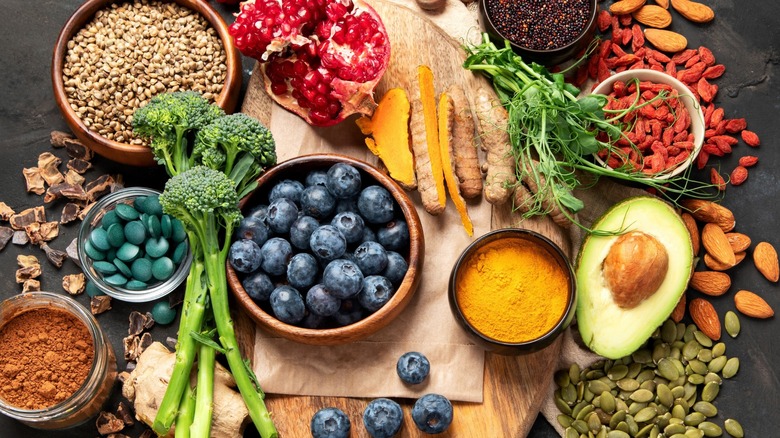
Do you remember the first time you heard of açaí berries? What about goji berries? Or coconut oil? All of these have been marketed at various times as superfoods — promising amazing health benefits that could cure your ills and make you better, stronger, and healthier. But the truth is that's just one of the many superfood myths you can stop believing. There's no real scientific reasoning, regulating body, or even a formal definition behind the designation of any one superfood.
Generally, a food gets called a superfood because it has a noteworthy amount of desirable nutrients — blueberries are high in vitamin C and antioxidants, turmeric has antioxidant and anti-inflammatory properties, salmon is rich in omega-3 fatty acids. All of these foods are tasty and nutritious so, sure, they're "super" – but, while you should consider adding some of them to your diet, there is less evidence of the remarkable health claims often associated with them.
The FDA goes after companies that make drug-like claims about foods. Producers of noni fruit products, for example, were issued a warning from the FDA in 2018, after claiming it could prevent chronic diseases among other health ailments. Similarly, back in 2012, internet marketers who promoted açaí berries as a weight loss miracle had to pay a $15 million settlement. As a result, many companies limit their wording to calling said products "super" to avoid lawsuits.
The origins of the superfood craze

The idea of superfoods can be traced back to fruit companies selling bananas during the First World War. They claimed bananas were not just delicious and nutritious, but all of the things you'd expect today when someone discovers a new superfood. At the time, doctors and medical journals even suggested bananas could help treat conditions like diabetes and celiac disease. Suddenly, bananas were a superfood that could cure disease — a trusted source had said so, and people were inclined to agree. This set the stage for what came in the 21st century.
Companies learned that people would pay a lot of money for a food that made them healthier, so that coveted title was very important. Producers of products like chia seeds, flax seeds, and green tea, which is commonly thought of as a powerful superfood, continue to benefit from the reputation. While a diet rich in these foods may certainly provide health benefits, and no one is necessarily deceiving you by labeling foods as superfoods without making any specific health claims, the truth is that the term promises much more than the evidence delivers.