

This Is The Only Tool You Need For Sharpening Serrated Knives
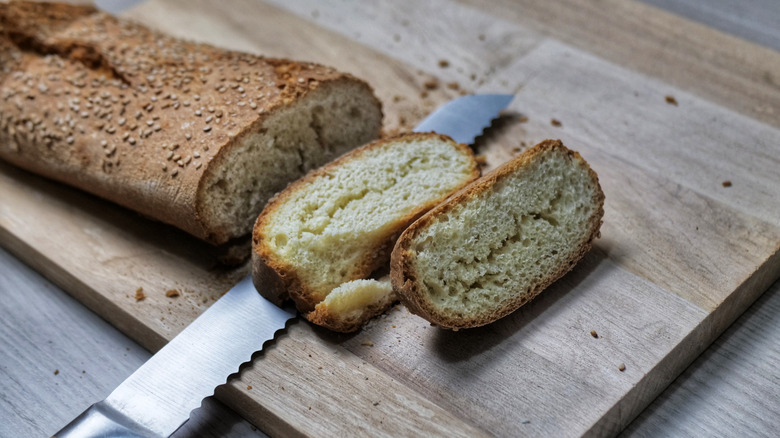
Sharpening your knives is a great way to keep them in prime condition. Over time, however, even the very best knives can become dull and dangerous. But what about serrated knives? They're often forgotten about, and you may not realize that they need to be sharpened and honed, too. Your usual electric sharpening tool won't cut it if you want to keep your cuts clean for delicate tasks like slicing crusty bread and ripe tomatoes. So what will?
A honing rod is truly a tool of the trade, keeping your knives sharp. While they are available in a variety of different materials, such as diamond-crusted steel, stainless steel, or ceramic, for serrated knives, a traditional stainless steel rod will not provide enough sharpening power. So, it's recommended to opt for a diamond or ceramic version with a fine grit. Since the serrations are a bit different from a chef's knife (or any knife with a sharp, straight blade), ceramic and diamond rods are strong enough to sharpen individual serrations, restoring your knife to its original sharpness.
When selecting your honing rod, depending on the size of your knife, make sure it can fit into each serration sufficiently to produce a burr — a small curl of metal that indicates reground and sharpened serrations. For knives that aren't as dull, you can purchase a large ceramic rod.
How to sharpen serrated knives
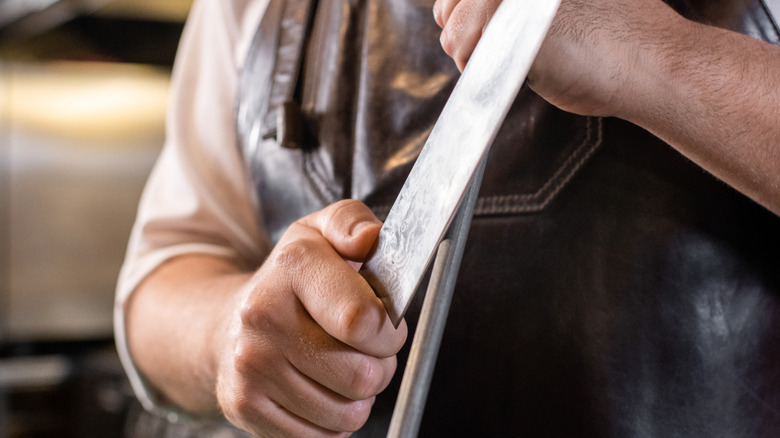
Oftentimes, a serrated knife is one of a chef's favorite tools. The small, teeth-like serrations are what produce a strong but clean cut. But to sharpen your knife, first decide if it needs true sharpening from heavy use or only a touch-up. From here, identify the beveled side: for most serrated knives, serrations are only ground into one side, known as the beveled side. Then, select your tool, likely a diamond rod, ideally tapered at the end that fits the serrations.
For individual serration sharpening, place the knife at a slight angle, slightly resting it on the cutting board if needed for larger knives. Place the rod in the valley of the serration, also known as the gullet, and push away from the cutting edge. Do this a few times to produce a burr. This will bring the beveled side closer to the flat edge and produce a sharp knife. After, you'll need to remove the burr, which you can do with leather or denim.
If the knife only needs a touch-up or it isn't very dull, use a large ceramic rod, about the length of your knife, moving back and forth slowly. This method won't produce a burr, since you are not grinding away metal, but it will help align the serrations and improve its cutting ability. If you're in a pinch, check out this easy trick for sharpening that uses two common household items.