

Teddy Roosevelt's Meat-Eating Preferences Were A Bit Particular. Here's Why
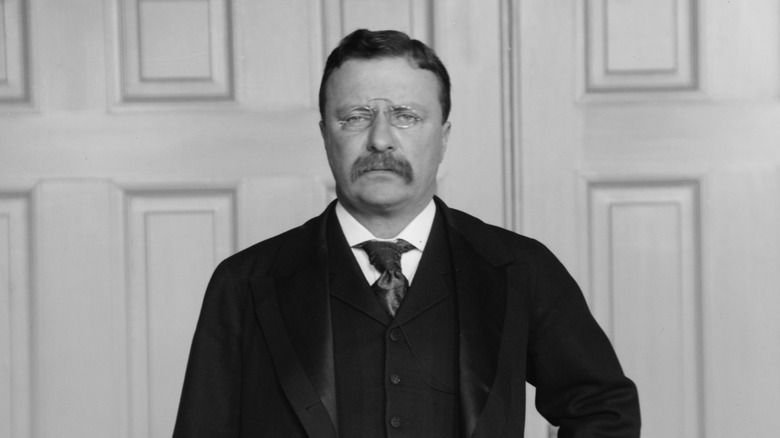
In 1909, former President Theodore Roosevelt and his son went on safari to Africa and collected over 11,000 specimens, ranging from plants and insects to large animals like hippos and lions. Between the two men, they shot over 500 of Africa's largest game animals, most of which were sent to the Smithsonian. Yet, Roosevelt was also a committed conservationist; we have him to thank for the U.S. Forest Service and 150 million acres of national forests. While he enjoyed meat, he was also a man of simple tastes.
Roosevelt loved to hunt, but not for sport. In fact, in his book, "African Game Trails," he called sport hunting "butchery" and "wanton cruelty." He often ate what he killed and lamented the losses caused by overhunting and deforestation, fearing the wasting of natural resources. Roosevelt enjoyed game meat as well as beef, and he wrote frequently about eating chicken. He valued food that was not only satisfying but also safe and ethically produced. Interestingly, there is little evidence that he enjoyed exotic dishes, except for tea, and preferred a classic fried chicken. The former president preferred his fried chicken served with white gravy soaked right into the meat, the same way his mother prepared it, and he would never eat it another way.
When hosting a dinner for Prince Wilhelm of Germany, Roosevelt offered the prince a 10-course meal that started with oysters on the half shell. Interestingly, the 26th U.S. President was a key factor in passing the Meat Inspection and Pure Food & Drug Acts after testifying before Congress that he would have sooner eaten his old hat than the "embalmed beef" being fed to soldiers. His own tastes at home reflected that all he wanted was a decent meal without a lot of frills.
What was Teddy Roosevelt's diet?
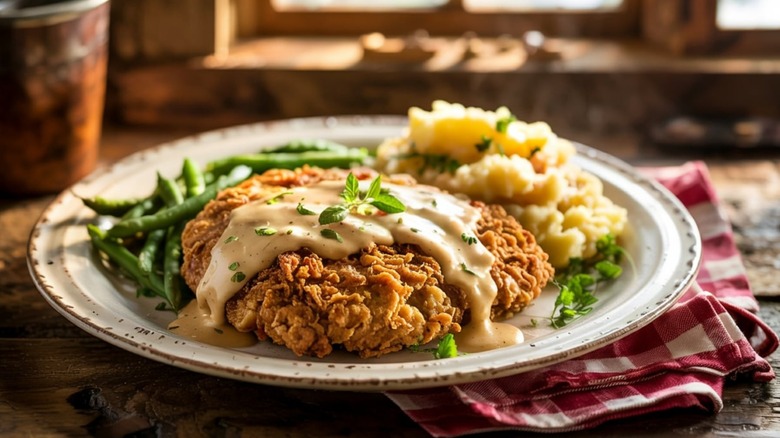
On an expedition, Teddy Roosevelt ate anything he could hunt at the time out of necessity (even monkey on a trip to South America). He hunted to keep food in his camp, but nothing more. At home, he ate hard-boiled eggs for breakfast and often had milk and bread for lunch (or fried chicken). Dinner might be chicken or oysters, or occasionally game meat sent to him by friends. If he had steak (not unlike other U.S. presidents), it was often with gravy.
Roosevelt once wrote to the Washington Post after they published a scathing piece about the lavish meals his family supposedly ate at the White House. He explained that lunch wasn't made up of dishes like eggs à la turque and spring lamb, as they claimed, but usually consisted of leftover cold meat and cantaloupe when in season. It only got that fancy if he was dining with his family; otherwise, milk and bread was it. In writing about ranching life, Roosevelt described the food during a spring round-up as good but rough. He was a supporter of simple food, describing his meals as consisting of beef, pork, beans, canned tomatoes and corn, and coffee.
Clearly, President Roosevelt had an adventurous palate but also a fondness for the basics. He was happy to try new things, but he wasn't always seeking another culinary thrill. He preferred comfort dishes, basic food, and meat that was simple, hearty, and prepared in a homestyle way. With deep respect for ingredients, especially the animals whose lives were sacrificed for meals, Roosevelt's personal eating habits helped shape many of the policies he helped implement.