

Don't Be Fooled: Avoid Buying This Cheap Fish At All Costs
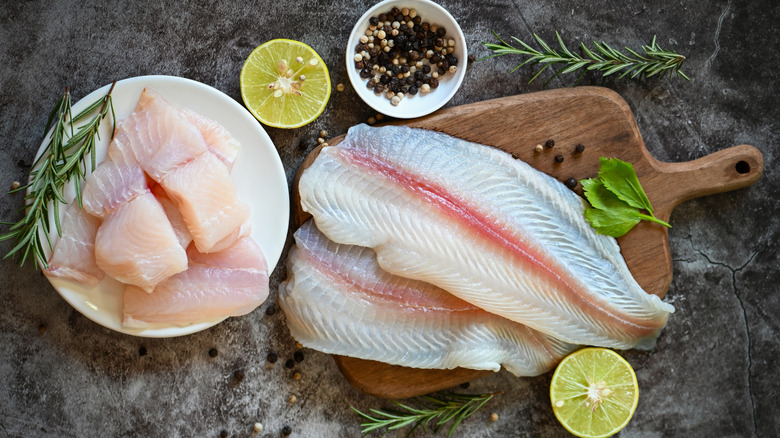
What is your go-to fish when you go shopping? Do you prefer salmon fillets or tuna steaks? Or do you focus on some more economical options like tilapia or sole? Whatever your seafood preference, you should think twice about buying Asian catfish farmed in Vietnam the next time you see it on sale. They might be affordable, but the way these fish are farmed is potentially very harmful to the environment, and they may also contain dangerous chemicals.
The fish can't legally be called catfish in America because that title is reserved for domestic catfish, so it is usually sold as basa, swai, pangasius, and tra. It has been illegally substituted for at least 18 other fish worldwide, according to research by Oceana. Investigative researchers found the fish, which is actually called pangasius, being sold as much higher-value fish such as perch, grouper, sole, and halibut.
Seafood Watch, a program that monitors and evaluates seafood available in the United States, ranks Vietnamese farmed catfish very poorly because of its low effluent score and high chemical use involved in its farming. Effluent refers to the environmental impact caused by sludge dumped from fish farms into rivers, lakes, and oceans. Because the industry is so large and there are reports of illegal dumping, this effluent is a serious environmental danger. Likewise, chemical use is cause for worry. Though specific data is not available, the folks at Seafood Watch have seen evidence that chemical use in Vietnamese pangasius farms is heavy. That includes antibiotics that can affect human health. All of this makes pangasius one of the fish you should avoid.
Asian catfish and its alternatives
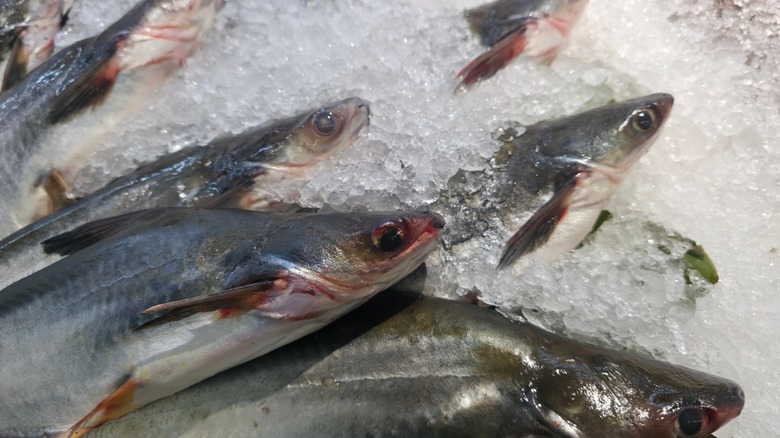
Not all Asian catfish need to be avoided, however. There's nothing inherently wrong with the fish itself. The problem is the farming practices in some places. If you want to support sustainable seafood, Seafood Watch recommends you look for basa or swai certified by Aquaculture Stewardship Council (ASC), Best Aquaculture Practices (BAP), or Naturland. These organizations ensure good eco-stewardship and more responsibly farmed fish. Because these fish are native to the Mekong Delta, they are raised in many other places as well, including Thailand, Laos, and Cambodia. Thailand is known for having very strict regulations for seafood safety, which is why the warning only covers fish farmed in Vietnam.
Swai fish has a very subtle, sweet flavor with white, flaky, tender meat. Swai is as nutritious as other white fish and bears some similarities to tilapia, though it is a more delicate fish overall. Because there are so many farms producing swai, the quality from one to another can also vary drastically. Compared to North American catfish, swai has a similar taste, but domestic fish is subject to stricter regulations and can offer shoppers and diners greater peace of mind. If you're looking for substitutions but can't find tilapia or domestic catfish, Pacific cod, sole, and even haddock are reasonable substitutes in terms of both flaky texture and mild flavor. If you can't determine where exactly the fish came from, consider giving it a pass. If it doesn't feature certification from one of the agencies we listed above, you may be putting your health and the environment at risk.