

Always Keep Expired Spices — Here Are 10 Clever Ways To Use Them Up
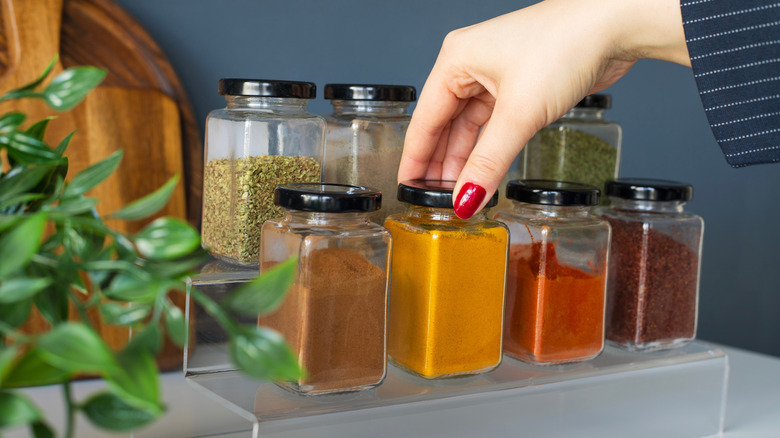
What's the oldest thing in your kitchen cupboard? Chances are, there's a spice jar or two with a questionable use-by date that you still might be adding into your recipes on the regular. Dried spices have a lengthy shelf life, which is typically somewhere between one and four years. And, once the expiry date has passed, this doesn't usually mean that consuming the spice will make you sick. But, while they don't necessarily go bad, the spices can become significantly less potent and flavorful, which is enough to warrant replacing them with a fresh jar.
When the time comes to clear out your pantry, there's no need for those expired spices to go to waste. In fact, there are a variety of different ways they can be repurposed. If you're into crafting, you can save the spices for use in various homemade creations, from beauty products to candles. Many spices can also serve as effective deodorizers for various areas of your home, and they can even help you keep pests at bay. So, before you toss them out, give your spices a second chance with one of these nifty ways to use them up.
Make stovetop potpourri
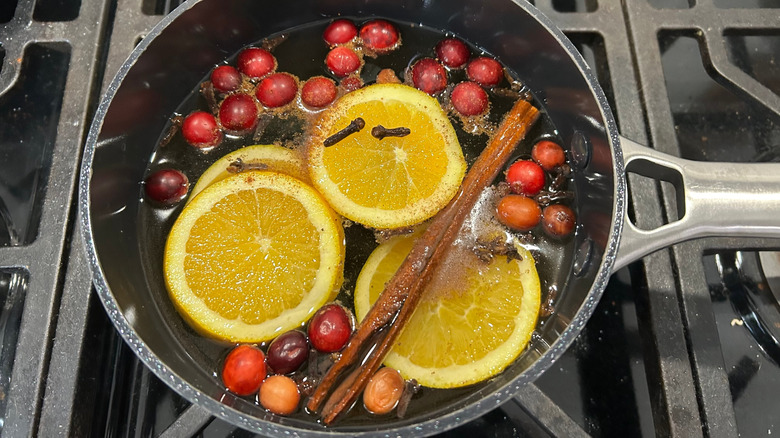
Stovetop potpourri, also known as a simmer pot, is an incredible way to fill your home with cozy, warming aromas. To make one, you'll simply add a medley of fragrant ingredients to a large pot with some water, bring everything to a boil, then reduce it to a low simmer. The pot can then be left bubbling away on the stovetop for as long as you wish. With a top up of water every now and again, you can keep potpourri on the go for several days (just make sure to turn off the stove at nighttime). It makes for an inviting touch if you're hosting guests during the holiday season, or any time you want your home to smell amazing.
Dried whole spices are ideal for simmer pots, such as cinnamon sticks, star anise pods, or cloves. These work brilliantly alongside slices of orange or lemon and fresh cranberries. Dried herbs are ideal add-ins, too. Think bay leaves, rosemary, and thyme. Essentially, you can craft your unique stovetop potpourri depending on your desired aroma, or what you have on hand. A top tip is to prep and portion a batch of your chosen ingredients into individual bags, which can be stored until you're ready to use them, or even gifted to friends and family.
Spice up homemade soap
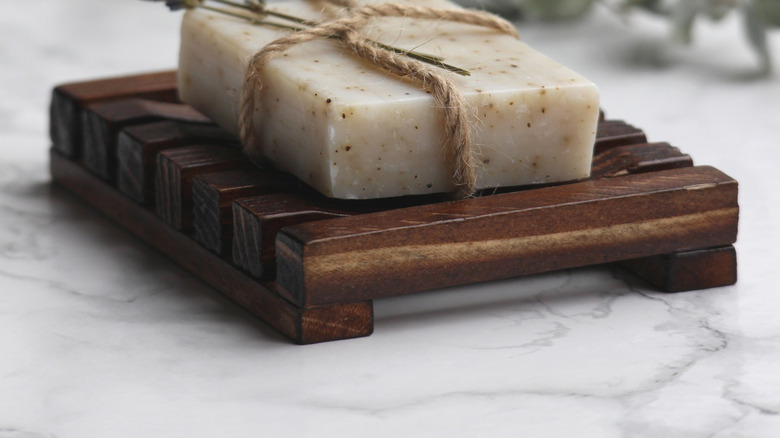
There's something wonderfully rustic about a bar of handmade soap, and there are endless ways to customize your natural creations with refreshing or relaxing scents. Spices can add color, texture, and fragrance to a bar, and here, they're best used in powdered form.
The soap-making process begins with a mixture of lye crystals (sodium hydroxide) and water, to which you'll typically add oils like coconut oil, olive oil, or palm oil. Once the mixture becomes thick and creamy, the spices can be added. Ground cinnamon is an excellent choice, being naturally anti-bacterial and acting as a gentle exfoliant. Turmeric is also known for its soothing, anti-inflammatory properties, and will give the soap a gorgeous golden hue. Paprika and cloves make brilliant additions too, and adding ginger to your soap could possibly help reduce dandruff. Consider incorporating some essential oils such as lavender, tea tree, or rosemary alongside the spices. They will boost the fragrance factor even further.
With the soap mixture prepped, it's ready to be poured into molds, where it'll sit overnight to firm up. Once sliced into bars, the soap will then need to cure for up to six weeks before it's ready to be used on the skin.
Keep garden pests at bay
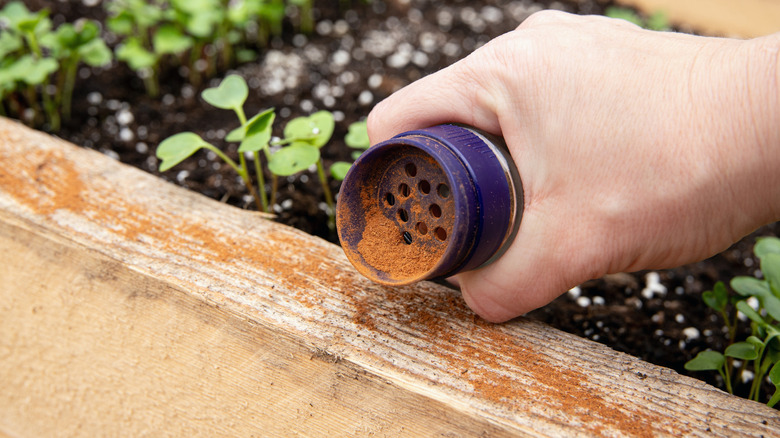
While spices might smell delicious to us humans, they're not as appealing to some of the pesky critters in your garden. If you're a keen grower of fruits and veggies, you've may have already experimented with a few different pest control measures. Chemicals aren't for everyone, and physical barricades aren't always convenient, but that's where spices can come in. They're completely natural and highly effective at keeping garden pests at bay.
Cloves are particularly potent deterrents, and these can be ground up and sprinkled around the base of a plant to deter common pests like aphids and whiteflies. Chili powder and cayenne pepper are also excellent options, with their spiciness being especially unappealing to slugs, snails, and spider mites. A handy technique is to mix the ground spices with water and dish soap in a spray bottle, spritzing the mixture over the lower leaves of the plant.
If fungal infestations are a problem in your garden, cinnamon can help. Mixed into soil or combined with water and sprayed directly onto leaves and stems, this spice acts as a natural fungicide, to keep your plants thriving.
Create vibrant dyes for painting Easter eggs

Painting eggs with vibrant patterns is a long-standing Easter tradition, and while regular paints and Sharpies are great for brightening those shells, they'll render the eggs inedible. If you intend to eat the hard-boiled eggs post decoration, make sure you opt for natural, non-toxic dyes. You can craft your own egg dye using ingredients you may well already have in your kitchen, including beets, red onion skins, and blueberries. And there's a specific spice that's the perfect tool for tinting eggs a sunny shade of yellow — turmeric.
Dig out that expired jar of turmeric from the back of your kitchen cupboard and simmer the ground spice with water for around 30 minutes. You'll need about 2 tablespoons of spice for every cup of water, so adjust the quantities depending on how much dye you'd like to make. To create a green dye, try adding purple cabbage to the turmeric-infused water (around one cup of chopped cabbage). Once prepped, simply soak hard-boiled eggs in the liquid in the fridge, until they've soaked up the color. Then, dry the eggs, spray a piece of kitchen paper with cooking spray, and give the shells a quick polish. This will give them a beautiful shiny finish.
If preferred, you can absolutely paint the dye with a brush, pairing it with other colors to create your own unique patterns. There are plenty of decorative options to choose from, so feel free to get creative with fun designs.
Mix a natural cleaning spray
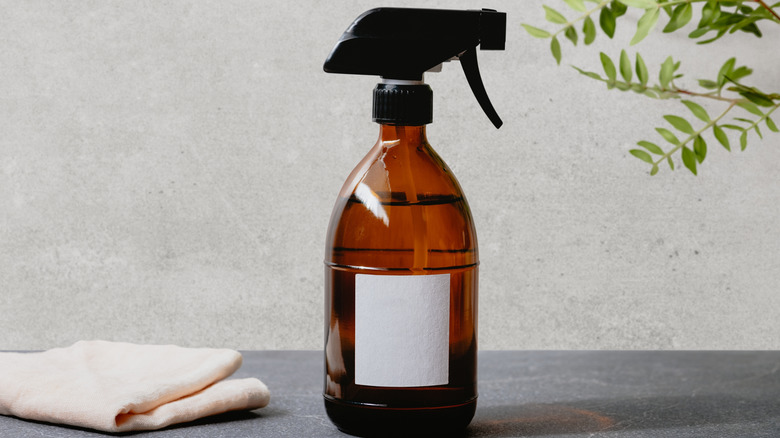
Freshening up your surfaces with an all-natural cleaning spray is a fantastic way to reduce the use of chemicals in your home, and making your own solution from scratch is surprisingly easy. Along with other fresh ingredients and herbs, whole spices can be used to infuse the liquid base, making the final product more effective and delightfully fragrant.
To make your own spray, start by infusing distilled white vinegar with your selected add-ins. Spice-wise, you could opt for cardamom pods, cloves, or cinnamon sticks, which are all known for their antibacterial properties. These will pair beautifully with the citrus peels — you can use lemons, oranges, or grapefruit — and herbs like rosemary, mint, and sage. Lavender and eucalyptus are popular additions, too. Just add everything to a jar, pour over the vinegar, and pop the lid on. The mixture will then be left to steep in a cool, dark place for up to four weeks.
Once the vinegar has been sufficiently infused, strain out the solids, and pour the liquid into a spray bottle along with some water and essential oils. Give it a quick shake and get spritzing. Your countertops will soon look shiny and smell wonderful.
Freshen up your carpets

Store-bought deodorizers aren't the only way to give your carpets a new lease of life. Try freshening them up with the help of some leftover spices instead. This approach is chemical-free, and it's sure to help eliminate those pesky odors that can get trapped within carpet and rug fibers.
A base of baking soda is a great place to start, since its alkaline properties make it adept at neutralizing odor-causing compounds. Try mixing this with some ground spices such as cinnamon, cloves, or nutmeg, which can add a hint of fragrance, while also contributing their antibacterial properties. Turmeric is best avoided here, unless you're looking to dye your carpet a fetching shade of yellow! But feel free to toss some aromatic herbs or essential oils into the baking soda mix.
Once you've crafted your mixture, sprinkle it liberally over the carpet, and use your fingers or a brush to work it into the carpet fibers. For the maximum deodorizing benefits, it's then best to let the powder sit for a few hours, or preferably overnight, before vacuuming everything up. Your carpet will then be left smelling lovely and fresh.
Make scented candles

Candles are a go-to for filling your home with sweet aroma, and it's not uncommon to find the ones infused with food-themed scents. If you want to make candles yourself, there's endless opportunity for customization, whether fresh or cozy is your vibe. If you love warming scents, spices make the perfect addition to the wax mixture, yielding a wonderfully comforting atmosphere when lit.
Ground cinnamon, nutmeg, cloves, and ginger will all work amazingly well in a scented candle, especially if you're going for a festive feel. These can provide warm, slightly sweet and woody notes that fit in beautifully alongside vanilla or citrus-based ingredients. To infuse candle wax with these fragrant add-ins, you'll first melt it in a double boiler. Then, simply stir in the spices, plus any essential oils or other extras. A teaspoon of each spice per candle is a good place to start. With the wick added to your candle holder, pour in the wax, before leaving everything to set at room temperature. If you're using a glass or other transparent base, there's also the option to glue sprigs of lavender, rosemary, or thyme to the inside the holder before pouring in the wax. This can add heaps of visual appeal.
Craft some scented sachets
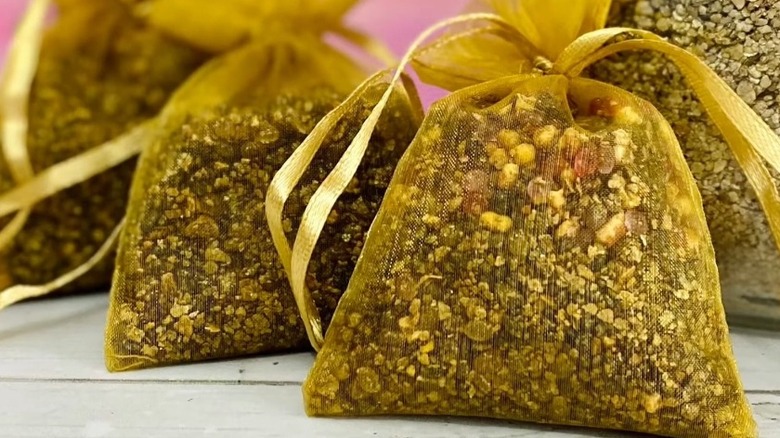
While expired spices may no longer be in their prime taste-wise, they can still provide plenty of aromatic goodness when used as a scent booster. To keep your wardrobe, sock drawer, or car smelling great, try sprucing these areas up with some carefully crafted scented sachets. These pleasing little bags are also great for gifting.
To get started, you'll need some small, breathable bags, which you can absolutely sew yourself using fabric squares if you're feeling crafty. Otherwise, pre-made drawstring or ribbon-tie cotton or linen bags are ideal. For the bulk of the filling, we recommend using dried rice, which serves as a neutral base. To this, add your dried whole spices, such as cloves, star anise, and cinnamon sticks (broken up if needed). Dried lavender is another favorite here, and a few drops of an essential oil such as lemon, jasmine, or peppermint will contribute to the aroma. Combine the spices and other add-ins with the rice, spoon the mixture into the bags, and securely close them. Then, you can toss the sachets anywhere that's in need of a sweet-smelling boost.
Deodorize your fridge
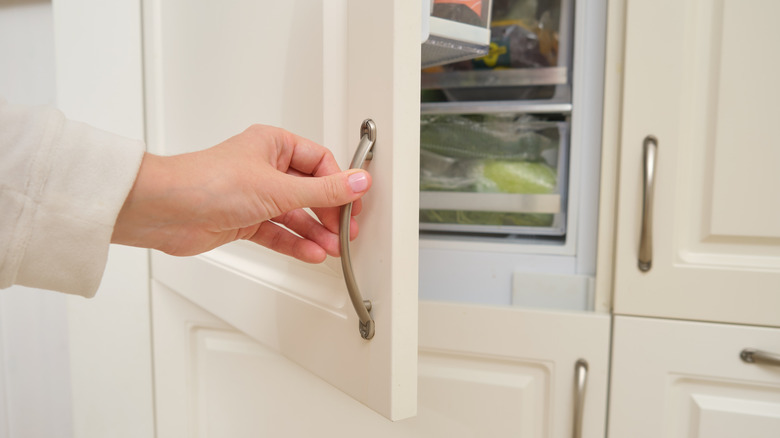
Unwanted food odors can easily build up inside the fridge, but thankfully, there's a handy hack to keep them at bay. Your expired spices are the perfect candidates to repurpose as fridge deodorizers. They are a simple, non-toxic solution thanks to their natural odor-absorbing properties and pleasant aromas.
To boost their neutralizing effects, pair the whole or ground spices with baking soda. Crushed cardamom pods will work great, as will cinnamon sticks and cloves. For a refreshing twist, throw in some fresh mint leaves or orange peels, too. Once you've added everything to a small bowl, pop it uncovered in the fridge door or on a shelf and leave the ingredients to work their magic.
Of course, regular cleaning of your fridge is the best way to get rid of bad smells and always avoid leaving spoiled food in the fridge. However, these DIY deodorizer bowls are great way to boost freshness, or tone down the scent of particularly pungent foods like fish or cheese. Remember to replace the contents of the bowl every two months or so, to maintain those odor-absorbing benefits.
Keep your home critter-free

Most of us would rather keep our homes free of creepy-crawlies, but this doesn't have to mean reaching for harsh, potentially toxic chemicals. Instead, put your expired spices to good use as natural pest deterrents.
One spice in particular is highly effective at keeping pests away, and this is cinnamon. Just sprinkle the ground spice around doors or on window sills, and it'll act as a barrier for unwanted visitors such as ants, spiders, cockroaches, and silverfish. This is because the active compounds in cinnamon can disrupt the insect's nervous systems, and in the case of ants, cinnamon's potent smell masks the scent trails they use to navigate. Hence why the bugs are not so keen to walk right over a sprinkling of this aromatic ingredient. You can also use cinnamon to keep ants away from certain areas in your garden. For example, if you have a children's play area where biting critters are not welcome, or a wooden structure that ants might cause damage to. You'll find that ants have a distaste for paprika too, if you don't have cinnamon on hand.