

This Vintage Dish Find Is Worth More Money Than You'd Think
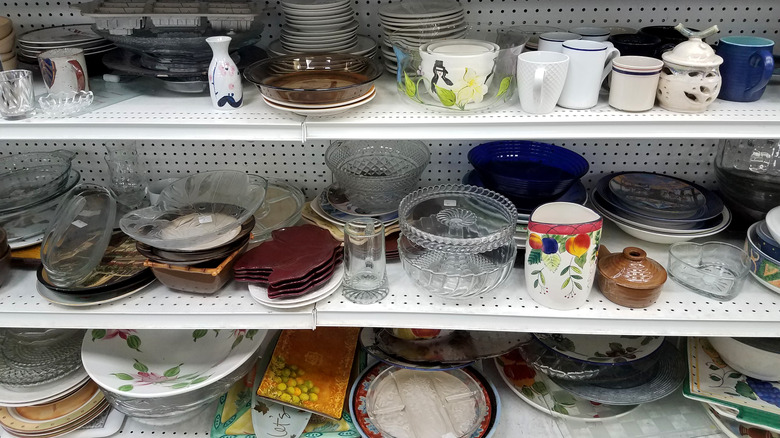
We've all heard stories of savvy thrifters inadvertently stumbling across highly valuable vintage items, snagging one for a fraction of its collectible value. But the truth is rarely that simple, at least in the sense of it being a complete accident. In fact, many collectors make calculated, devoted trips to thrift stores in pursuit of these very things. That doesn't make the finds any less remarkable, especially when it's something as undeniably charming as brown and white transferware dishes.
This subset of vintage ceramic dishes can be far more valuable that you likely imagine. Most of these pieces hail from Staffordshire, England, which was for centuries the widely known center of Britain's famous potteries. Transferware, sometimes referred to as "underglaze printing," is based on a process known as transfer printing, which thrived in the late 1700s and the 1800s. It used engraved copper plates and inked tissues to transfer detailed designs onto ceramic surfaces. Through this process, middle-class English homes could suddenly afford decorative dishware with intricate patterns and nuanced colors — effectively creating a new cultural norm that "democratized" home dining.
While transferware was then considered affordable, relatively speaking, it can be a different story now. The highly treasured brown and white patterns served as a counterpart to the more common blue-toned prints, including early versions of Spode's blue Italian patterns. The brown palette with warm tones and pastoral scenes can bring surprisingly high prices at online auctions and antique shows, sometimes hundreds or even thousands of dollars for well-preserved 19th-century pieces.
How to identify transferware pieces
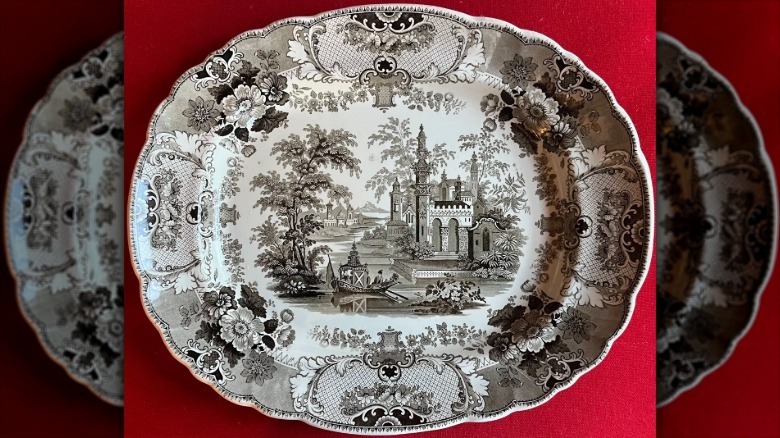
Like many earlier designs, brown and white transfer patterns often have a strong storytelling aspect in the details, reflecting literary sensibilities and cultural awareness. When acquiring or selling transferware, pay attention to these details and themes, as they can add depth or intrigue when used in the dining room.
When seeking authentic vintage transferware, including the brown and white patterns, it helps to know identifying traits, visual details, and maker's marks. For true antique pieces, look for faint seam lines or breaks in the design, which routinely occurred when the transfer paper overlapped during production. Backstamps can also help date a piece, some indicating registration marks and others reflecting period-specific wording. Trends varied regarding trademark stamps, maker's marks, and pattern names — and the earliest pieces can even be completely unsigned.
In general, dishes registered with London's patent office between 1842 and 1883 likely carry registration marks. After that, look for country identification: Pieces made from 1890 to 1920 typically say "England," while ones after 1920 bear the mark "Made in England." If your interest is specifically in valuable vintage transferware, be aware that modern reissues of classic transferware patterns are available from Burleigh and House of Hackney, some with updated color palettes or scaling. For a deeper look at vintage thrifting, read about spotting vintage kitchen brands at thrift stores, such as the high-end MacKenzie‑Childs dinnerware brand.