

How Long Roasted Garlic Lasts — And How To Store It Properly
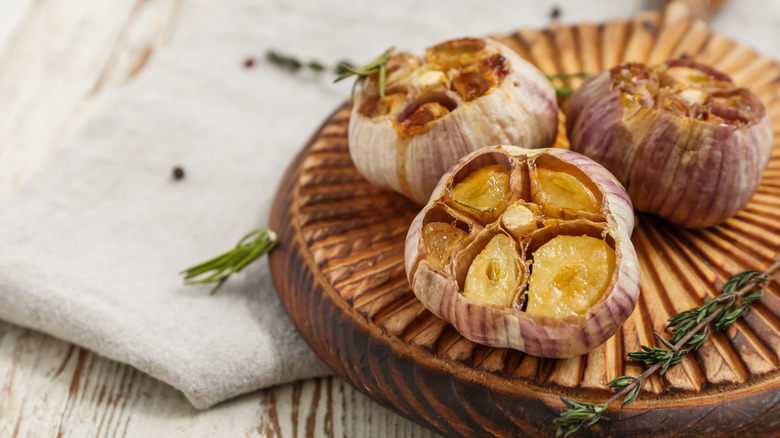
Unlike raw garlic, which can go for months on end and still be good enough to dazzle the plates, simple oven-roasted garlic has a much shorter lifespan. It can't sit on the kitchen counter or wait around indefinitely. All that goodness — golden, buttery flavors and a beyond captivating aroma — will go to waste if you leave it for too long. As is the case with most cooked food, roasted garlic's expiration date is relatively short, depending heavily on how you store it.
Simply shoved into the fridge and stored inside an airtight container at a stable temperature below 40 degrees Fahrenheit, roasted garlic can last for up to 4 days. Stretching this time span into 2 weeks, you'd need to peel the roasted cloves and soak them in olive oil (or the same oil you used to roast the garlic if you've opted for the oil-roasting route). Maybe even throw in a fresh sprig of rosemary for a fragrant boost. This storage method also comes with a pleasant bonus of giving you a homemade garlic oil — an effortlessly bold way to infuse your favorite dishes with more flavor.
The freezer is also an option, one that will keep the roasted garlic for up to 6 months. Simply freeze it in an airtight bag with all the air squeezed out. This works for both whole heads and individual cloves, although you will need to flash-freeze the cloves beforehand so they don't clump together later on.
How to know when your roasted garlic is no longer good
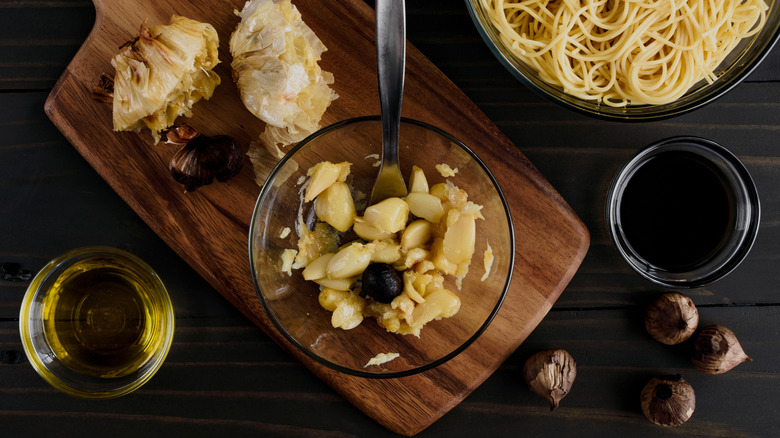
It's important to note that keeping roasted garlic at room temperature for longer than 2 hours is inadvisable, especially if you have decided to keep it in an oil-filled airtight container. Although rare, this may lead to the development of botulism — a foodborne illness caused by Clostridium botulinum, a bacterium that thrives in a low-acidity environment with little to no oxygen. In fact, this is one of the main reasons why it can be dangerous to make garlic confit at home.
Even with refrigeration, make sure to still check for signs of spoilage before you use the roasted garlic again. It could be an off-putting, funky, or strong smell, something that has you taking a double whiff, or simply just the lack of the garlic's signature pungency. Discoloration, in which the garlic develops brown or black spots, is another big no.
Blue and green garlic, however, are merely a result of enzymes breaking down over time or coming into contact with acidic ingredients (like lemon juice, for example) and, therefore, are still safe to eat. And, needless to say, moldy, fuzzy spots are a clear indicator that your roasted garlic is no longer fit for consumption — even if you have cut off the mold.