

For The Most Flavorful Kale, Cook It The Southern Way
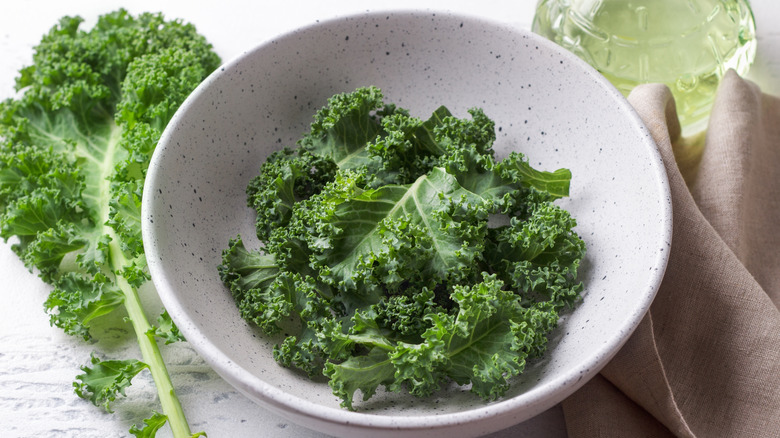
Kale saw a rise to fame in the early 2010's, turning the cruciferous vegetable from a green associated with new-age hippies and health nuts to one that is ubiquitously splashed across restaurant menus and recipe blogs. Most people are familiar with the lighter green, frilly-edged curly kale, or the darker, sturdy, flat-leafed lacinato kale, also known as dinosaur kale, both of which are commonly found in most grocery stores. Kale is part of the family that broccoli and cauliflower belong to, but you may be surprised to learn that there are at least 13 different type of kale, all of which have uniquely delicious qualities when properly prepared, especially when braised southern-style.
If you've ever had the pleasure of eating southern collard greens, you'll know the dish is a far cry from a fibrous, difficult eating experience. Braising collard greens, which are similar to some kale in texture, transforms them from stiff and stringy to supple and soft. Just like when braising collard greens, be sure to remove the thick stems and ribs from the kale before slicing the leaves to braise, but save the leftover kale stems for other projects. Stewing the greens in liquid for a longer period of time is key to break down the tough fibers of the greens.
Bring out the best in kale
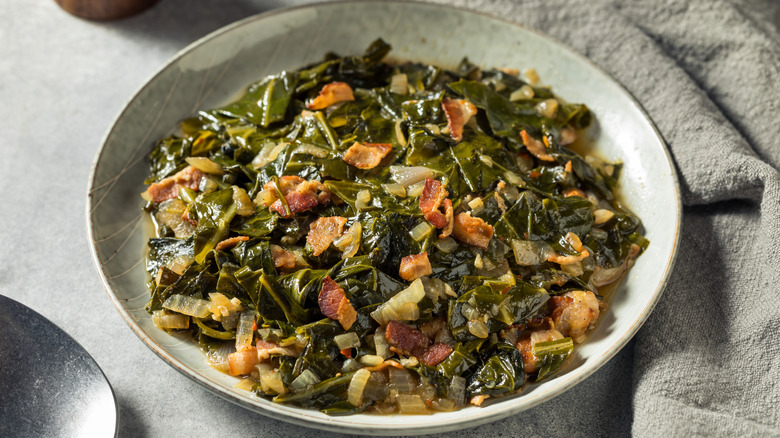
Traditionally cooked with a ham hock, southern-style greens can also be made with thick-cut smoked bacon, pancetta, or even smoked pork sausage. The flavor won't be quite the same as traditional greens made with a ham hock or pork trotter, but the fat, salt, and meatiness will benefit the kale no matter what. In addition to a fatty pork product, another essential ingredient when stewing greens is aromatics, commonly onions followed by garlic, which boost the overall flavor. We recommend starting with simple seasonings the first time you braise kale, like red pepper flakes, to get a sense of the base flavors of the dish, and then experimenting with add-ins the next time. Try swapping onions for shallots, and play around with spices like smoked paprika or coriander for added warmth, or even a sprinkle of MSG for a bit more umami.
Lastly, be sure to braise the kale in a liquid more flavorful that just plain water, like chicken or vegetable stock, so that the greens can absorb more flavor in addition to the aromatics and spices. Many recipes for stewed greens call for a sprinkle of sugar towards the end of cooking, but taste the kale first before adding any sugar to make sure you need it, as some kale is more bitter than others. No matter what type of greens or pork you're stewing, don't forget to add a splash of apple cider vinegar towards the end of cooking to help balance out the flavors.