

Why You Should Always Check The Flame Color When Using Your Gas Stovetop
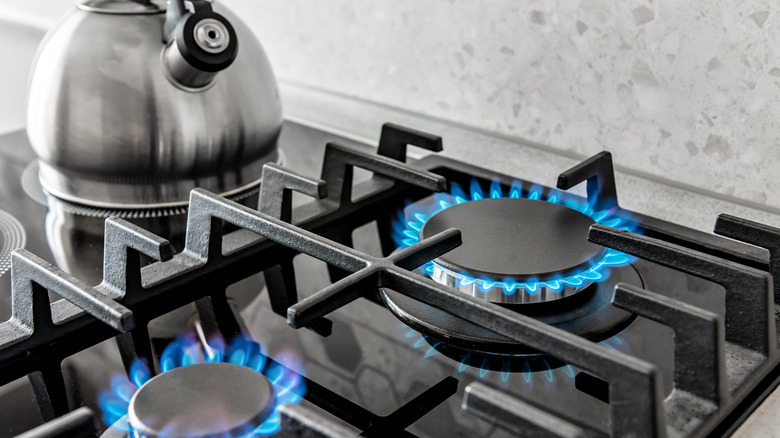
Some cooks swear by a gas stovetop while others find it intimidating. If you're new to using gas, it can be difficult to judge temperatures from nothing more than the height of the flame. Professional chefs often prefer cooking on gas because of its consistent heating and control, but there are important details to keep in mind. Not all flames are equal when it comes to a gas stovetop. One of the most important things to pay attention to is the color of the flame you're cooking over.
Tasting Table asked Chef Randy Feltis, co-owner of Katherine Wants and co-author of "Katherine Wants: The Ultimate Date Night Cookbook," what you're looking for in terms of flame color when cooking on a gas stovetop. "You want the flame to be blue," he told us. "If you are getting an orange flame, it's getting a carbon buildup on your pot, which will spread throughout your kitchen. Which is not good because it's dirty."
Continually cooking over orange flames in your kitchen poses a potential safety risk. Since carbon monoxide is very hard to detect and poses a health risk, you'll want to make sure this doesn't happen frequently. In addition, that sooty buildup can make a mess of your pots and pans, as well as the area around your stove, including the backsplash, walls, and vent. One meal cooked on an orange flame won't cause too much trouble, according to Feltis, but you shouldn't let it continue for long.
Why does your flame burn orange?
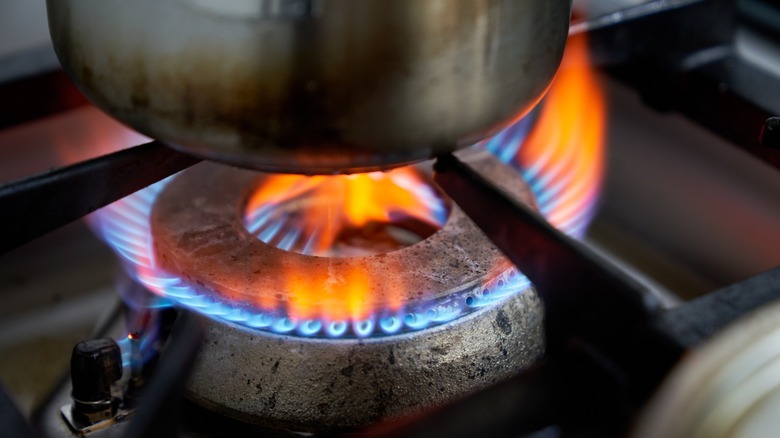
A problem with the mix of gas and air, or poor gas pressure, can lead to orange and yellow flames. The methane gas, which is what burns bright blue normally, is not burning completely. These orange flames produce a lot of soot and, at the same time, increase carbon monoxide in your home due to that incomplete burn. Because toxic carbon monoxide is odorless, its presence can be very dangerous, so the issue should be fixed as soon as possible.
One contributing factor could be buildup, so cleaning your burners is a good idea. Old grease or debris that hasn't been cleaned away can clog the portholes, which will slow or prevent gas from releasing properly. You should turn your burner off and let it cool, then remove the caps and base. Next, use a small brush, like a toothbrush, to clean the ports and ensure gas can flow freely. Make sure you scrub out the holes thoroughly to remove whatever is clogging them. If that doesn't fix the issue, there may be something else to blame.
Another unusual source for orange flames could be a humidifier running in your home. Minerals dispersed in the mist can cause your flame to burn orange. Turning the humidifier off could potentially fix the problem. However, if that's not the source and cleaning doesn't solve it, you should call a professional to assess the situation. The problem may lie with the stove itself or the gas supply, and either could be dangerous.