

Why You Need To Snip Off Just One Corner Of Your Kitchen Sponge
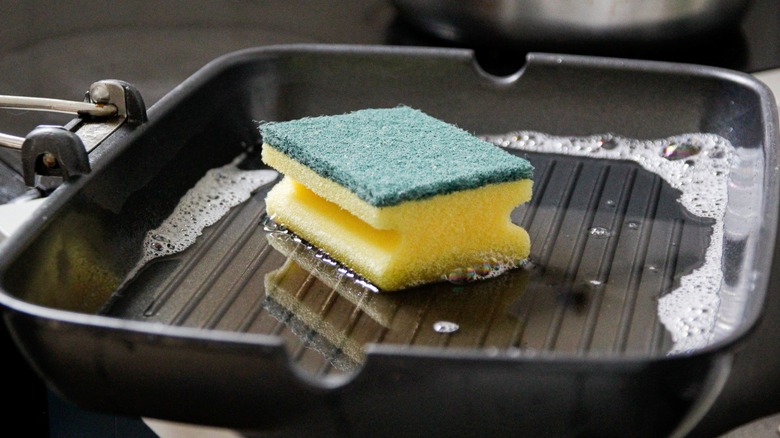
How does your kitchen sponge smell right now? Is it still bright yellow with a vibrant green scrubby side, or has it turned into one of those flat, balding, depressing-looking things that are perpetually soggy? One study published by Springer Nature showed that your kitchen sponge may have up to 54 billion bacteria per cubic centimeter. If your kitchen sponge is 231 cubic centimeters, it could be home to over 12 trillion bacteria right now. When your sponge becomes so dirty and full of bacteria that it's potentially dangerous, consider repurposing it by cutting off a corner. This helps you distinguish an everyday utility sponge from one used for dishes.
Store your clipped sponges away from the kitchen sink, separate from the sponge you use to wash dishes. That way you won't be tempted to grab it by accident, nor will anyone else. Your clipped sponge can be used for anything from scouring your tomato sauce recipe off the stovetop to cleaning up spills on the floor — basically anything that's not a food prep or eating surface.
In an ideal world, you would use a sponge once for whatever task and then throw it away. But that is horribly impractical environmentally and financially. You should be able to get at least a week's worth of use out of any sponge just doing dishes, but that doesn't have to be the end of it. After using your sponge for a week or so, just cut off one corner so you can tell at a glance that it's a week old.
The life of a sponge
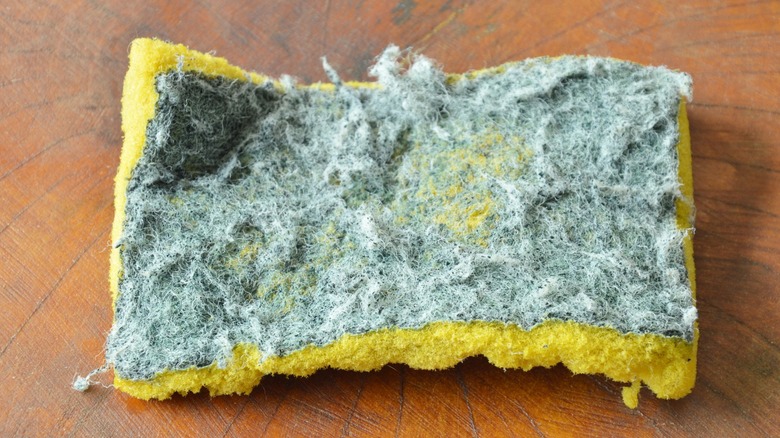
Some experts recommend replacing your kitchen sponge at least once per week. However, what's recommended and what actually happens are two different things. One survey from The Zebra showed that only 12% of Americans replace a kitchen sponge weekly. The majority, about 59%, hold on to that sponge for over a month. That final 29% evidently keep a single sponge for as long as five months. If you're thinking that your sponge might be okay because you sanitize it (and you should clean and sanitize your kitchen sponge), there's bad news on that front as well. Of all the ways to sanitize a sponge, microwaving it is the most effective, but it only removes about 60% of the bacteria. That's better than nothing, but it still leaves billions of bacteria behind it.
Microwaving or boiling your sponge is helpful, but you can also soak it in bleach water afterward. Let the sponge sit overnight in a bowl of diluted bleach water. Rinse it clean in the morning before use; this can extend its life and keep it more sanitary. If your sponge constantly looks dirty, feels slimy, or has an unpleasant odor, it's probably beyond saving. Toss that sponge and get a new one in circulation. Sanitize your sponge daily and snip the corner after a week. Follow these simple steps, and your sponge will stay safer and longer, and your kitchen a little cleaner.