

How Much Calcium Is In Tofu?
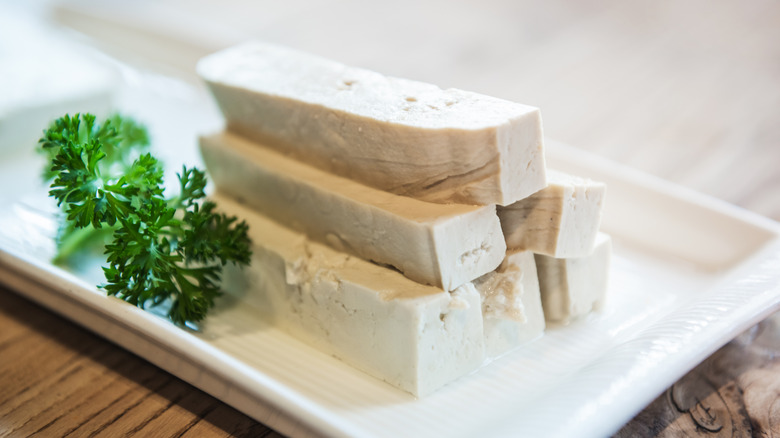
You've probably heard more than once in your life that you need to "drink more milk" so that you can grow "big and strong," which is really just to say that you should be consuming more of the nutrients in milk. Cow's milk contains important vitamins and minerals like B12, riboflavin, and calcium, which can indeed help a little human grow "big and strong" (thanks, mom!). For our lactose-intolerant friends, there's plant-based milk with just as much calcium as dairy milk, but if you're really looking to up that calcium intake, try turning to tofu instead.
Depending on the specific type and brand of tofu, those pale blobs can contain a whole lot of calcium — sometimes up to a whopping 434 milligrams per half cup, according to the Dietary Guidelines for Americans. Adult humans are recommended to consume between 1,000 and 1,200 milligrams of calcium per day, per the National Institutes of Health, so a half or full cup of tofu can put you well on your way to completing that goal. In comparison, one cup of cow's milk only contains about 300 milligrams of calcium, while similarly, one cup of cottage cheese (another popular source of calcium) only contains about 227 milligrams.
Tofu is chock-full of calcium and other beneficial nutrients
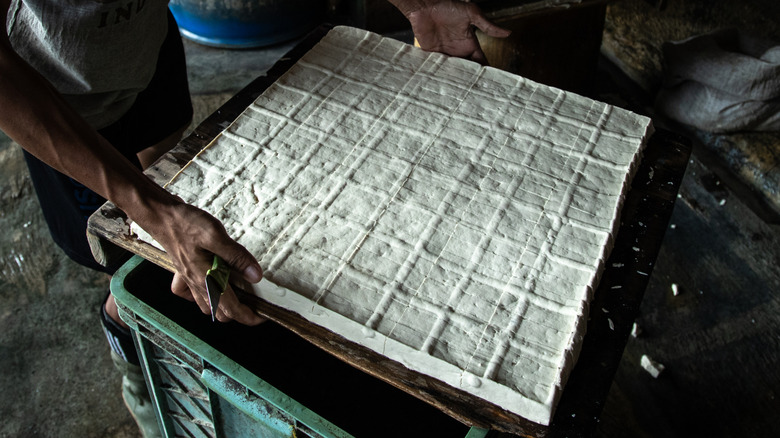
Making tofu is an ancient Chinese practice that dates back thousands of years and involves purposefully curdling soy milk. Soybeans are turned into milk, which is then mixed with a coagulant until firm and pressed into blocks (here's how to improve the texture of tofu in minutes, in case you need it). The type of coagulant used is what determines the calcium content of a block of tofu, as calcium sulfate (a calcium salt) will contain significantly more calcium than magnesium chloride (nigari) or even calcium chloride. These three coagulant types are the most commonly used ones when making firm tofu.
Tofu is not only rich in calcium, but brimming with other important nutrients as well. Protein, fiber, and iron are some of the most commonly associated benefits, but tofu also contains zinc, vitamin A, and important isoflavones. The neutral, often undetectable taste of tofu means that it will easily soak up any rubs or spices that it's mixed with, edible both cooked and uncooked, depending on your preference. While commonly used in stir-fries, soups, and on salads, there are plenty of other unconventional ways to use tofu that are worth checking out.