

The Fast-Food Pioneer That Served Millions But Couldn't Escape Bankruptcy — Twice
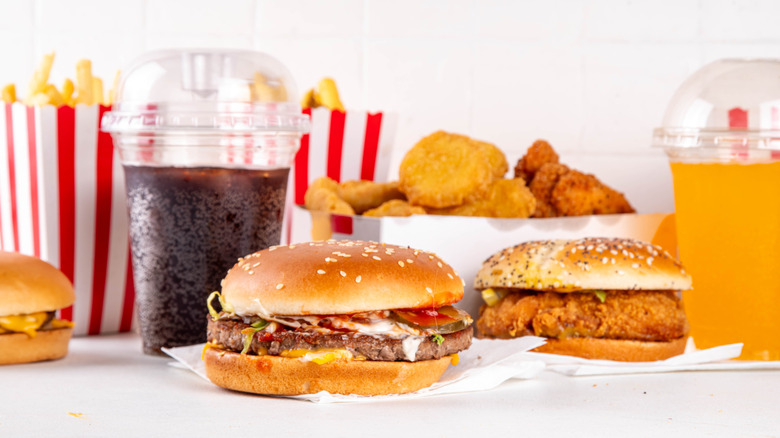
For several decades, spanning from Prohibition to the suburban exodus of the 1950s, Horn & Hardart's Automat was where millionaires and the less fortunate sat elbow to elbow at lacquered tables and dined on a three-course meal and a fantastic cup of joe for less than $1.50. With 180 locations, mostly in New York City, it had a varied menu of nearly 400 items — anyone could plunk a few nickels into the imposing wall of glass cubbyholes that dispensed piping hot meals in seconds. The food was cheap, but it was also astonishingly good, thanks to founders Joseph Horn and Frank Hardart, for whom quality control was gospel, and the diligent workers behind the glass wall, who constantly refilled the dispensers with freshly prepared food, as depicted in the Cary Grant–Doris Day film, "That Touch of Mink."
Despite the Automat's extraordinary success, Horn & Hardart filed for bankruptcy in 1972 and again nine years later. This led to the closure of all but one Automat until 1991, when it too was shut down. What went so tragically wrong for the Automats, which were known for good food, better coffee, and inclusivity? Several cultural factors are most likely to blame. By the 1950s and '60s, people were gravitating away from sit-down restaurant meals in favor of grabbing burgers and fries at fast-food drive-ins. Inflation drove up food costs, and Horn & Hardart could no longer afford to feed people for nickels and dimes.
The Automat couldn't keep up with the changing times
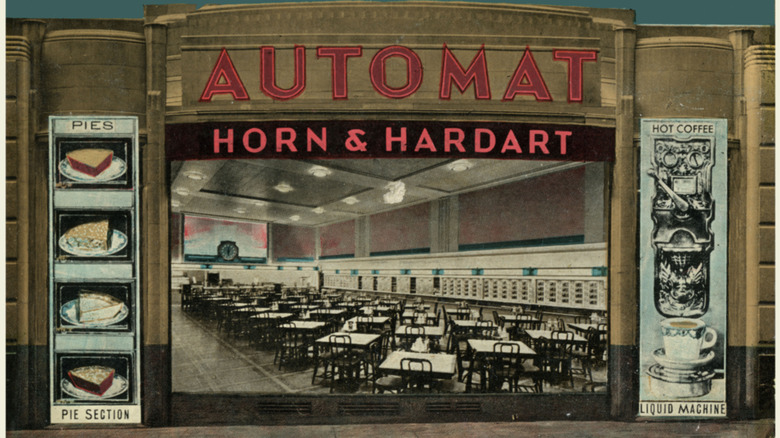
The Automat was so revered that it inspired Howard Schultz's vision for Starbucks and was the subject of a documentary, "The Automat." Horn & Hardart's Automats weren't just cafeterias but ornate dining palaces, replete with Italian silver dolphin-shaped spigots that dispensed millions of cups annually of freshly brewed French-style drip coffee. Frank Hardart personally created the Automat's coffee blend, mixing beans from Central and South America until he achieved what was called the best cup of coffee in the world. Sold for a nickel, Hardart's coffee served as the basis for opening their first lunchroom in Philadelphia around 1898. The founders opened their first Automat in 1902, also in Philadelphia, and 10 years later, they opened the historic Automat in Times Square.
The Automat really took off during the Great Depression, when anyone could afford its famous mac and cheese, chicken pot pie, and bottomless cups of always-hot coffee. With the cultural changes in America, however, Horn & Hardart kept losing millions of dollars, which resulted in two bankruptcies and reorganizations. The company couldn't keep up with its fast-food competitors, and Automats were shut down, sold off, or converted into Burger Kings. In 1972, Horn & Hardart was bought by Hanover House Industries, a retail catalog company, and after failed attempts to compete with other fast-food chains of the 1970s, Hanover House shut the last remaining Automat to focus solely on its catalog business. A truly sad end to an all-American icon.