

9 Frozen Meal With Some Of The Lowest Quality Ingredients
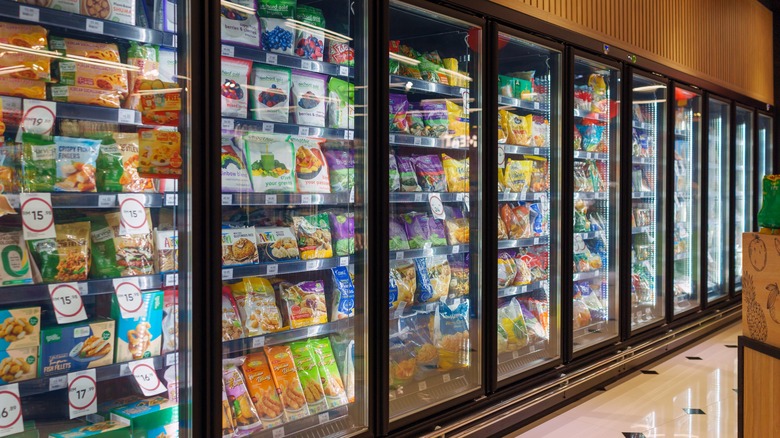
Frozen meals are a staple in North American pantries because they are inexpensive, convenient, and frankly, everywhere. But beneath the brand names and comfort food looks is a harsh reality: many frozen meals consist of low-quality ingredients that have nothing to do with the homemade fare their packaging claims to mimic. Instead of intact cuts of meat, minimally processed grains, and fresh milk, these products employ fillers, stabilizers, imitation cheeses, and meat extenders to cut costs and enhance shelf life.
These sacrifices are not simply about "unhealthy" ingredients like fat or sodium; they are a fundamental lowering of ingredient quality. For example, textured vegetable proteins are inexpensive to add bulk to meat foods but also alter texture and taste, and fake cheeses replace milk fat with vegetable oil and starch.
Here we'll highlight four of the most common frozen foods that are representative of these practices, all chosen because they use processed imitations rather than real, minimally processed whole foods. We especially focus on ingredients rather than calorie counts or health claims, as an understanding of what precisely goes into the food is the foundation of making smart choices. Unpacking these ingredients, we expose how foods marketed as satisfying meals or snack foods actually are complex assemblages of processed grain, starches altered chemically, preservatives, and colorants. Recognizing this is able to help consumers distinguish between food that merely looks filling and food that is built from better-quality materials.
Marie Callender's Salisbury Steak
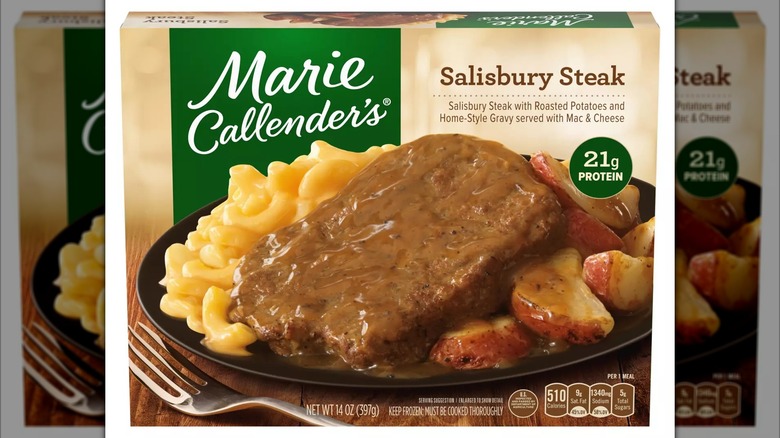
This Salisbury steak is a great example of how a frozen meal sometimes relies on low-cost, industrially processed fillers and extenders rather than on whole, quality ingredients. The steak patty consists of beef and pork, but not far behind them are textured soy protein concentrate and soy protein concentrate. These ingredients — which do have some inherent nutritious — function to inexpensively add bulk to the product rather than to add the flavor or texture of meat. These soy proteins are isolates, broken down to protein, and often incomplete in most nutrients you'd find in whole meat cuts. Caramel color, which is strictly cosmetic, not nutritive, is also added to the product so you're not staring at a grey slab of meat for dinner.
The mashed/mac & cheese part is made of enriched macaroni product, maltodextrin, and soybean oil, rather than whole grain pasta or natural cheeses; along with stabilizers like xanthan gum and guar gum to maintain texture in a frozen product. The roasted red potatoes are preserved with preservatives like disodium dihydrogen pyrophosphate and contain dextrose, both of which are included to maintain color and improve texture, but not flavor.
The gravy here uses modified starch instead of simply relying on meat drippings. There is a long list of minor ingredients like flavorings, extracts, etc., many of which are industrially derived or synthetic. In sum, much of what you're eating is not recognizable as whole food but engineered substitutes to mimic meat, cheese, sauce, and texture.
Totino's Combination Party Pizza
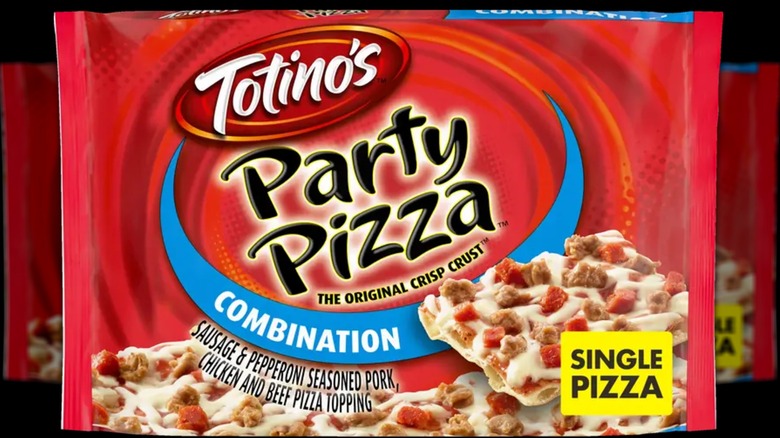
Totino's Combination Party Pizza piles a number of low-grade components on top of one another. The crust contains enriched flour, a manufactured grain which has been reduced of bran and germ and only enriched with vitamins and iron. It is topped with imitation mozzarella cheese, a blend of vegetable oils, modified starch, gelatin, and whey, without the milk fat content and fermentation profile of true mozzarella. The meat toppings are made from mechanically separated chicken, textured vegetable protein and soy protein concentrate, all of which are lower-cost bulking agents instead of whole muscle meat.
Preservatives such as TBHQ and potassium sorbate add shelf life, with sodium phosphates retaining moisture and altering texture. Pepperoni is also a blend of pork, beef, and other mechanically separated chicken and nitrites to cure. Appearance adjusters such as titanium dioxide and caramel color alter appearance. Dough conditioners such as L-cysteine hydrochloride improve machinability in large quantities but have no cooking role for home cooks.
Although the package promises a party-style pizza, the contents are a cost-cutting maze of fine-grained starches, oil-based cheese substitutes, and highly processed "meat." Every major component, like crust, cheese, and meats, is premised on replacements that cut costs but sacrifice the taste and quality of the final product.
Hot Pockets' Ham & Cheddar Croissant Crust
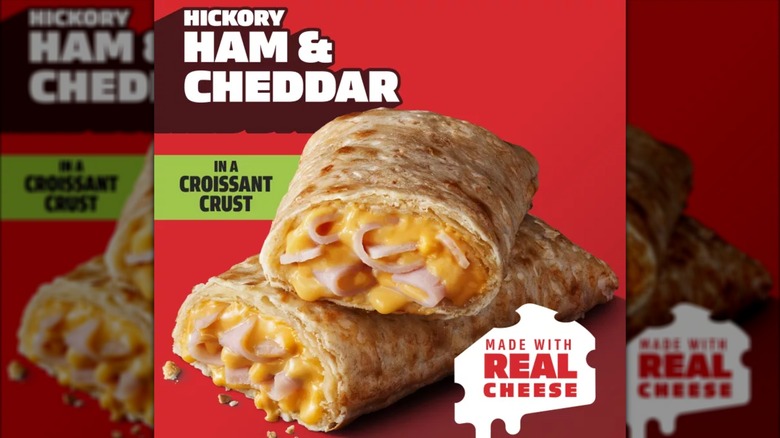
Hot Pockets' Ham & Cheddar Croissant Crust showcases the degree to which a sandwich can be engineered. The crust is composed of enriched flour blended with vegetable oils, sugar, and dough conditioners instead of plain flour, butter, and yeast. The ham is a "fully cooked ham and water product with added ingredients," i.e., restructured meat that has brines, phosphates, and starches to simulate "whole ham."
Filling cheese uses reduced-fat cheddar with modified food starch, emulsifiers, coloring, and flavoring to produce a pasteurized process cheese rather than actual cheddar. Butter is replaced by margarine and palm or soybean oils to cut costs, but sacrifice taste and quality. Pastry "conditioners" like L-cysteine hydrochloride, once again, help the pastry withstand freezing and mass production (believe it or not, these meals often need to be made "fridge stable").
Other fillers include maltodextrin, sugar, and processed starches, preservatives and stabilizers with a focus more on shelf life than taste. The lengthy list speaks to a food engineered for distributional efficacy and cost, as opposed to objective flavor. Even though it's marketed as a croissant sandwich, the product consists not of the butter-rich laminated pastry and rustic cheese/ham filling of a real croissant, but rather an imitation, a replica by industrial means. This focus on lower-grade ingredients is at the expense of both nutrition and authentic flavor.
Stouffer's Macaroni & Cheese
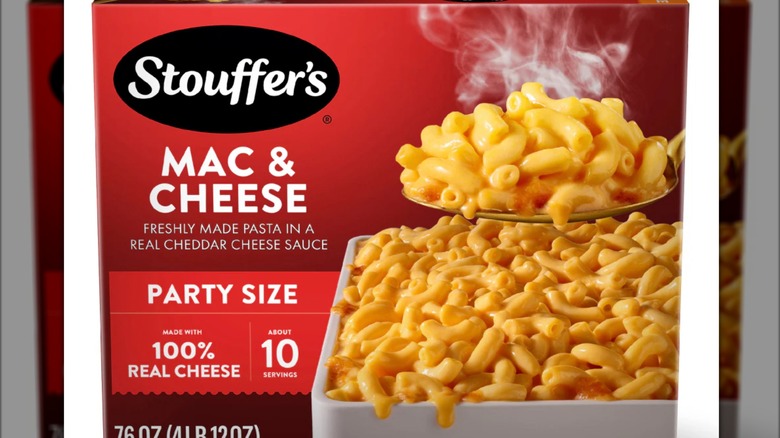
This one only appears to be a comfort food classic, but it actually relies on factory ingredients to make a uniform, predictable frozen food. The family-sized frozen pasta is not whole-grain wheat flour but bleached wheat flour. The cheese sauce is derived from a "cheddar club cheese" blend — processed cheeses to which water, emulsifiers, and stabilizers have been added — and not aged cheddar. A stabilizer like xanthan gum, while not inherently poor, is needed to ensure the sauce texture doesn't break upon freezing and reheating.
Plant oils like soybean oil replace some dairy fat, lower the costs but don't change the texture. Annatto colorants produce the expected orange color without employing good-quality cheese. Salt and preservatives add shelf life, but as a combination, they create a product far from homemade mac and cheese. Nearly every basic ingredient — pasta, cheese, sauce — uses a lower-end substitute or factory additive, displaying how an old-time dish is remade for cost reduction over ingredient quality.
Stouffer's Cheesy Chicken Bacon Ranch Bowl
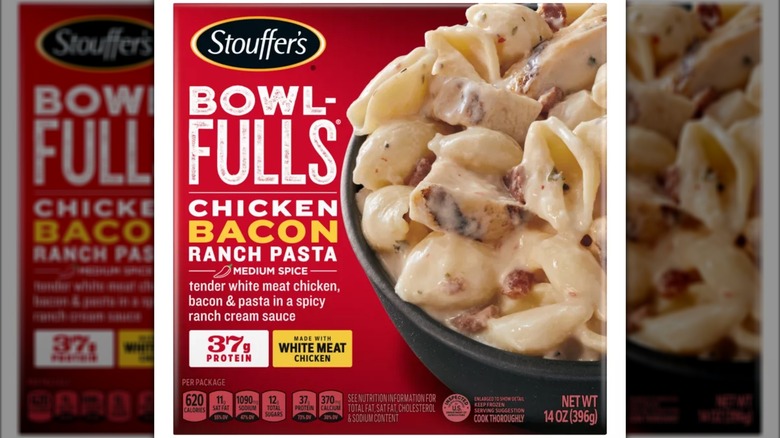
You would think that Stouffer's Cheesy Chicken Bacon Ranch Bowl would be as simple as a chicken, bacon, and sauce mixture. You'd be mistaken, because it also includes many engineered additives, extenders, and lower-quality ingredients. The product contains cooked white meat chicken, but immediately qualifies it: "white meat chicken, water, isolated soy protein, modified food starch ... sodium phosphate, maltodextrin, salt." These are used as fillers or binding agents, rather than chicken muscle itself.
The sauce is cream cheese and cheddar, but the cheese blends are supplemented with gums (carob bean gum), stabilizers, and colorants (annatto) to maintain appearance and texture following freezing rather than relying on natural cheesiness. The bacon is cured with water, salt, sugar, sodium phosphate, erythorbate, and nitrite, basically all low-cost curing agents used for preservation, color protection, and flavor masking. In addition to this, "2% or less of soybean oil, modified food starch, natural flavor, etc." appear as ingredients in the bacon well.
Such "minor" ingredients frequently are hugely effective in processing cost savings but never affect real ingredient quality. Typically, even the dairy (skim milk, buttermilk powder, sour cream) gets supplemented with additives and stabilizers. The heavy reliance on isolated soy protein, phosphates, gums, stabilizers, seasonings labeled only as "natural flavor," and refined starch leads to most of the bowl being processed. This dinner shows how frozen dinners can hide a lot of poor-quality ingredients behind the disguise of comfort food.
Any'tizers Boneless Chicken Bites Honey BBQ Flavor
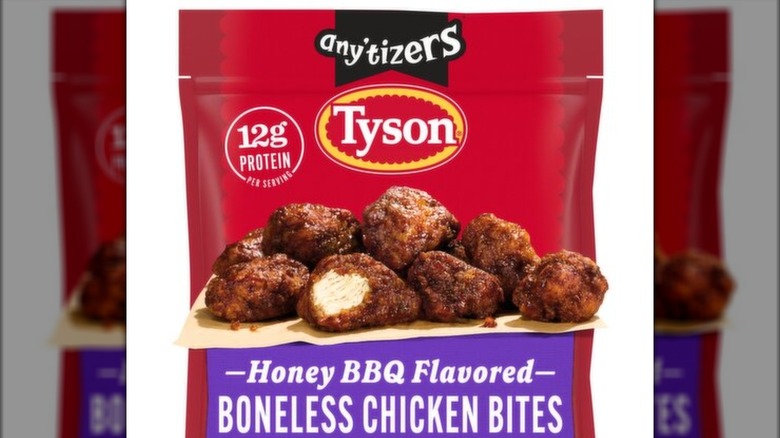
The Any'tizers Boneless Chicken Bites Honey BBQ Flavor looks good, but as with the rest of this list, its ingredient deck shows lots of low-end and cost-saving materials instead of a pure chicken product. The initial ingredient is "white meat chicken," but this comes after water, which dilutes meat content. Wheat flour (refined) is used in breading, and lots of sweeteners: brown sugar, honey, sugar, corn syrup solids. These are used more for surface glaze and flavor cover-up than for quality of ingredients or nutritional value. There is wheat gluten and modified food starch (and modified corn starch) in small percentages at "2% or less" additives, which will provide texture but no significant content.
Leavening agents (sodium acid pyrophosphate, sodium bicarbonate) included in the breading is another sign of over-processing, not traditional breaded chicken. The glaze/sauce includes a range of flavorings and enhancers: natural flavor, smoke flavor, smoked paprika, paprika extractives, vinegar etc., as well as polysorbate 80 (emulsifier), xanthan gum (thickener), and sweetener sucralose. They are included for economy, sweetness, sheen, shelf life, or 'mouthfeel,' but not for ingredient integrity.
The breading floats around in vegetable oil, and you have microscopic ingredients like mustard, corn syrup solids, etc. All of which results in the product giving up meat, in addition to low processing for batches of hyper processed stuff. The end result overall is that while there is "white meat chicken," much of what you ingest and taste is conditioned by engineered replacements, thickeners, sweeteners, and cost-cutting fillers rather than the quality cuts of chicken cutlets would've provided.
Tombstone Original Pepperoni Pizza
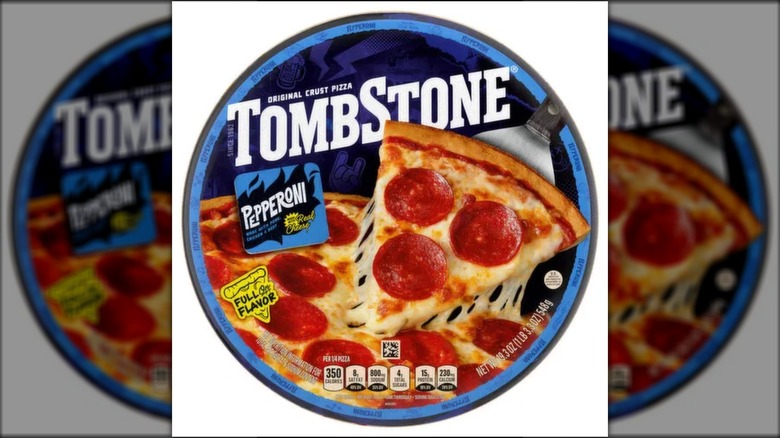
Tombstone makes good use of low-grade ingredient shortcuts rather than employing high-grade, whole ingredients. The frozen pizza crust is made up of enriched wheat flour — and you'd know the drill by now, processed wheat with significant amounts of the natural bran and germ removed and then enriched with refined, man-made vitamins. There is mixed cheese content: there is low-moisture part-skim mozzarella, which is by its nature lower in fat and flimsier in bite than full-fat mozzarella, and an imitation mozzarella cheese that includes water, palm oil, modified food starch, and other ingredients.
The pepperoni is not all beef and pork, but mechanically deboned chicken (a low-cost poultry waste product), dextrose, pork stock, flavorings, preservatives such as sodium nitrite, sodium ascorbate, BHA, BHT, and natural smoke flavor. The product also uses vegetable oils (soybean or corn oil) rather than purely dairy fat or olive oil. Sugar, seasoning blends, yeast, and L-cysteine hydrochloride (the dough conditioner) are other components utilized.
This means that the pizza is put together from a number of engineered or processed components: bleached flour, fake cheese, engineered meat with preservatives and fillers, and chemical colorings or texture enhancers. These detract from the overall quality of components and render the product less like a natural pizza and more like an economy-optimized build.
Marie Callender's Steak and Roasted Potatoes
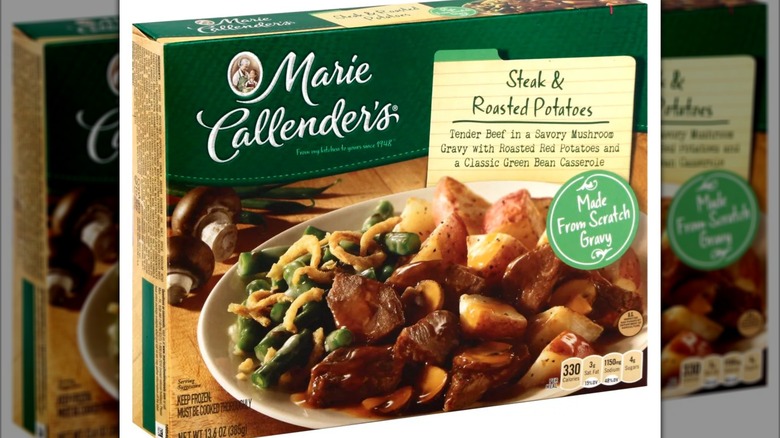
Another Marie Callender's product makes the list, this time the Stead and roasted potato. The red roasted potatoes include canola and/or soybean oil, salt, spice, and sodium acid pyrophosphate, a preservative/anti-discoloration additive. This is in contrast to what you'd expect to see — potatoes, oil, and spices. The mushroom gravy part is thickened with corn starch , and includes onions, water, but also added sugar and flavorings; the beef flavor contains yeast extract, maltodextrin, caramelized sugar syrup, and beef extract in place of pure beef stock.
The "seasoned cooked beef and binder product" is most telling: along with beef, it contains water, maltodextrin, dextrose, caramel color, modified corn starch, potassium phosphate, sodium phosphates, and a number of spice extractives. These add bulk to weight, improve texture, aid in moisture retention, or otherwise compensate for the inclusion of less whole meat. The green beans are buttered, but that butter includes cream, salt, and modified corn starch.
The entree similarly relies on "2% or less" categories that include flavorings, modified starches, dried whey, natural flavor, and other processed foods. These trace ingredients add up, which means adding stabilizers, texture modifiers, flavor precursors, and lower-cost substitutes. Even though "steak" is in the title, binder product and water dilute the real steak content; a number of powders, starches, and chemical additives are thrown into the mix to add weight. All in all, the most central ingredients (steak, potatoes, gravy) are composed of budget-friendly, shelf-stable ingredients.
Jimmy Dean Meat Lovers Stuffed Hash Browns
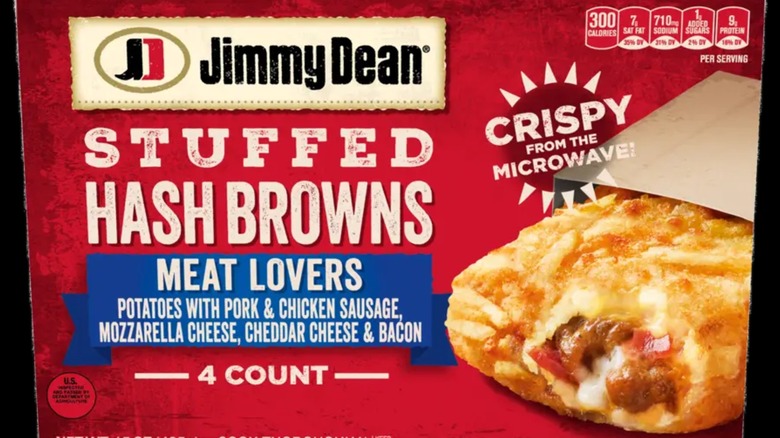
For these hashbrowns, potatoes are used for the outside covering, but the inside features fully cooked chicken and pork sausage crumbles. This includes water, mechanically processed chicken, and most definitely corn syrup or dextrose, rather than whole, unprocessed meat. The sausage crumbles have "contains 2% or less of ... sugar, salt, dehydrated pork stock, spices, natural flavor (with maltodextrin)" containing fillers and flavor enhancers but not meat.
The cheese ingredients are also mixed: low moisture mozzarella, cheddar/parmesan/romano cheeses, but spread with pasteurized processed cheese spread with whey, skim milk, cream, and additives like sodium phosphate plus xanthan gum, sorbic acid. These are cheaper, allow stability, and change texture and melting properties rather than giving straight-up aged cheese. The bacon and ham are cured, containing water, salt, sugar, sodium phosphate, sodium erythorbate, and sodium nitrite — preservatives that ensure color, prevent water from leaking out, and give longer shelf life at the cost of ingredient simplicity.
The breading contains bleached wheat flour, yellow corn flour, vegetable oils (palm or other low-cost oils), modified food starch, maltodextrin, and other "2% or less" minor ingredients that are fillers, thickeners, or flavor enhancers but not main sources of food. Additives are flavor enhancers, yeast extract, and natural flavors. The overall effect is that the product loses ingredient quality in favor of cost savings, shelf life, and ease of processing. What you're left with is an engineered Frankenstein of a relatively simple dish.