

Why So Many Iconic American Foods Trace Back To One Event
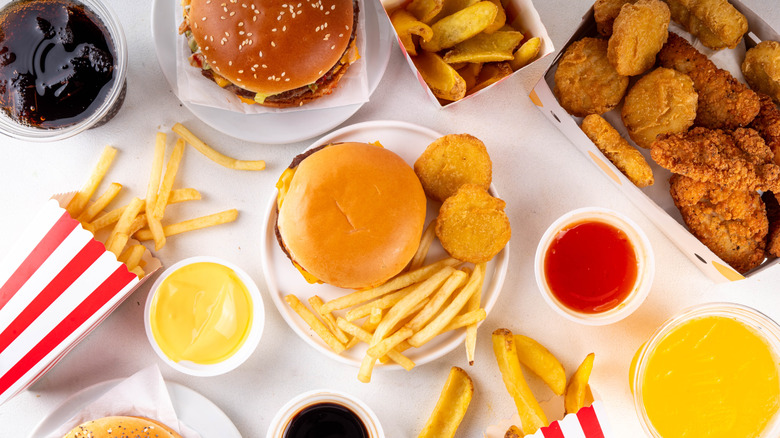
It's hard to imagine almost 20 million people streaming into an event spanning 1,200 acres more than 120 years ago. Yet, that's exactly what happened in 1904 when the St. Louis World's Fair flooded Forest Park with extraordinary displays of innovation, technology, and cultural ingenuity. But that's not all. This fair is credited with forever changing the face of American food. Officially called the Louisiana Purchase Exposition, this World's Fair essentially served as a giant food court, showcasing international fare from enterprising immigrants, as well as introducing many beloved culinary inventions to masses of people for the first time.
Most importantly, by some accounts, this event set the stage for what would become American fast food — at least in terms of hand-held, portable eating and loads of options not requiring sit-down restaurant prices. Some now-iconic foods debuted at the St. Louis World's Fair, while many others simply gained a much wider clientele. Millions of hungry fair attendees had the chance to taste things like cotton candy, Dr. Pepper, ice cream cones, peanut butter, Jell-O, and much more, likely for the first time. The 1904 World's Fair may have even led to iced tea's popularity.
More than 125 eateries doled out a world of American and fusion cuisine, representing at least 60 countries and the majority of U.S. states, creating a quintessential New World experience. From a backwards glance, the country's culinary perspective appeared forever enlightened and changed. Here's a closer look at how just a few American classic foods emerged from the fateful World's Fair in 1904.
American classics, thanks to St. Louis World's Fair
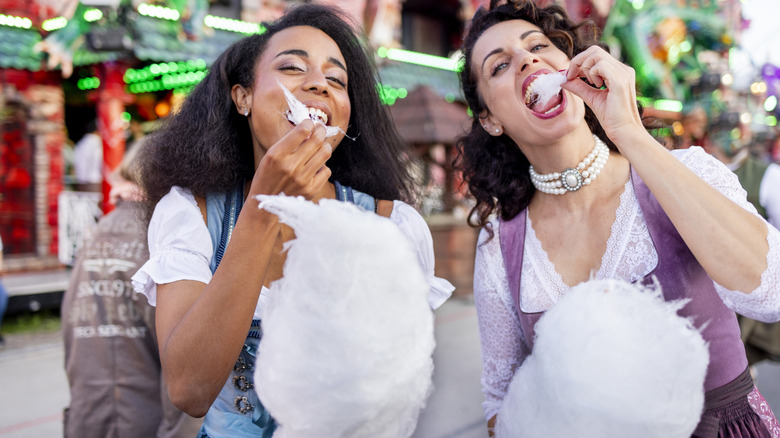
An old-fashioned fair without a cotton-candy vendor is unimaginable today. But that certainly wasn't the case at the St. Louis World's Fair, when the fluffy candy confection made its major American debut. Though actually invented seven years earlier — ironically, by a dentist and confectioner duo — it was a small-scale enterprise until they spun their sugar web across the World's Fair. Affectionately known then as "fairy floss," the overly fluffy cotton candy was whirled into threads and tucked inside wooden boxes. Selling for 25 cents, it was a big hit, with nearly 70,000 boxes sold, launching a fairgrounds ritual now spanning festivals, sports events, birthday parties, street carts, and more.
Much of the same goes for ice cream cones, which also got their spotlight moment at the St. Louis fair. Cones cradling cream had been around for a while, but if not for the fair, who knows whether they'd now occupy prime space in practically every U.S. ice cream parlor? Legend has it that a Syrian named Ernest Hamwi was selling zalabia, a waffle-like pastry, at the St. Louis World's Fair. In a neighboring concession stand, an ice cream vendor reportedly ran out of serving dishes, so Hamwi rolled a waffle into a cone shape — and voila! Ice-cream eating would never be the same again. Similar stories exist for Jell-O, which wiggled and jiggled its way to fandom with a gold medal at the fair. The history of peanut butter, likewise, only expanded after the fair, though it wasn't actually "invented" there.