

How To Peel Tomatoes Without Burning Your Hands (No Boiling Required)
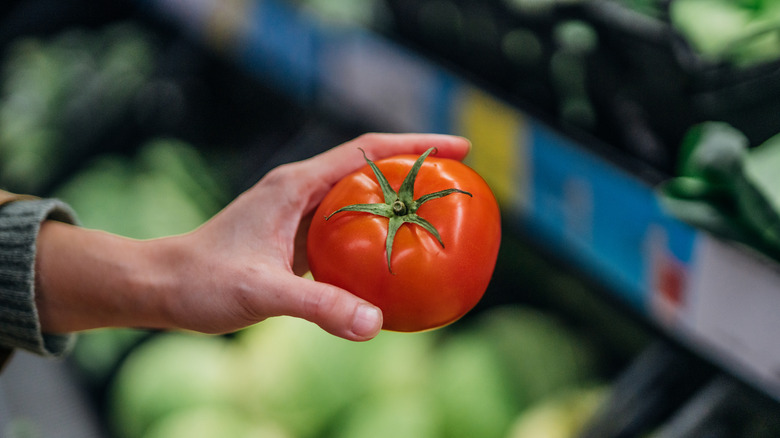
Whenever you've got a bumper crop of fresh tomatoes, chances are you'll either be making a big batch of quick marinara sauce or canning them for later. Either way, the first and most annoying step is peeling them. The traditional blanch-and-shock method often leaves you wrestling with stubborn bits of skin that refuse to budge. Plus, anyone who has handled tomatoes right after blanching them has probably burnt their fingers. That alone makes freezing your tomatoes instead of boiling them a game-changer.
Peeling your tomatoes can be as simple as placing them whole in the freezer and leaving them until they're fully frozen. Then, when you remove them from the freezer and allow them to thaw completely, the tomatoes will appear a bit wrinkled and their skins will slip off easily. Why does this happen? Freezing the tomatoes ruptures cells just beneath the skin so that, when the tomatoes come back to room temperature, pectic enzymes break down the binding between the skin and the flesh. This allows it the tomato skin to peel off easily — without any boiling required.
The tomato freezing technique dates back to the 1950s
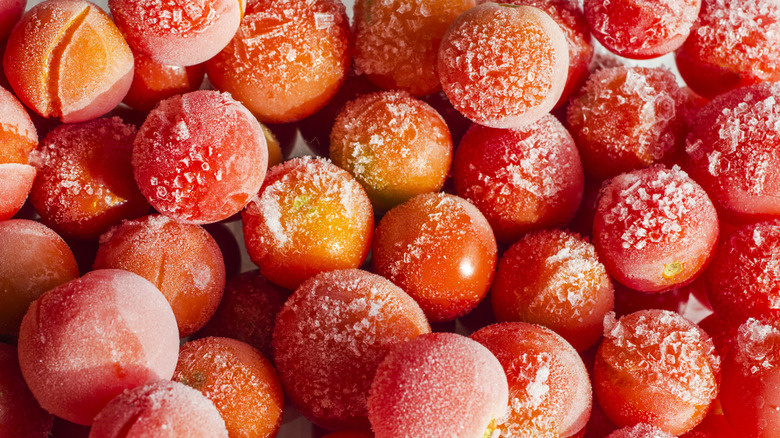
Delfino Cagnoni first patented a method to facilitate tomato peeling by employing a two-step freeze-heat process in 1957. Then, a couple of decades later, another group of researchers refined his idea in a 1976 study. Fast forward half a century, and the tomato freezing hack has made its round across TikTok and Reddit, where home cooks praise it for its simplicity and efficiency. "We quit canning and put the tomatoes in the freezer. So much easier!!!!!" wrote one Reddit user. Another wrote that "you don't even have to peel and dice first, just freeze them whole ... When they start to thaw, they just slip right off." This should be handy for anyone with too many summer tomatoes on their hands, but there are some things you should know before you start cooking with them.
While freezing, peeling, and using these tomatoes works wonderfully for making sauces and gravies, they aren't ideal for every dish. For example, if your recipe calls for roasting tomatoes, it's best to use fresh ones. Once frozen, thawed, and peeled, the tomatoes become more watery and lose the firm texture needed for roasting. Similarly, for adding freshness to a salad or sandwich, or making a no-cook tomato tasting board, we strongly recommend sticking with fresh tomatoes over frozen.