

Why You Should Never Store Bananas And Pears In The Same Fruit Bowl
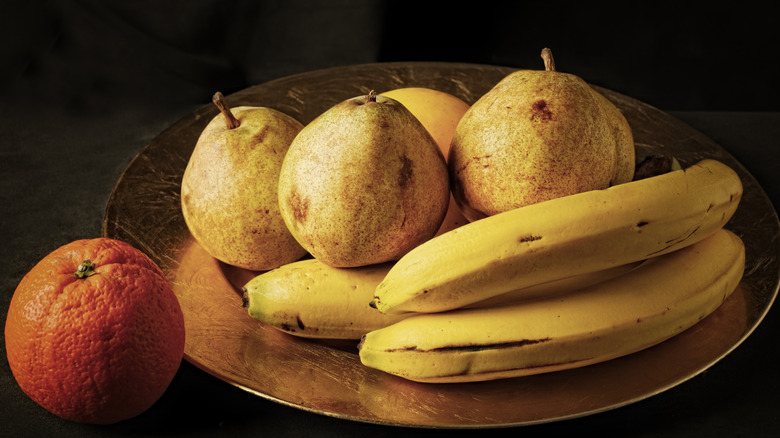
Most of us toss fruit into the same bowl without a second thought, but bananas and pears make for terrible fruit bowl fellows. The culprit is ethylene gas, a gaseous plant hormone that drives ripening. Bananas are prolific ethylene producers, which is why slipping one into a paper bag with unripe peaches or avocados speeds the process along. Pears also emit plenty of ethylene, but unlike many fruits, they're unusually sensitive to it. When both sit together, the effect compounds, sending each fruit from firm to overripe in a hurry.
Ethylene acts like a molecular switch. It tells fruit to convert starches into sugars and directs enzymes to soften pectin in the cell walls, which explains that familiar transformation from crunchy to yielding. It also influences color change by breaking down green chlorophyll, which is why bananas turn yellow so predictably. For pears, though, this accelerated timeline can backfire. They ripen from the core outward, so the inside often turns mealy or mushy before the skin shows obvious warning signs. What feels like a just-soft pear near the stem may already be collapsing at the center.
Bananas and pears aren't the only bad pairing to watch. Apples, kiwis, and avocados are also ethylene generators, while strawberries, broccoli, and leafy greens are highly sensitive. A single overripe piece can trigger a chain reaction, which is why the saying "one bad apple spoils the bunch" is real science. Ethylene is sometimes called the "aging hormone" of plants, because it not only coordinates ripening but also signals flowers to drop petals and trees to shed leaves in autumn. It's powerful chemistry packed into one invisible gas, and it makes the fruit bowl a surprisingly high-stakes environment.
Fruit bowl boundaries
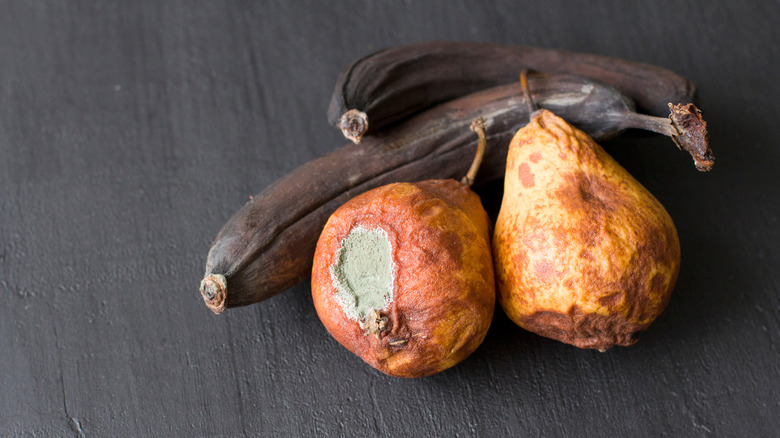
The good news is that with a little planning, you can keep both fruits at their best. If you've brought home firm pears or green bananas, storing them together for a day or two can actually be useful, precisely because their shared ethylene helps nudge them toward ripeness. But once they've reached peak sweetness, separation is key. Leave pears at room temperature until they yield slightly to pressure near the stem, then move them to the fridge to slow down further ripening. Cold storage doesn't stop ethylene, but it does slow it, stretching the window of good eating by several days. Bananas, on the other hand, don't love the cold. Their skins blacken quickly in the fridge, though the fruit inside stays firm. This is fine if you're planning smoothies or brown butter banana bread, but less appealing for fresh eating.
Commercial growers actually use this science on an industrial scale. Pears are harvested rock-hard, then chilled for weeks before being shipped. This "conditioning" step primes them to ripen evenly once exposed to ethylene again. Bananas are picked green and later placed in ripening rooms, where controlled doses of gas ensure they reach stores perfectly yellow. At home, you can mimic these tricks in small ways. Slip fruit into a paper bag with a banana if you need it ripe tomorrow, and the confined ethylene speeds things along. Just don't forget about it, since the line between ripe and spoiled is narrow in such a closed environment. It's also smart to think about what else you put together in the bowl. Keep cucumbers, leafy greens, and berries far from ethylene generators like bananas, pears, or apples. A little separation goes a long way toward keeping each fruit on its own natural, optimal timeline.