

The Important Relationship Between Salt And Heat That All Cooks Should Know
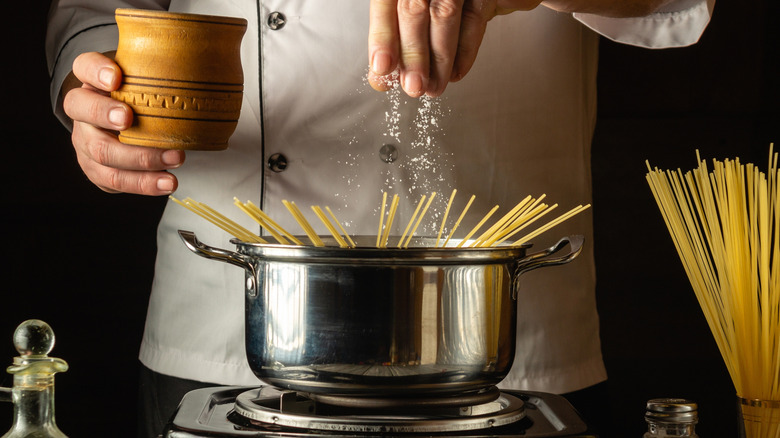
If you've ever found yourself making roast veggies for dinner and wondering exactly when to add the salt to the recipe, we've been there countless times too. Luckily, there's some scientific evidence about the relationship between salt and heat that all home cooks should know and live by. Specifically, it's usually best to salt your food — from soups and stews to French fries — while you're cooking, since heat allows for the best absorption and distribution of the spice. This will produce optimal flavor.
Due to the energy of thermal heat exchange in cooking, salt absorbs more readily in heat than in cold conditions. Take, for instance, salting a pot of water before boiling pasta or Yukon Gold potatoes. While salt does slightly increase the boiling point of water, adding it to the pot is largely meant to impart crucial flavor to the food as it cooks. Salting foods like potatoes while they're hot (via methods like roasting or boiling) gives the spice ample time to break through the skin and other fibrous cell membranes of the vegetable, so all the taste and flavor attributes can be fully absorbed.
On the other hand, if you salt vegetables, meat, or noodles after cooking them thoroughly, the spice is likely to mostly stay on the exterior of the food while the food cools down rapidly. The difference is a more immediate punch to your taste receptors, as opposed to a balanced saltiness that adding salt while cooking with heat can bring.
For best results, combine salt with heat
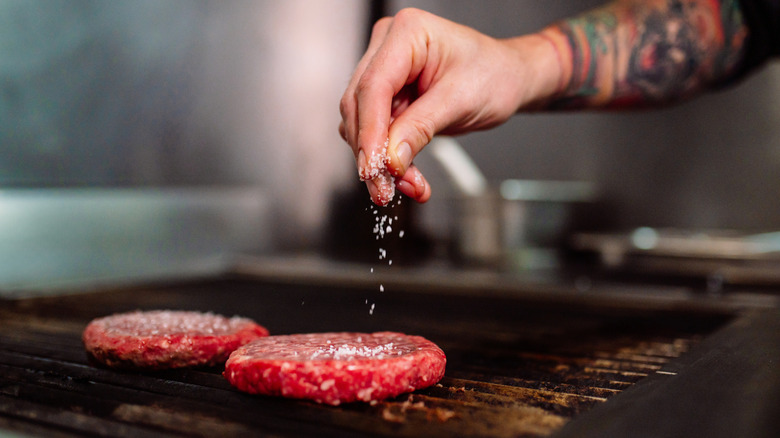
In her cookbook and Netflix special, "Salt, Fat, Acid, Heat," chef Samin Nosrat emphasizes the importance of salt in a recipe to enhance and draw out flavor, as well as heat to transform the texture and taste of a dish. How to season different sauces and other foods depends on the recipe at hand. But generally, adding salt at the beginning will help it to dissolve and release its flavor, especially under the heat generated in cooking. Plus, salt's high-heat absorption properties are what make it so useful in cooking methods like brining meat so it doesn't dry out when roasting or grilling.
If you do add salt towards the end of cooking, it's likely that your food will turn out more noticeably salty (like the sea) instead of well-balanced, subtle, and complex. That's because the salt hasn't had time to absorb fully (or perhaps even dissolve) into the food and mesh with all the other spices, fats, and flavors like spicy heat or sweetness. If you forget about the role of salt and heat, though, no worries. When adding salt to cold or warm foods, just add it in smaller additions to prevent over-salting from overwhelming your palate. When in doubt, you can always use Ina Garten's batch salting method, adding salt to taste to a small portion of the recipe before adding salt into the whole pot.