

How To Organize Your Fridge For Fresher Produce
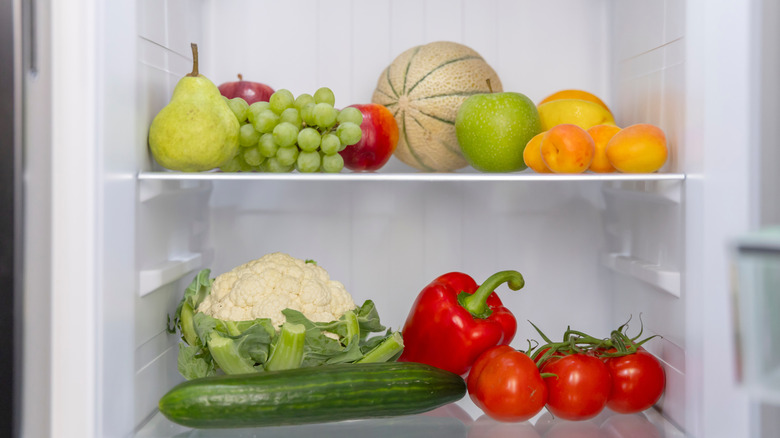
Stocking up on fresh produce is a win-win, keeping your meals for the week both healthy and delicious. But if you've been burned one too many times by produce that goes bad before you get to use it, you might feel discouraged. Fear not: There are plenty of ways to keep produce fresher longer, and one promises to truly flip the script. It's all in how you organize your refrigerator. Your fridge has different spots that are warmer and cooler, and different fruits and vegetables have varying needs. Forgetting this is one of the most common mistakes we make when organizing our refrigerators.
The first thing to know is where your produce will thrive. Some items fare best at room temperature, like winter squashes, potatoes, onions, and bananas; some like to be at room temperature while unripe and refrigerated when ripe, like mangoes. Those potatoes like cool, dark, high-humidity spots while onions prefer cool, dark, low-humidity conditions. Apples, pears, citrus, carrots, greens — these are all happiest in the fridge, but they may not play nicely together. Some produce emits more of the gas that ripens and eventually spoils produce, ethylene, than others. Enthusiastic ethylene-producers should be separated from produce especially sensitive to the gas. Melons, onions, bananas, apples, grapes, peaches, and tomatoes are major producers; broccoli, Brussels sprouts, cucumbers, and greens are sensitive. It's smart to devote separate crisper drawers to producers and non-sensitive items, like berries, versus sensitive produce.
Keep older produce visible and ready to use
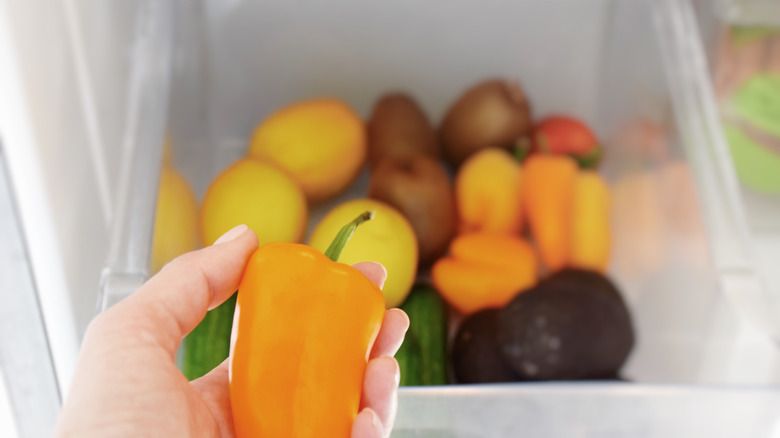
Crisper drawers are key when organizing your fridge to best store produce. They're nice and cold, and keep humidity under control. Your produce has room to breathe, but isn't entirely exposed and also doesn't get too much moisture, which can invite bacteria. Once you learn how individual fruits and vegetables are best stored — in what temperature, light level, moisture level, and in what kind of container or wrapping if any — it's time to arrange your refrigerator's contents accordingly.
When beginning this system, it's a good time to clean your refrigerator, tossing any items that are bad and then scrubbing down the interior. Of the things you're keeping, place them where they'll get the temperatures they need. The door is the warmest spot, so put things here that are more stable, like beverages. The bottom shelf is the coldest, so is best for things like raw meat. Use those crispers for produce.
It's worth getting helpful refrigerator organization tools. A lazy Susan can help you see what you have in a snap — not being able to do so is how things like produce get forgotten and left to spoil. Organize your fridge and kitchen like a pro, placing older items to the front and newer to the back. Designate a spot for things about to go bad so you remember to use them first. And use clear containers to keep things tidy, labeled, and easy to grab.