

The Best Variety Of Peaches For Baking Pie
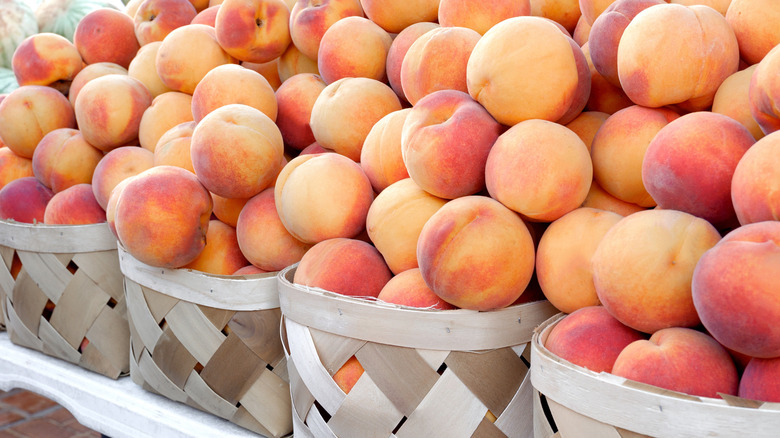
For many folks, fruit pies are the ultimate comfort food. They're sweet and belly-warming, with a soft mix of aromatic filling, flaky pastry, and nostalgia. Double all that when it's a freshly baked pie with just-plucked peaches and homemade crust. But here's the rub: Not just any peach will do. For ultimate peach pie, the kind made for generations in countless home kitchens, you want yellow freestone peaches, preferably from local orchards or backyard trees.
Most of us will be scooping up peaches from supermarkets — some of which have traveled long distances to grace our pies with goodness. Regardless of where purchased, it's important to know the core differences between the three categories of peaches — then specifically seek out the golden-yellow freestone beauties. Peach category names are pretty self-explanatory: clingstone, freestone, and semi-freestone. It all comes down to how easily the flesh separates from the inner stone. Compared to clingstone, the yellow freestone flesh practically slides away on its own when sliced in half. It needs little more than a nudge for super-easy pie prep.
Flavor and texture hold equal sway for creating homemade peach pies. When baked, yellow freestones provide a tender yet structured texture — soft enough for dreamy-creamy pie filling, but sufficiently firm to avoid a squishy mess. A lightly acidic flesh brings balanced tang to the inherent sweetness of the peaches, as well as to added sugars and spices. Freestone peaches go by many names, including Redhaven, Glohaven, Reliance, Sweet Scarlet, and Cresthaven.
Choosing the ripest yellow freestone peaches
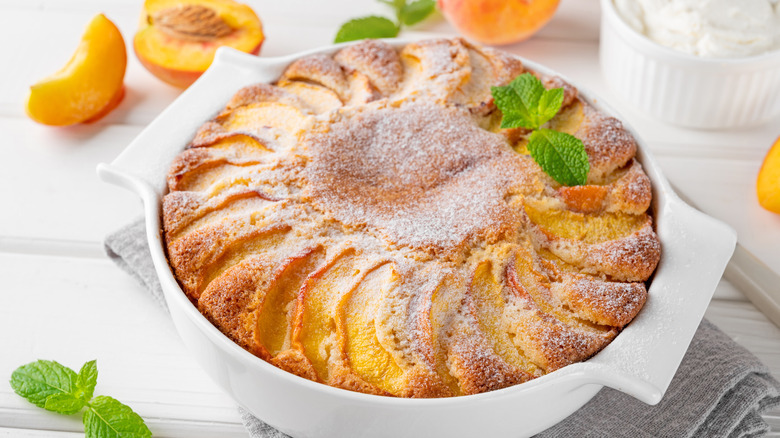
When it's time to bake that peach pie you're craving, it's important to invite the best fruits to the party. That means choosing yellow freestones at the peak of ripeness. You can generally identify the best pie peaches by coloration; They turn a deep yellow when ripe, and the flesh becomes more golden than mellow-yellow. They'll possess a uniformly round, plump appearance and noticeably sweet fragrance.
Ripe yellow peaches also bear a light indention or bruise when pressed — but no worries, as you'll ideally be turning them into warm, flaky pies within a day or so. Just make sure they're still structurally intact, not mushy. A lesser-known way of choosing the best peach is through visual inspection, and you're looking for one simple thing: a brown, rather than green, stem at the spot where it connects to the peach. Wrinkles around that same area can indicate it's pie-ready as well. In case you're wondering, these yellow freestones are also the best peach variety for homemade cobblers.
If you need to freeze seasonal peaches, do so when they're ripe, thus locking in the sweet-and-tart flavor, plus a texture as close as possible to fresh-picked. All said, there's certainly no shame in purchasing already frozen peaches from grocery stores. They're convenient and available year-round, plus they've potentially been frozen at peak times rather than degrading from long-distance travel and heat.