

Why Vintage Recipes From The 1950s Used So Much Gelatin
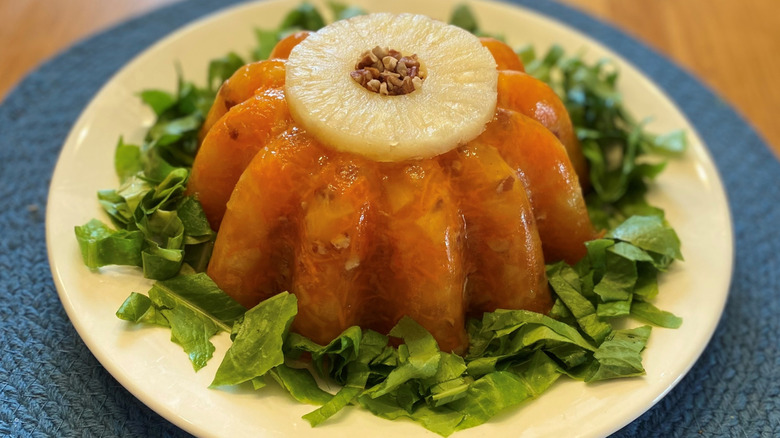
The 1950s gave us some truly bewildering gelatin-inspired culinary creations, from jellied hamburger loaves to 7-Up cheese aspic, and while it's easy to get smug about how far our food tastes have come, trends need to be understood within their social and historical context. For instance, the widespread appeal of these jiggly, jewel-toned dishes can be traced back to World War II.
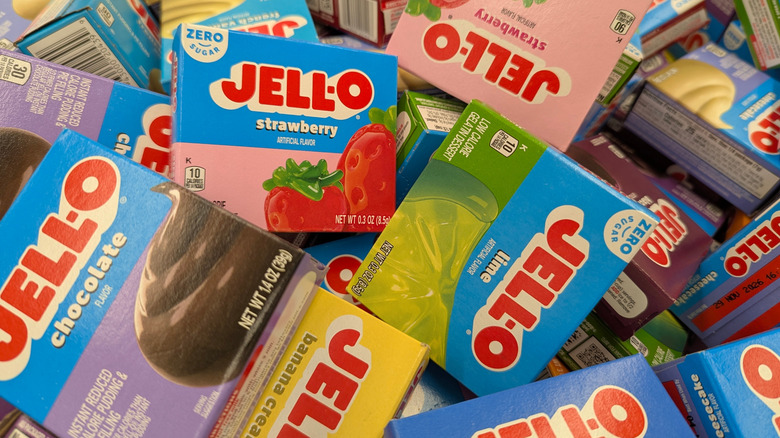
The earliest use of gelatin in food can be traced back to the 1400s. But mass production of the ingredient only ramped up during the Second World War, when its preservative properties helped extend food shelf life and sustain troops on the frontlines. After the war, the same food manufacturers pivoted to marketing these gelatin-based products, like Jell-O, to domestic consumers. Or working women, to be precise.
The war had seen a big shift in women's involvement in the workforce, with the percentage of working women going up from 14 million in 1940 to 19 million in 1945. According to the website History Matters, a majority of these women intended to stay on in their jobs after the war "to support themselves and others". Gelatin's creativity-meets-convenience pitch seemed to have struck a chord with these women, who needed quick, impressive dishes that looked elaborate but required minimal kitchen time.
How we got to Jell-O Salads
The idea of fruits, vegetables, and meats suspended in a gelatin mold might not seem creative today — but as we mentioned, context matters. In fact, 75 years from now, a puzzled food historian may well be asking why we topped coffee with flavored foam, or what made us believe so strongly that deconstructing food was the height of sophistication. Until the mid-19th century, jellied dishes themselves were very much considered elite food (primarily because of how long it took to render the collagen from animal bones). French chefs used aspic — clear, set meat stock — to encase fish, poultry, and vegetables in molded, chilled forms. These presentations highlighted the ingredients in a visually striking way. Even in America, the first popular Jell-O salad pre-dates the war. The Perfection Salad, invented in 1904, was a popular savory dish that combined shredded cabbage and bell peppers with vinegar and lime-flavored gelatin.
Jell-O saw its popularity peak from the 1950s through the 1960s, when the growing American middle class embraced both sweet and savory gelatin dishes. This was driven by a big marketing push that involved cookbooks, advertisements, and many unusual flavors, including Celery, Mixed Vegetable, Seasoned Tomato & Italian Salad in 1965. Many of these "weird" recipes from this period were less about the taste and more about the shock value, designed to showcase new processed foods in ways that were visually striking, which makes it sound like a lot of food TikToks that flood our timelines every day.