

How We Get Fresh Bananas Even In The Most Frigid Areas Of The Country All Year Long

Based on a 2023 survey by the USDA, bananas are America's favorite fresh fruit, yet none of the commercially available producers are located in the United States. While bananas can grow in warmer climates such as Florida and Georgia, they can't produce the volume required to sell. So, how is it possible to enjoy these nutritious, sweet, and versatile fruits all year long? There are several factors at play, including where they are grown, how they are handled during transportation, and the techniques used for ripening.
Dole, Chiquita, and Del Monte lead the way in banana production across Latin American countries, closely followed by the Philippines. But the farmers are the ones who select the firm and green fruit for picking. From here, the bunches are cleaned and inspected before being packed tightly into boxes to prevent bruising. To avoid ripening during their cross-ocean trip, the bananas are kept at temperatures that maintain a dormant, green state, around 57 degrees Fahrenheit, thanks to advanced cold transport systems. When they arrive, they're held at cold temperatures until distributors are ready to purchase and sell. Right before they depart for the grocery store, they are placed in a temperature-controlled area, where the temperature rises slightly every day to mimic natural ripening processes. Ethylene, a fruit-safe gas naturally produced by apples, is also used to speed up the ripening process. This allows for a variety of bananas in different ripeness stages, so you can purchase the exact type of bananas you prefer. Follow these simple tricks on how to pick the perfect fruit, every time.
What ripeness of banana is healthiest?
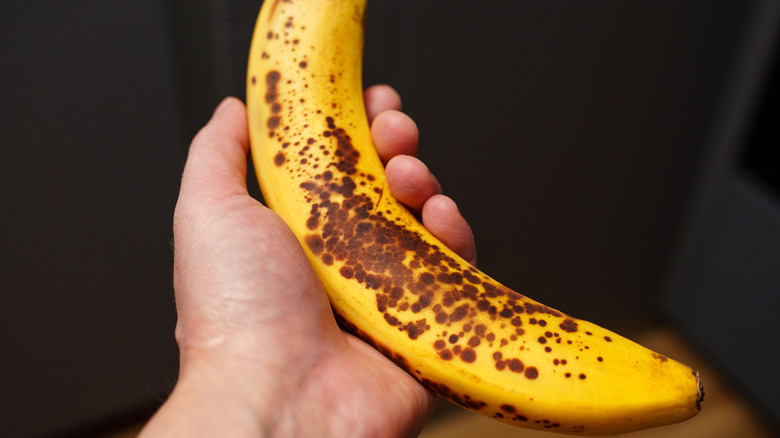
While there are over 1,000 different varieties of bananas, the most common and widely available are the sweet Cavendish, followed by the cooking banana, plantain. There are various ripeness scales, typically depicted by the characteristics of the peel, ranging from green and firm to yellow with brown spots. While bananas are generally considered healthy, containing nutrients like Vitamin B6, Vitamin C, and Potassium, with some nutritionists mentioning it's the perfect pre- and post-workout snack, the stages of ripeness can determine their use.
Green or unripe bananas contain the most resistant starch and are a higher source of fiber, as the main change during the ripening process is the breakdown of starch. This means that the carbs break down into sugar, which results in a sweeter, fruiter taste. So, if you're interested in baking the best banana bread or other delicious banana recipes, you likely want a ripe or yellow to brown banana. But, if you're looking to stay fuller longer or increase your fiber from fruit, an unripe banana might be the best choice. To find the perfect banana for you, be aware of how long ripe bananas will stay fresh on your countertop.