

The Subtle Difference Between Pork Butt And Shoulder You Should Know

Most Americans are probably only familiar with a few basic cuts of pork, but even then, naming conventions can be confusing. We know pork chops and loin, ham, and a few others, but not many people could tell you where they come from. Once you get into pork steaks and country-style ribs, you are probably totally lost. And one of the most confusing names seems deliberately misleading. Pork butt is not actually from the rear of the pig; that is where the ham is cut from. Instead, pork butt, also called Boston butt, is from the shoulder area of the pig. But then, of course, you'll ask, where is the shoulder from?
The confusion stems from how pigs and other animals, like cows, are broken down. There are larger cuts called primal cuts, which include entire sections of the animal, and then the primal cuts are broken down into the more specific cuts of pork you find at the grocery store. Pork shoulder is one of the four primal pork cuts, which also includes the belly, leg, and the loin. Pork butt is a subsection of pork shoulder, coming from the area at the top of the pig's front legs, behind the head. So pork butt is pork shoulder, but not all pork shoulder is pork butt. What's even more confusing is that the other subsection of the shoulder sometimes just gets called "pork shoulder," so the name is used as both a larger category and a smaller cut from that area.
Pork butt is a section of the larger pork shoulder area
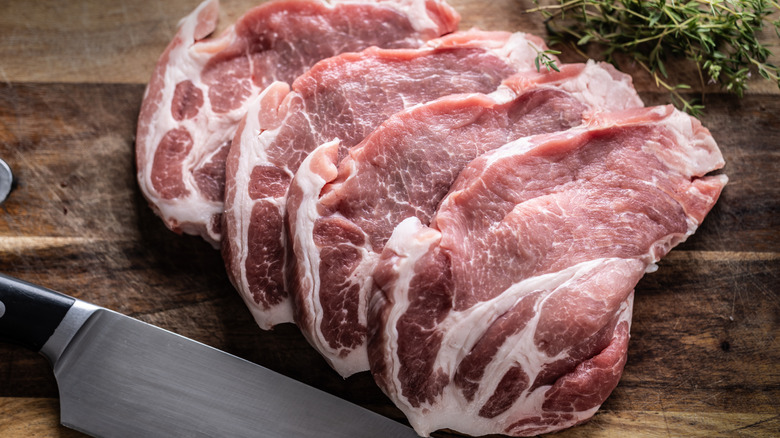
If you see a cut labeled "pork shoulder," it is from the narrower end of the shoulder area, closer to the bottom of the leg. This cut also gets called the "picnic shoulder," or (confusingly again) "picnic ham." Both cuts are very similar, as the larger shoulder area gets a lot of work, so they are each tough cuts with lots of sinew and connective tissue. The main difference is in fat content. Pork butt has a higher fat content with more marbling, while pork shoulder (or picnic shoulder) is leaner. From a butchering perspective, pork shoulder is also usually sold bone-in, while pork butt is deboned. Because of the difference in fat, pork butt is better for moist recipes like pulled pork, while pork shoulder is better used as a roast, but both should be cooked low and slow because of their toughness.
So why is pork butt called that? There are two explanations, neither definitive. The historical explanation is that pork butt came from the barrels they were packaged in during the colonial era in New England, which were called butts. This would also explain why they are sometimes called Boston butt. However, there is no definitive proof of this, and the other explanation is just the thickness, the same way the thick end of a rifle is called the butt. But either way, you are getting a part of the shoulder when you buy it.