

The Safety Reason For Why It's Important To Keep A Clean And Organized Fridge
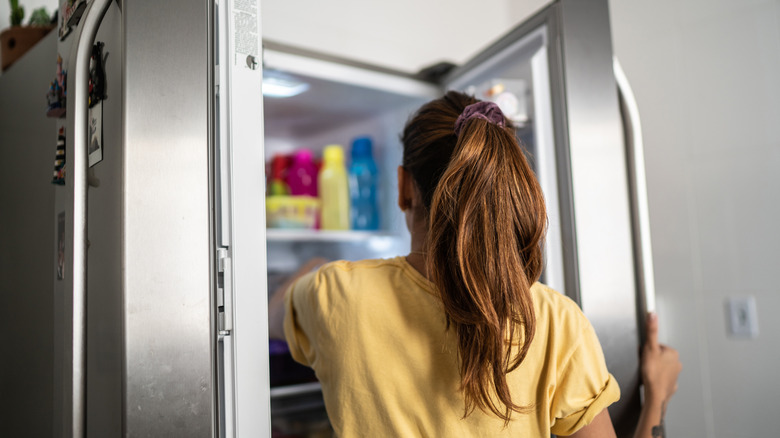
It's all too easy for our refrigerators to get out of control. It starts with a big grocery shopping trip, after which we end up stuffing every spare inch of the fridge's shelves. Then leftovers from dinners throughout the week join the party. Ditto that for the excess takeout from Friday night. Before you know it, it's time for another stock-up at the supermarket for some items, while others are still hanging out in the fridge. Suddenly, you can't find everything or easily see all your food and drinks, and you start forgetting what's where and for how long it's been there. This can cause stress around meal prep and it can waste money if you're buying things you already have or have things expiring before you use them, but it's also a major safety risk.
The reason is that, as the refrigerator gets cluttered and some things get forgotten and go bad, cross-contamination can happen. Crumbs and spills inevitably accumulate between items, and in those hidden spaces, bacteria flourish. Fridges are typically somewhat moist environments, which bacteria just love. Let the contents of your refrigerator go unchecked for a couple of weeks, and the bacteria between spoiling food and spills can multiply, mingle, and infect various items without you realizing. Plus, dust builds up without regular cleaning, too, which can negatively impact the air quality in your kitchen; and an over-filled fridge needs to work harder, is often less efficient, and can spike your energy bill.
How to organize your fridge to avoid cross-contamination
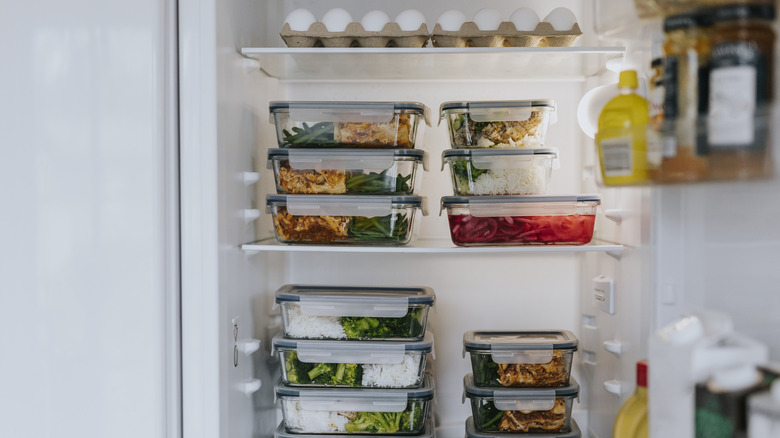
Keeping a clean, organized refrigerator helps prevent cross-contamination. It also helps you enjoy everything you buy while it's fresh. It may seem overwhelming, but with one big clean-out and a system for going forward, this can be a relatively quick and easy chore with a big pay-off. This is one of the most game-changing organization hacks that will make mealtime a snap.
Pick an afternoon and put on your favorite podcast or music. Remember the do's and don'ts of cleaning your refrigerator, and take every single item out, placing it in coolers. Scrub every shelf, door, drawer and crevice with soap or baking soda and vinegar mixtures. Then, go through your food, tossing anything expired. Understand the parts of your refrigerator and place items that need to be kept colder like meat and dairy in lower-temperature spots. If you organize your kitchen like a restaurant chef, you may know the "first in, first out" principle: Place newer things in the back and older things in the front to help you use everything before it expires. Use drawers for produce so you can control the humidity, and employ clear containers for prepped meals and leftovers so it's all easy to see — bonus points for labeling them with dates. Keep raw and cooked items apart and don't over-stuff shelves. With better tabs on what you have and what's expiring, and a scheduled monthly cleaning touch-up, you can count on safe, fresh food.