

Why Flour Is Packaged And Sold In A Paper Bag
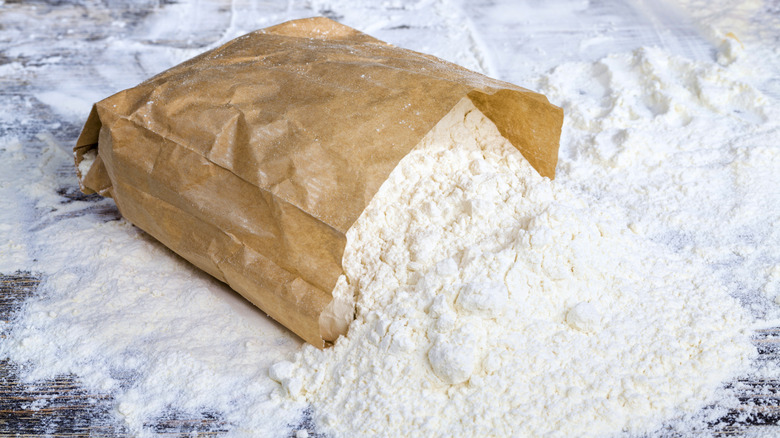
If you've ever bought a paper bag of flour from the store only to realize it was leaking, you might have wondered why it was packaged that way to begin with. Paper flour bags can be hard to keep closed and store without spilling, but they are an inexpensive method of packaging for flour companies. The bags are constructed from multiple layers of lightweight paper that allow air to circulate and prevent flour from clumping. Because air can get in and out of the bag easily, there is a lower risk of moisture staying trapped long enough to cause mold or rot.
The truth is that the flour was never meant to stay in the bags for long. Flour companies expect consumers to put the flour in a food storage container. Many home goods companies make ceramic and glass jars and canisters that are properly sealed to keep bugs and moisture out and prevent spillage.
Flour packaging has changed a lot throughout the decades. During the Great Depression, flour companies started packaging flour in cotton or muslin bags printed with colorful designs. When the bags were empty, women repurposed them into pillowcases, kitchen towels, and even dresses. Eventually, flour companies began printing instructions on the bag telling people how to reuse them. In the 1950s, these cute flour bags were replaced by the cheaper paper ones we know (and hate) today.
How to properly store flour
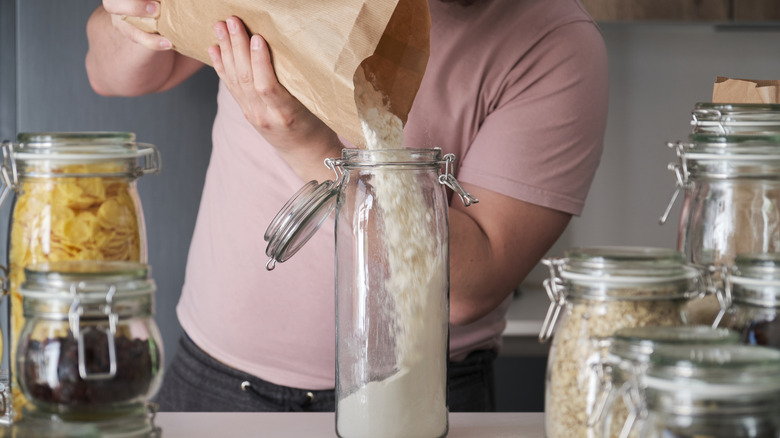
If you're ready to ditch the cumbersome flour bag but aren't sure how to store your flour, we're here to help. Flour should be stored in an airtight container that keeps moisture and kitchen pests out. We recommend looking for vintage storage jars at the thrift store or storing large amounts of flour in bulk food storage containers.
Keep your flour container in a cool, dark, and dry place like a kitchen cupboard or pantry. After transferring your flour to its new container, you should label it with the flour's expiration date. Remember that different types of flour have different shelf lives. You can also add a few bay leaves to your flour container to keep bugs away.
If you don't want to use a container, you can keep the flour in its bag and make sure you seal it with a clip after opening it. You can also put the paper bag of flour into a mylar bag or resealable plastic bag to protect it. Just make sure that whatever method you use, the flour is sealed tightly to keep moisture and bugs out.