

Keep Your Carbon Steel Knife From Deteriorating With One Consistent Food Prep Action

One of the biggest differences between carbon steel and stainless steel knives is that carbon steel blades are more susceptible to rust and corrosion. You can make sure your expensive, high-quality knife lasts as long as possible and remains sharper by taking care to protect it from moisture and acidic foods. As you chop, slice, and prep your meal, wipe the blade of your carbon steel knife on a clean towel or your apron between each action. This prevents prolonged exposure to citrus juices, tomato juice, and other acidic liquids that could damage the blade over time.
As your carbon steel knife ages, it will develop a layer of oxidation on its surface. This is called a patina, and it can act as a protective coating that reduces the risk of rusting and corrosion. Although carbon steel knives require more maintenance than stainless steel ones, their blades are more resistant to wear and tear and can hold a sharper edge for longer. This is why so many chefs prefer to have carbon steel pans and knives in their kitchen.
Here are some other tips for caring for your carbon steel knives.
Other tips for caring for and maintaining carbon steel knives
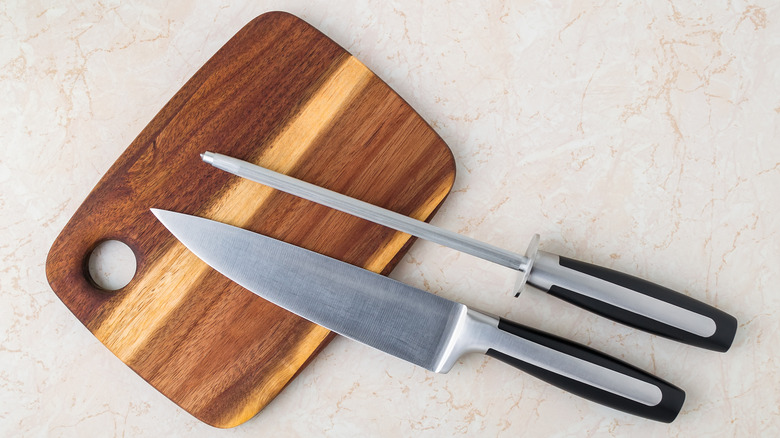
It's important to clean your knife diligently after every use. In addition to wiping the blade dry during food prep, you should also wash it by hand in warm, soapy water when you're done using it. Thoroughly dry the blade and handle with a soft cloth or towel, and apply a light coating of food-grade mineral oil. This protects the blade from moisture, rust, and corrosion. Never use cooking oil for this step, however, as it will become rancid as it ages.
When not in use, always store your knife in a dry place. Make sure it isn't stored somewhere that is at risk of water leaks or humidity, and don't stack it on top of other knives. You can use a wooden knife block. We just don't recommend using a magnetic knife strip. You should also make sure the knife is away from any sources of steam, oil, or other moisture, like your stove, dishwasher, or sanitizer.
When you know how to sharpen your knife properly, it will keep its sharp edge for a long time. You can use a knife sharpener or sharpening stone if you notice the blade getting dull, and a honing rod to re-center your knife. If you notice a patina developing on your knife blade over time, don't try to clean it off. However, if you notice rust, you can remove it with a rust eraser or a mildly abrasive scrubbing pad.