

The Old-School Kitchen Appliance We Don't See People Use Anymore
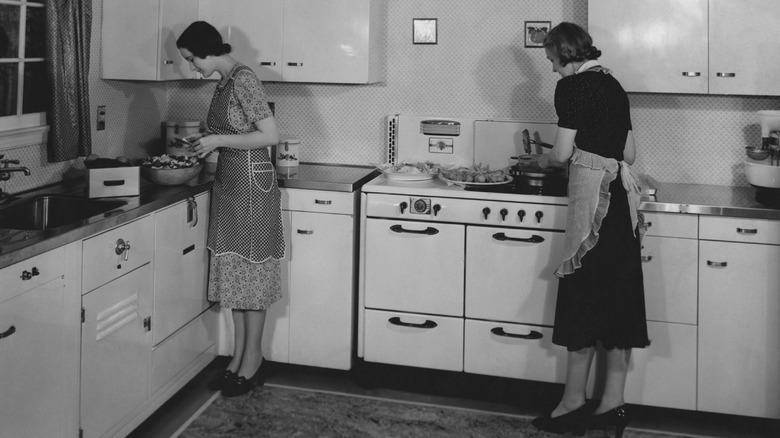
Long before home appliances involved stainless steel, touchscreens, compressors, and electricity, there was a decidedly different way to keep food cool — one that involved a clever designer, humble sheets of metal, and huge chunks of ice. It's a curious contraption appropriately named the icebox, an almost forgotten ancestor to modern-day refrigerators. This was no fly-by-night invention, rather a carefully crafted one that transformed eating and food storage across the globe in the mid-to-late 1800s.
What eventually morphed into household refrigeration got a meager start by a Maryland farmer and cabinetmaker named Thomas Moore. In 1802, he fashioned a tub out of cedar wood, then placed a tin metal box inside, surrounded by ice and covered with a lid. To keep it insulated, he used rabbit fur and cloth, dubbing his invention the refrigeratory. Moore patented it a year later, in 1803, and invited Thomas Jefferson himself to view and sketch what later became the everyday icebox in countless American homes.
Subsequent versions used insulating materials such as straw, cork, charcoal, mineral wool, sawdust, or even seaweed. A large block of ice perched in the top compartment, creating cold air to chill the food below. As it melted, the water collected in trays beneath the icebox. Local icemen constantly delivered ice replacements, toting in 25- to 50-pound blocks at a cost of roughly 15 cents each. Partially due to icebox popularity, the Tudor Ice Company is said to have shipped 150,000 tons of blocked ice around the world by 1856.
Sweet homage to the icebox
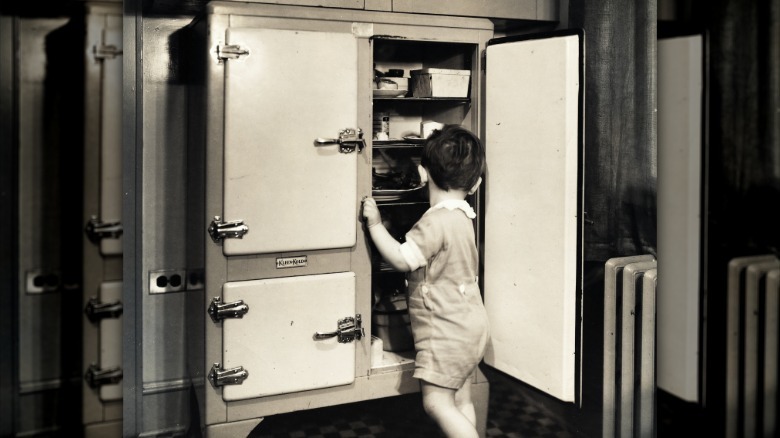
You may even have experienced a functioning version of the old school icebox, obviously not from living more than a century ago when iceboxes were a norm in American homes, but because the nostalgia of yesteryear keeps random iceboxes tucked into basements and sheds, brought to life on occasion for way-back-when intrigue. The icebox also lives vicariously today through a different medium.
Icebox is a term used now for a distinct dessert: The icebox pie. This no-bake pie is a remnant of the 1800s, getting its name from the iceboxes that kept them chilled. Icebox pies are embraced in Deep South food culture, typically made with creamy fillings such as sweetened condensed milk, cream cheese, pudding, or custard, spread over a graham cracker or crushed-cookie crust, and topped with whipped cream or meringue. They skip the oven and go directly into the refrigerator for firming.
My personal favorite is the lemon icebox pie, a classic diner dessert known for "who makes the best" competitions. My Mississippi family welcomes me home by lining up lemon icebox pies and having blind tastings to crown the new icebox king or queen — inevitably a local chef who churns out dozens of icebox box pies every week. Other icebox pie versions include peanut butter, key lime, millionaire, and black-bottom pies with Oreo pie crust. Though less common, there's also a version called icebox cakes.