

Butter Vs Oil: Ina Garten Has A Clear Stance When It Comes To Flavorful Sauteing

We may receive a commission on purchases made from links.
Cooking is a series of small decisions that you might not even be aware you're making. Adding salt but not black pepper, for example, or reaching for a bottle of oil before sauteing instead of a pat of butter. While butter has more flavor than oil, it can burn quickly at high temperatures, ruining your dish, so to be on the safe side, maybe you just use oil. But there may be a better solution.
When it comes to sauteing, Chef Ina Garten has clear advice for achieving perfect results without sacrificing flavor. According to her 2018 cookbook, "Cook Like a Pro: Recipes and Tips for Home Cooks," Garten refers to using butter and oil together as "the best of both worlds." Garten notes that the higher smoke point of oil allows for a crispy, golden crust, while butter imparts its delicious flavor into the food.
There's a science behind mixing butter and oil when cooking, and using them together creates a median smoke point between the two, lowering the oil's smoke point but allowing the butter to perform safely at higher heats. Highly refined oils like soybean, peanut, corn, and even refined olive oil all have smoke points of over 450 degrees Fahrenheit, making them ideal for high heat cooking and, therefore, ideal to combine with butter when sauteing. Butter is great for baking as it has a smoke point of about 350 degrees Fahrenheit, but once butter gets too hot, it begins to burn and become acrid, which will leach unpleasant flavors into your food.
Butter and oil are a winning combination
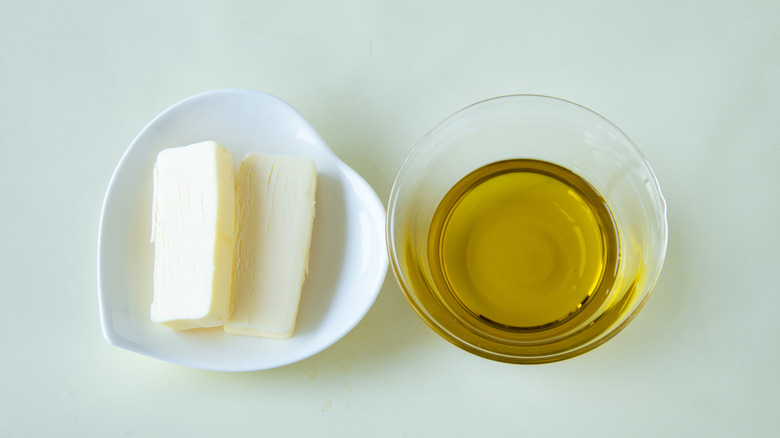
The combination of butter and oil is ideal for not only sauteing vegetables in a hot skillet, but also for making grilled cheese sandwiches, allowing you to achieve a perfectly golden crust on the bread while still letting the flavor of the butter shine. Clarified butter is another option to use for sauteing or making grilled cheese, as you get the best of both worlds — a high-heat cooking ability with the flavor of butter. Clarified butter has a smoke point on par with many high-heat appropriate cooking oils at 450 degrees Fahrenheit, but it is a process to make at home and can be a more expensive item to purchase at the store.
It's important to keep different types of oil in your kitchen for different applications, as some oils are better for using in raw applications, while others are better to cook with. Ina Garten loves a high-quality olive oil, but she's also aware that it's not ideal to use in high-heat cooking due to the delicate nature and precious flavors of an extra virgin olive oil, which is better suited for salad dressings or drizzling on finished dishes for an extra pop of flavor and richness. Similar to high quality olive oils, it's best to leave your fanciest, best quality butters for spreading on toast or using in baked goods instead of sauteing.