

The Curly Garnish That Ruled The '80s (And Then Fell Out Of Popularity)
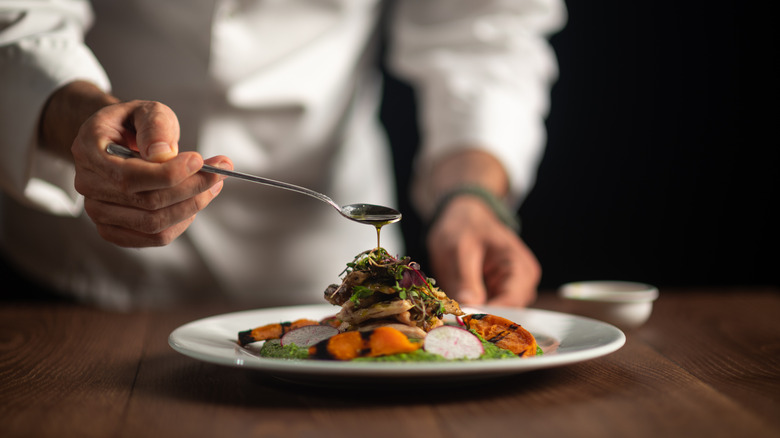
When you're at a restaurant and your grilled hanger steak comes to the table with a small pile of microgreens on top, or your cocktail shows up with a floating edible flower, do you actually eat the garnish? If you don't, you're not alone. Garnishes are intended to make a dish look more appealing and help the empty space on the plate look fuller, but they don't always add taste to a meal.
In the '70s and '80s, curly parsley as a garnish was a staple, one you'd find adorning foods from pecan-crusted chicken breast to hamburgers to soups and everything in between. It's described as having a distinctly milder, less pleasant taste than its flat-leafed cousin, with an earthy, sometimes scratchy mouthfeel. During the height of its popularity, curly parsley was the most readily available type of parsley, partially thanks to its resiliency as a plant and partially thanks to its dazzling green color and whimsical shape. Not only would chefs use curly parsley for garnishing darker-colored meals, but it was also often laid on buffet tables or cheese platters for added visual effect.
Curly parsley lost its spot to flat-leafed parsley
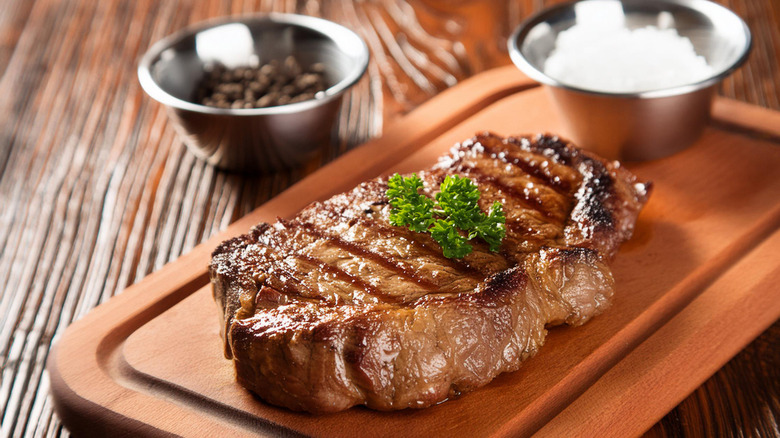
The use of curly parsley was inspired by French cuisine, which was considered the epitome of culinary excellence at the time. The French used curly parsley to add flavor and texture to a dish, since the little green sidekick kept its fluffy shape once cut and turned crispy instead of wilting in the oven. Americans, on the other hand, used curly parsley mostly for visual purposes and not as a true accent to a dish. By the turn of the decade, curly parsley fell out of favor when chefs turned to a different region of cooking for inspiration: Italy.
With Italian-inspired cooking methods came the rise of flat-leafed parsley, also known as Italian parsley, as opposed to curly parsley. Before the '90s, it was scarcely available in the United States, but once chefs discovered that Italian parsley was better and bolder tasting, it became the new normal (and a popular ingredient in many of Giada De Laurentiis' favorite foods). Garnishes in general experienced an overhaul around this time, morphing from a strictly visual addition to an important opportunity to complement or add flavor to a dish, further pushing bitter-tasting curly parsley from the table. Curly parsley as a garnish isn't necessarily off the table forever, but by then, the new-age chefs will have found a better use for it than simple decor.