

Here's Why You Should Freeze Beef Well Before The Expiration Date
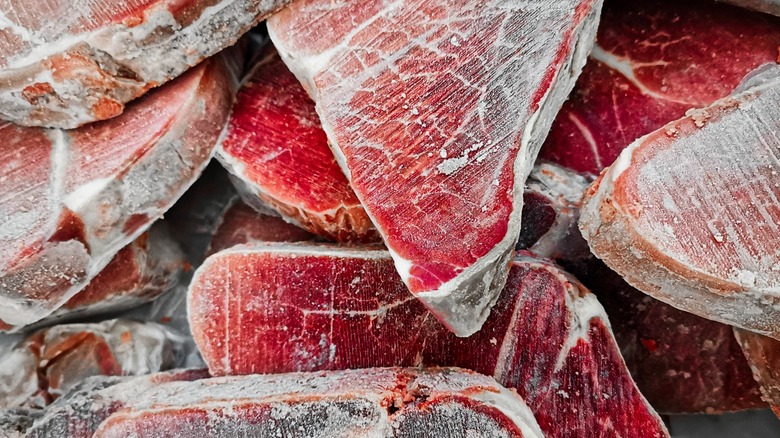
The average consumer in the United States loses $728 per year to food waste, according to the EPA, and data from the USDA shows that many consumers don't follow proper food handling practices when cooking meat, even if they think they do. Therefore, it makes sense that some people try to prevent food waste, but aren't sure how to do so safely. You might think that if your beef is nearing its use-by date, freezing it will reset the clock, giving you a few more days once it's thawed. But it doesn't exactly work that way. When it comes to beef, if you don't plan to use it right away, it's best to freeze it early before that expiration date hits. The clock does not reset, even with freezing.
Unlike cooking, freezing doesn't kill the bacteria that has formed on your meat — it just pauses, or slows, the growth. If you freeze the meat on its best-before date and thaw it a week later, it will still be at the same point in its shelf life as when you froze it. You'll need to use it right away, as there's no grace period just because the meat was frozen.
When meat is in the fridge, bacteria can still grow, though more slowly than at room temperature. This is why fresh meat lasts a few days in the fridge before it expires. That's how long it takes for the bacteria on the meat to grow enough to cause spoilage.
Why you need to freeze on time
The bacteria that forms on aging meat isn't the same as harmful pathogens like salmonella or E. coli, though those may also be present. This is just the natural bacteria that forms as a result of meat spoiling over time. It causes the meat to become slimy, smell bad, and develop a sour taste that could upset your stomach or cause serious digestive issues.
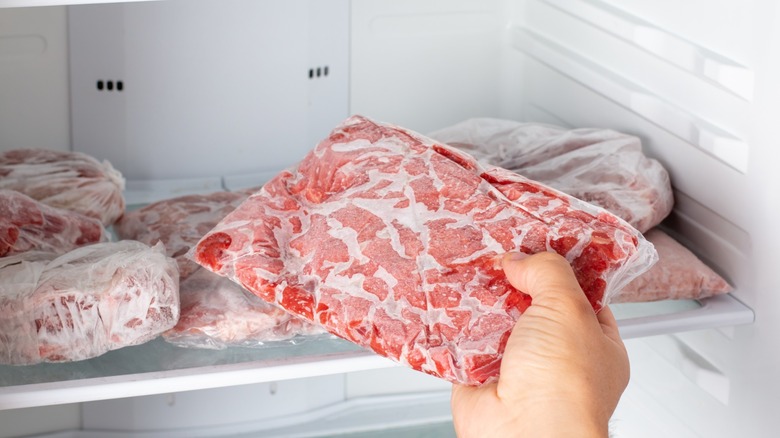
Freezing meat to 0 degrees Fahrenheit pauses bacterial growth, but doesn't kill the bacteria. Any bacteria that developed before freezing will still be there when the meat thaws. So if your ground beef nearing expiration was almost to the point of spoiling before freezing, it will be right there again when you thaw it out. You'll want to use it immediately before it goes bad completely.
There is one possible workaround that can effectively reset the clock. When you cook the meat, you don't need to eat it immediately. It can be put back in the fridge or even frozen again. Cooking, so long as you bring it up to temperature to kill the bacteria, extends the shelf life. If your eye of round roast was about to go bad, but you cooked it properly, you have another three to four days to safely store it in the fridge. You can also freeze it and keep it for at least two to three months. To avoid wasting food or making yourself sick, freeze your beef with plenty of time to spare.