

What You Should Know Before Ordering Red Lobster's Rock Lobster Tail
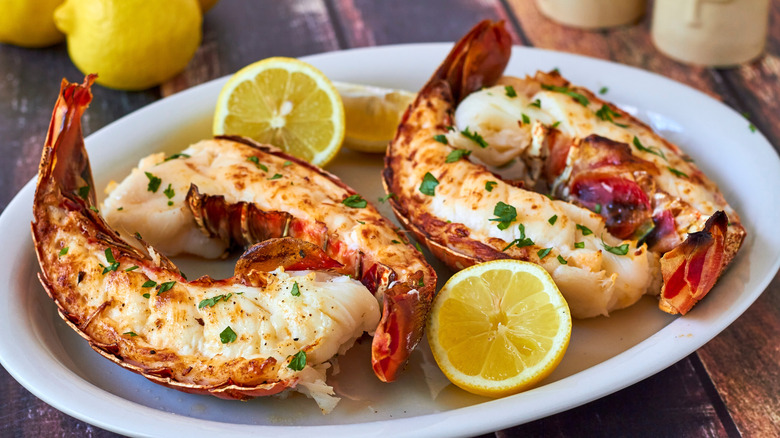
When a hankering hits for that most prized of crustaceans, a visit to Red Lobster is a surefire way to get your fix. There are only a few states without Red Lobster locations, and with the exclusion of Alaska, they are all in the Northeast, where other lobster options abound. But when you sidle into that comfortable booth and flip open the menu, you might see that there are more choices than you expect. In addition to the classic Maine lobster, rock lobster tails are also sometimes available. So, what's the difference between the two?
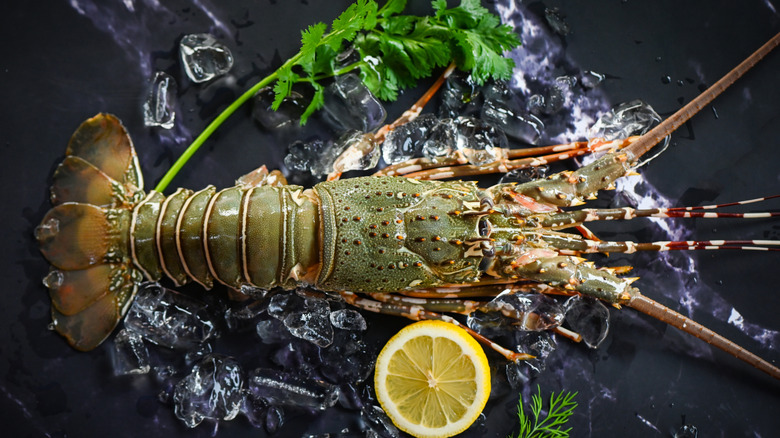
You may be surprised to learn that there are actually many different types of lobsters out there, and some of them aren't actually even lobsters, in a technical sense. Rock lobster — also sometimes called spiny lobster — is one of these lobster-like crustaceans that eats very similarly, but actually comes from an entirely different taxonomic family.
On the plate, they are both delicious fare, but there are some notable differences between rock lobster and Maine lobster. For starters, they come from different parts of the sea. Maine lobsters — also called American lobsters — live in the Atlantic Ocean, primarily from Labrador, Canada, down to New Jersey, though they can be found as far south as North Carolina. The many species of rock lobsters, on the other hand, are found all over the world and typically prefer warmer climes.
The other major difference between the two lobsters is the claws. Maine lobsters have large front claws, which contain a significant amount of meat. This is not the case for rock lobsters. For rock lobsters, all of the meat is in the tail.
Should you order rock lobster or Maine lobster?
In the debate between these two types of lobster, as in many culinary questions, there is no right answer; it really all comes down to personal preference. But for the sake of making your crustacean choice a touch easier, we will break down the differences that you should expect on the plate.
Maine lobster is known for its sweet, buttery meat. They are typically boiled or steamed, and the meat of the claws is especially prized for its tenderness. This is the lobster that you know and love from those perfectly assembled lobster rolls. Much of the unique flavor of Maine lobster comes from its cold-water habitat. If you are sitting down expecting that specific flavor, just drizzled with a bit of drawn butter, then Maine lobster is the way to go. But rock lobster is certainly nothing to turn your nose up at.
Living in warmer waters, rock lobsters pair the traditional sweetness with a slight briny flavor. Additionally, rock lobsters tend to swim more than their scuttling northern counterparts, which means that the tail meat tends to be slightly less tender. The firmer texture makes rock lobster well-suited to grilling and broiling, and the tropical origins mean that it is often complemented with flavorful spices and marinades. With such tiny claws, you'll never order a whole rock lobster, but the increased prevalence of this variety does mean that the tails often come a bit cheaper.
In the end, it's all about what you like best. If you are looking for the classic lobster experience, stick with the Maine lobster. But if you are open to trying something new, a rock lobster tail is still sure to satisfy.