

Yes, You Can Microwave Glass — But It's Complicated
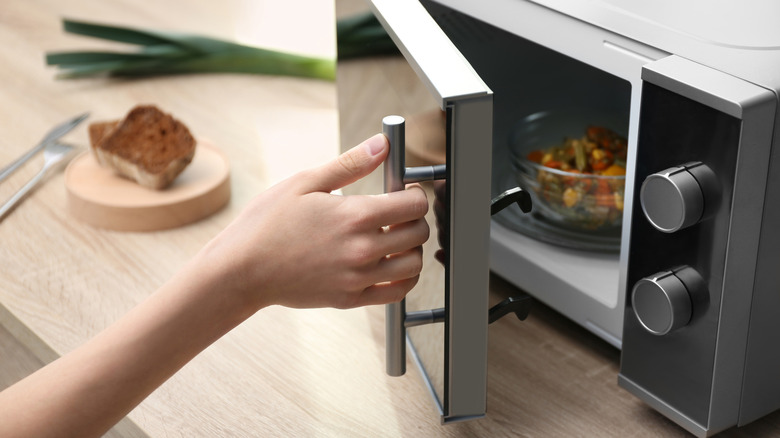
It's no secret that glass is a popular go-to for storing leftovers, meal prepping, and reheating food. But the question of whether it's safe to microwave glass isn't always a clear yes or no. In general, microwaving glass is fine — as long as the container is labeled microwave-safe. Tempered glass, like Pyrex (which will last longer if you know what you're doing) or other brands designed for baking or reheating, can typically handle the microwave without an issue. But not all glassware is created equal. Decorative dishes, some vintage Pyrex containers, and anything with metallic paint or trim should never go in the microwave.
The biggest concern with microwaving glass is thermal shock — the sudden change in temperature that can cause it to crack or even shatter. That's why you shouldn't microwave a glass dish straight from the fridge. Let it come to room temperature first, and never pour cold liquid into hot glass or vice versa. If your glassware is cloudy, chipped, or etched from frequent dishwashing, it may be more prone to breakage and should be used with extra caution.
Best practices for microwaving glass safely
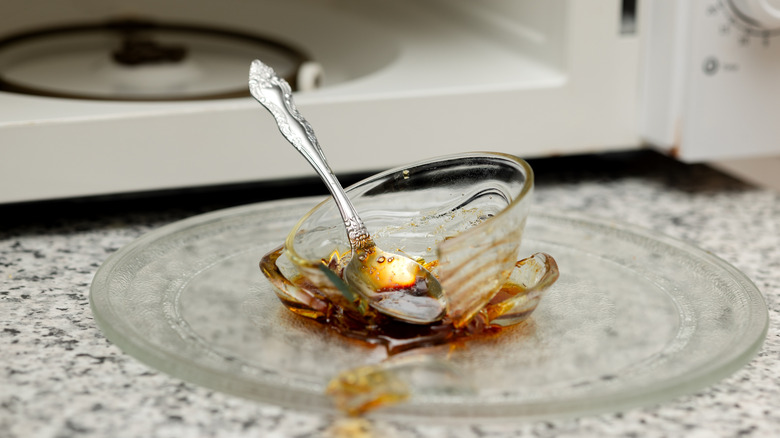
If you're planning to microwave a glass container, always check the bottom for a microwave-safe label first. Even with approved containers, avoid sealing the lid completely — steam needs a place to escape, and tightly sealed lids can create pressure that cracks the glass or causes spills. If your dish comes with a vented lid, use it. If not, drape a paper towel or leave a corner open.
Additionally, keep in mind that microwaves heat unevenly, and glass containers can develop hot spots. Stir food halfway through heating to prevent scalding or overheating one area, and be sure to use oven mitts or a towel when removing the container. The glass may feel cool at first, but it can heat quickly in spots that aren't visible. The last thing you want to do is drop a glass dish on your kitchen floor.
Finally, don't assume all glass behaves the same. Thin, low-quality glass or older containers not designed for reheating may not withstand repeated microwaving, even if they don't break the first time. When in doubt, test with water. Fill the glass halfway, microwave for one minute, and check the container's temperature. If the glass is hot but the water isn't, skip the microwave and choose a safer alternative.