

10 Mistakes To Avoid When Cooking Ribeye Steak
We may receive a commission on purchases made from links.
Nothing hits the spot quite like a thick-cut steak that's been cooked to perfection. It can be an ideal thing to prepare for a dinner date, family meal, or simply to treat yourself. For meat lovers everywhere, ribeye is often the first prize. Ribeye is one of the most popular cuts of steak out there. It's rich, fatty, and so full of meaty flavor that it's hard to get enough of it. For such a good piece of meat, how you cook it can either detract from or enhance all of those characteristics.
As a food business owner with professional culinary training, I prepare ribeyes very often; it's one of my preferred cuts of meat because it's such a crowd pleaser. It's also a pretty forgiving cut because of how flavorful it is. That said, it's not the cheapest option out there, so you'll still want to do what you can to make the most of your steak. There are various ways that people go wrong, from not cooking it to the right temperature to forgetting to rest the steak, and more. Luckily, many of these are easy to avoid. Here are some mistakes to avoid when cooking ribeye steak.
Choosing the wrong steak
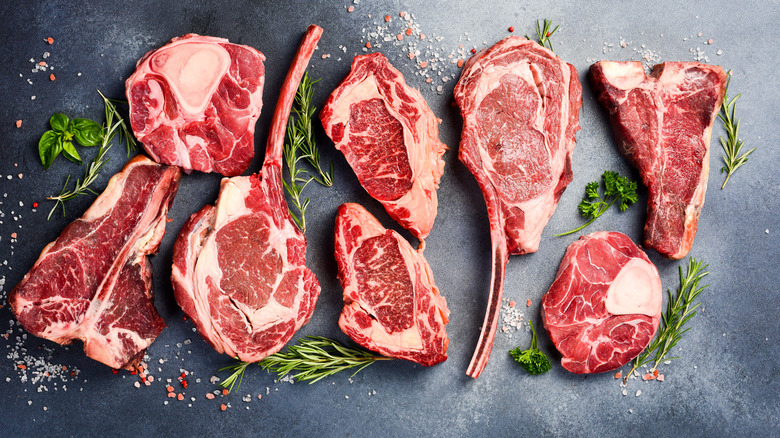
As I mentioned, ribeye steaks are not the cheapest cuts of meat out there, but they're also not the most expensive. One can even argue that it's one of the best value-for-money cuts because it has so much to offer — maybe even more than pricy options like a filet, for example. But being equipped with knowledge will help you get the best bang for your buck. Before spending a pretty penny on your ribeye steak, make sure you're clued up on different types of steak cuts so you know what you're looking for.
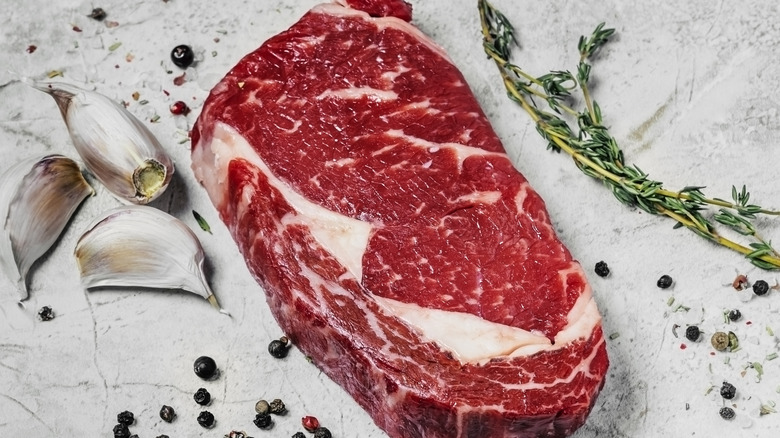
Firstly, the thickness of your steak may come down to your preference, but if you're not a seasoned cook, it can be a good idea to go for a thicker cut of ribeye. The thicker the steak, the more forgiving it will be if you overcook it. You also want to choose a higher-quality piece of meat. Your butcher can often advise you on this, but you want to choose ribeye steaks with more visible marbling. This will yield a more tender cut that will be dripping with delicious flavor as the fat melts into the steak from the inside.
Under- or over-seasoning the steak
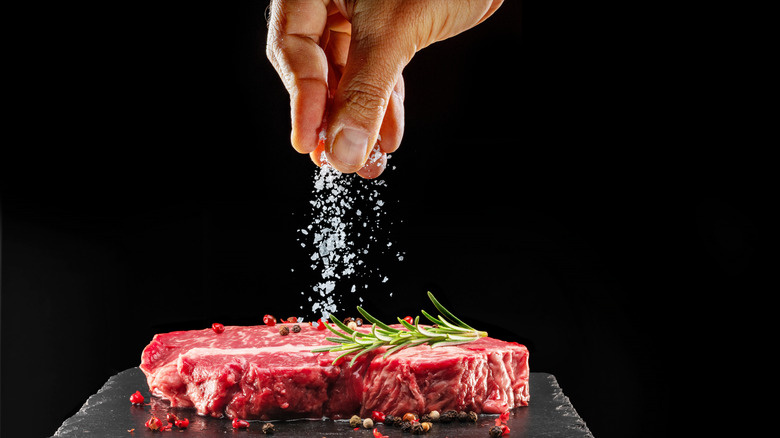
There are different camps about how you should season meat, with some purists arguing that good cuts of steak should hardly be seasoned at all. I'm not part of that camp, and believe that the right amount of seasoning can really bring out the flavor of your steak beautifully. With ribeye, however, this shouldn't be taken too far. Since ribeye is naturally very flavorful, it doesn't need as much seasoning as other foods to enhance those flavors.
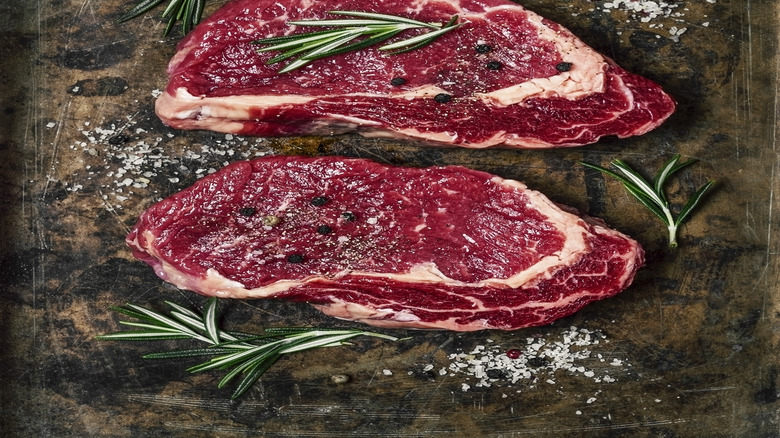
The right amount of seasoning will differ from person to person, but an even, consistent amount of salt and pepper across the meat is often all that you need. I'm also partial to using my favorite steak rubs and spice mixtures, but in moderation, so that you're not masking the taste of the steak with them. Another tip is to let the seasoning "marinate" for a while. This can help your steak absorb it deeper into the flesh, which is needed for a thicker cut like ribeye. This will also aid in creating that caramelized crust when you sear your steak.
Cooking it straight from the fridge
You should always rest your steak after cooking it. What's less known, perhaps, is that you should do the same before you cook it. Resting your steak beforehand helps to bring it to room temperature first. If you cook your steak straight from the fridge, it will be too cold to cook evenly. Especially with something thicker like a ribeye, the center will stay colder than the outside, leaving you with a blue-rare middle and a potentially overcooked exterior. If you like your steak rare, this might not be a huge problem, but if you want to cook it to an even medium doneness, this is a necessary step.
When letting your meat "rest" outside the fridge before cooking it, what you're actually doing is tempering it. It doesn't take that long, either. I've found that 30 minutes on the counter is enough to let the steaks get to room temperature. So, even if you're really hungry, exercising just a little bit of patience will help your ribeye turn out even better. If you want to be extra efficient, you'll use this time to let your spices marinate your steak, and kill two birds with one stone.
Not getting a good sear
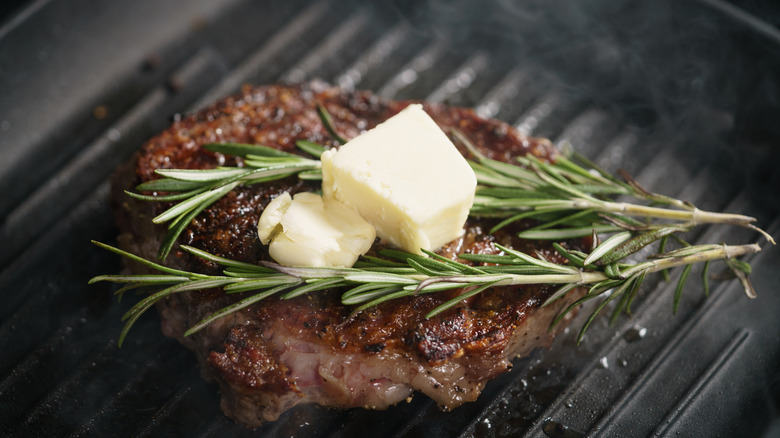
Now, on to the actual cooking of the steak. You'll want to choose a cooking method that gets you that signature caramelized crust on the outside. This browning, caused by the Maillard reaction, is what gives your steak that amazing "grilled" flavor. For a piece of meat like ribeye, it would be a real shame to skip this step, so choose your cooking method accordingly. You shouldn't cook your steak in liquids that might lead to braising. Instead, you should be grilling your steak or pan-frying it.
You may be wondering if you can use your oven, but it can be tricky to achieve the right browning only cooking it this way. You can finish your steak in the oven, but it needs to be seared on a hot pan or grill first. Alternatively, you can sear your steak after cooking it slowly in the oven — this is known as a reverse sear — but I don't love this method. I find it's much easier to overcook your steak this way, because you will have already cooked it close to your desired doneness. Once it hits the skillet or grill, it's easy to push it over into overcooked territory.
Not preheating your oven or pan
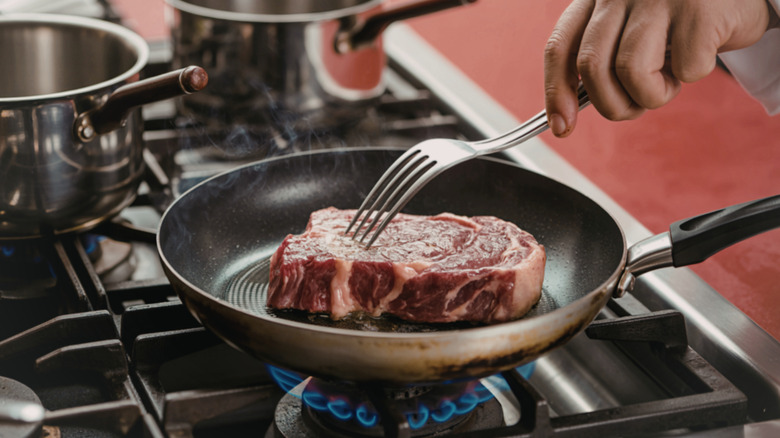
Whether you're cooking your ribeye with a pan, grill, or oven, it's imperative that you've preheated sufficiently first. This means not slapping your steaks on a warm grill or pan, or sending them into a lukewarm oven. If you do this, your steak will only take longer to cook. Worse, you are likely to overcook it. Another downside? A hot surface is necessary for developing that browning on the outside; without it, your steak will lack serious flavor.
If you're starting your steak in a pan and plan to finish it in the oven, make sure the oven is on and preheated before you even start cooking. Ovens can vary in how long they take to come to temperature; mine can take a good 15 minutes or longer. If you've already started searing, you may be done with that step long before your oven is at a high enough temperature to properly finish your steak.
Flipping it frequently while cooking
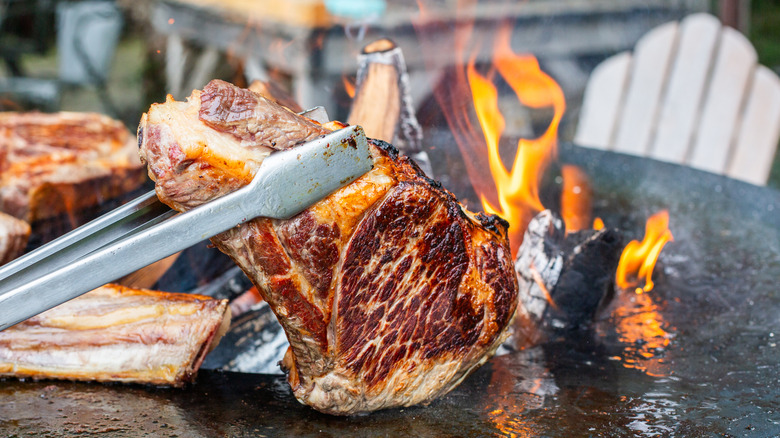
It's advice we've probably all heard multiple times: You shouldn't flip your steak too much while grilling it. Some have countered that this isn't true and that you can achieve even better results with frequent flipping. You can follow the advice that suits you, but in my experience, it's a lot easier to form a delicious brown crust on a thick steak like ribeye if you err on the side of less flipping.
This doesn't mean you have to stick to a strict "only flip once" rule. You can flip the steak a few times, but I recommend that the first touch of heat on each side of your steak should be long enough to form a good crust. Since ribeyes are thicker, you'll still have ample time to flip the steak here and there after you've done the initial searing.
Another thing that people get wrong while fiddling with their steak is pressing down on it while it's cooking. During my training, I learned that doing this just squeezes out the natural juices, which you don't want. Let the juices come out naturally if they need to, but don't force them out by pressing on your steak.
Not using a meat thermometer
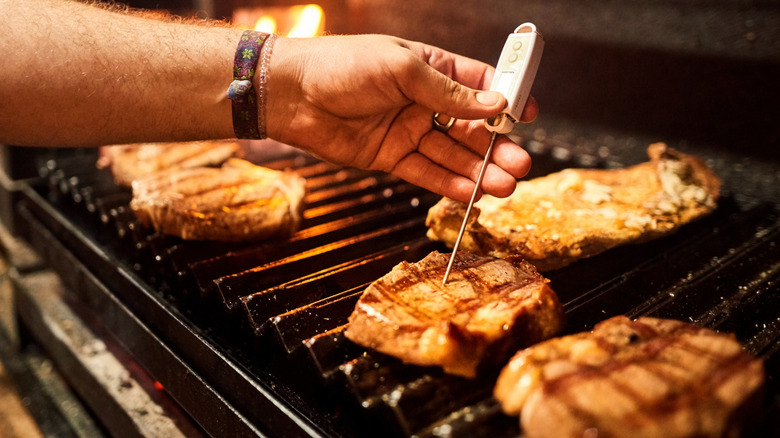
There are plenty of fancy kitchen gadgets used in professional kitchens that really don't make sense for a home cook to own. There is one exception, though, and that's a meat thermometer. In my experience, a thermometer takes out much of the guesswork involved with cooking large pieces of meat. Ribeye is one of those cuts that can be difficult to gauge just how long you need to cook it for; it's essential that the center is cooked just right. You also don't want to go through all the effort of cooking the steak, resting it, and then cutting into it to find it raw in the middle. While you can place it back in the oven, this can lead to a dry steak. It's just not ideal.
Sticking a meat thermometer into the thickest part of your steak will instantly let you know if it's ready or needs a bit more cooking time. It couldn't be easier to use. So, if you've put off purchasing a meat thermometer, this is your sign to get one. If you don't know where to start, this ImSaferell digital meat thermometer is a great option.
Overcooking the steak
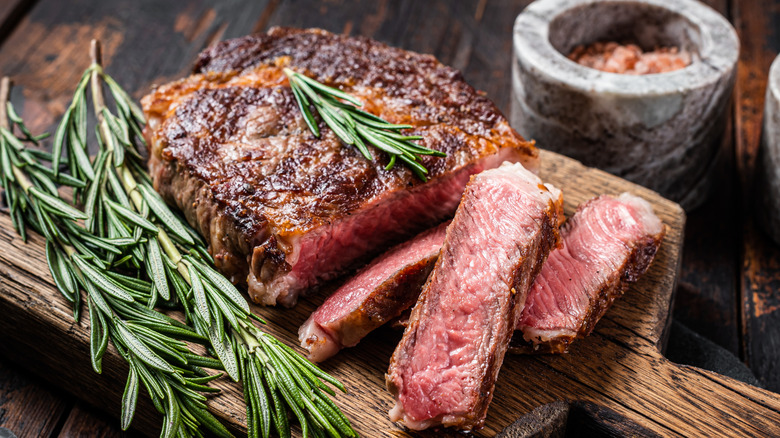
I'm no arbiter of how you should enjoy your steak; everyone is allowed to eat their steak however they prefer. If you like yours well done, there's no judgement here. However, if you like to eat your ribeye steak rare, medium-rare, or medium, it can be disappointing when you overcook it. The good news is that ribeye is such a well-marbled cut of meat that it will still taste good, even if it's overdone. Still, being improperly cooked means it doesn't reach its full juicy potential.
You can avoid this whole issue by monitoring the steak's temperature as it cooks. For a medium-rare steak, remove it from the heat when the thickest part reaches 125 degrees Fahrenheit; let carryover cooking take it to between 130 and 135 degrees Fahrenheit while it rests. For medium, pull it from the heat at 135 degrees Fahrenheit and let it carry over to 140-145 degrees Fahrenheit. If you generally prefer less doneness, pulling your steak from the heat at 115 degrees Fahrenheit will leave you with a more rare finish.
Not letting the steak rest
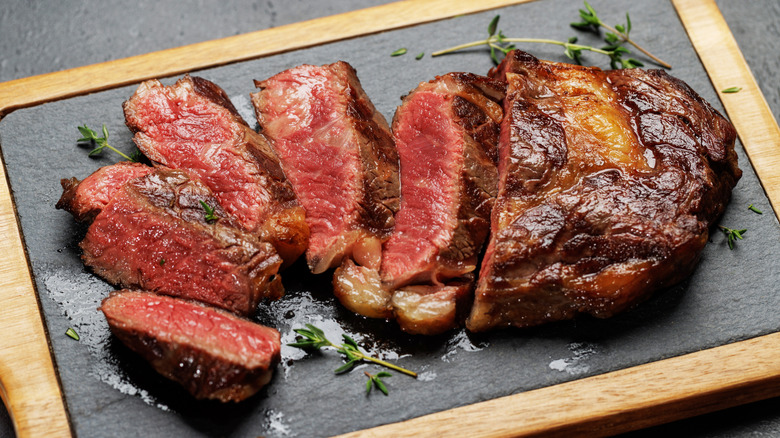
If you're feeling hungry, you might be tempted to skip the resting step. Can it really make that much of a difference? In truth, it does, and there are many reasons to let your steak rest. It's definitely worth it to achieve the perfect steak, especially since it requires you to literally do nothing. With a cut like ribeye, it's even more imperative that you let the juices redistribute evenly for a tastier result.
When you cut into a thick ribeye steak immediately after cooking, the juices will all run out in excess. In my experience, rushing this step, or skipping it outright, can detract from the delicious marbling that makes the ribeye special. Giving your steak even just five to 10 minutes allows these juices to settle in place, yielding a juicy, tender ribeye as it's meant to be enjoyed.
Discarding the juices
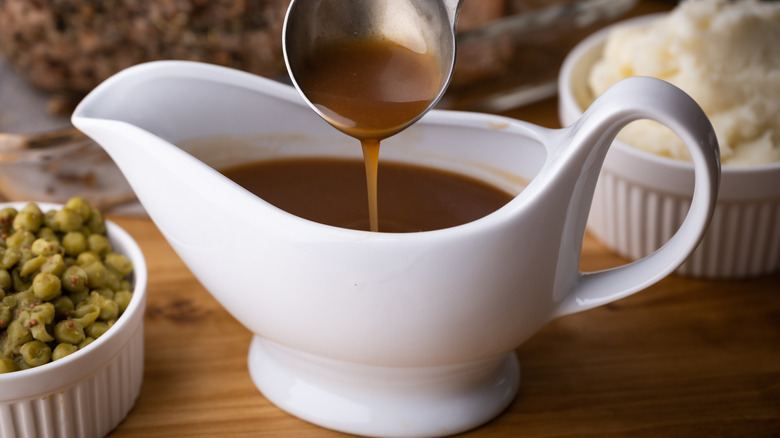
After letting your ribeye rest, you'll notice a certain amount of steak juice left in the plate or resting pan. You'll even have a fair amount left in the pan you cooked it in. This is meaty, delicious flavor in liquid form, and you'd be wrong to discard it. That liquid consists of the steak's juices, bits of browning, plus any flavorings, oil, butter, and seasonings you used. The easiest thing you can do with the juice is pour it over your steak as a sort of finishing sauce. It's perfect for drenching each slice of meat with every last bit of flavor.
You can also use that juice to make a flavorful sauce like au jus or gravy to serve with your steak, or even other meats in the future. Either cook the liquid down into a more concentrated version of itself, or thicken it up with a roux and make it into a luscious and velvety gravy. If you prefer your steak without any of this, you can freeze gravy for future use. Either way, don't waste all that yummy goodness by dumping it into the bin!