

Why You Should Pay Attention To The Labels On Dried Fruit
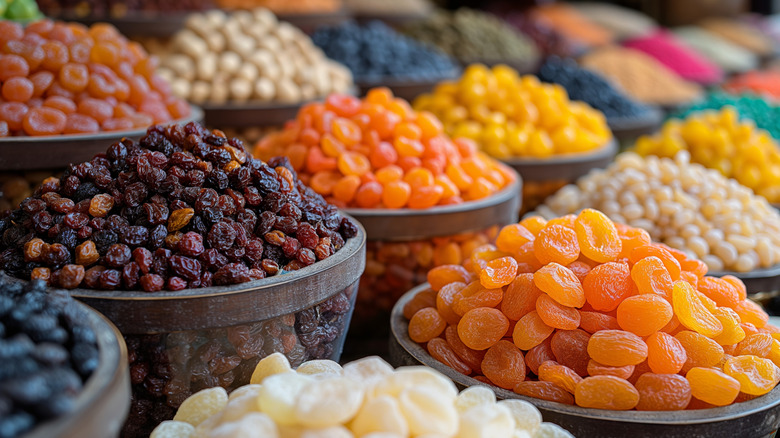
Dried fruit is a convenient, tasty, and nutrient-rich snack food. But a lot of variables can determine just how "healthy" it actually is. Removing moisture affects the fruit in several important ways — and there's a chance of unexpected ingredients being introduced during processing. Unless you're drying fruit at home, it's a good idea to read package labeling to check for added sugars.
Since drying fruit concentrates the inherent natural sugars, you're already getting more of it than when eating the fruit fresh – so it's worth noting if extra sugar has made its way into the final product. To determine this, simply check the nutrition label for a line that lists the total grams of sugar, then a sub-line stating how much of that is "added sugars." You'll also need to examine the ingredients list for terms such as honey, fruit-juice concentrate, syrup, or any words ending in "ose."
Dried fruit has its pros and cons: It prolongs the enjoyment of seasonal fruits and improves accessibility, all while providing many of the same nutrients as fresh. In fact, the drying process concentrates all that goodness into a smaller form. But the catch is that, in doing so, it also concentrates the natural sugars. Ultimately, this makes them super tasty — but likely to have a lot more sugar than you think.
Other things to consider about dried fruit
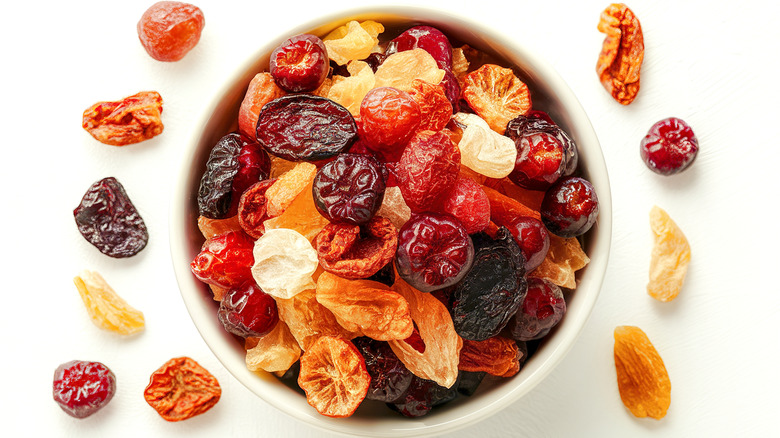
Not all dried fruits have added sugar, and some varieties have less than others. Dried apricots, goji berries, and prunes tend to be lower in sugar, with an added benefit of more fiber and nutrients. When eaten in moderation, experts agree that dried fruit can be an excellent way to infuse your diet with important nutrients, fiber, vitamins, minerals, and antioxidants.
One way to practice this is by using dried fruit to complement your meals, rather than snacking on them. Sprinkling them into salads is a given, while adding dried fruits to cereals and grain bowls adds dimension and sweet flavor. Another idea is to try mixing raisins, dried apricots, or dried cherries into your Moroccan couscous recipe or use them as an ingredient to elevate rice pilaf. You can also stir them into trail mixes and baked goods, or simmer them into a compote for drizzling.
Another viable alternative is freeze-dried fruit instead of dried. Freeze-dried fruit gets frozen and then dehydrated, rather than heated. This method preserves more of the fruit's nutrients and flavor, with little need for additives — all while delivering a light, crispy texture for easy snacking.