

How To Cook Salmon For Someone Who Isn't A Fan (Yet)
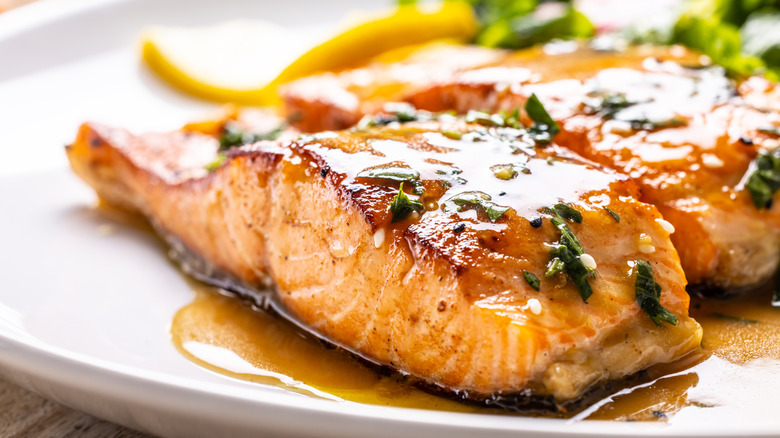
Open up most menus and you'll find salmon in some form — blackened and served over rice, baked with buttery potatoes and vegetables, or topped on a loaded salad. There are also salmon burgers, pastas, and sushi options galore. If you're not a fan, you might be sick of hearing people bang on about the protein-packed and vitamin-rich benefits provided by this wonderfish, but the good news is that there's still hope for the unconverted. Seafood chef Bart van Olphen, the founder of Sea Tales and curator of the online Ocean Cookbook, told us that the best one to cook for skeptics is wild Alaskan sockeye salmon.
He says, "This species is known for its predominantly vegetarian diet, feeding mostly on plankton. As a result, it has a slightly milder and less 'fishy' flavor compared to other wild salmon species." It's common for people to not like salmon at first. It has a bright color, a deep, rich flavor, and it is an oily fish. But this milder-tasting variety might encourage the wary to give it a go.
Sockeye is a meaty fish, so it's great for pairing with a cream sauce or curry. Van Olphen recommends cooking it in a dish that's familiar to the person you're serving, so they're not too thrown by the taste. Pastas, curries, or flavorful sauces made with fresh, bright ingredients are all good options for first-timers.
Make a salmon pasta or curry for skeptics
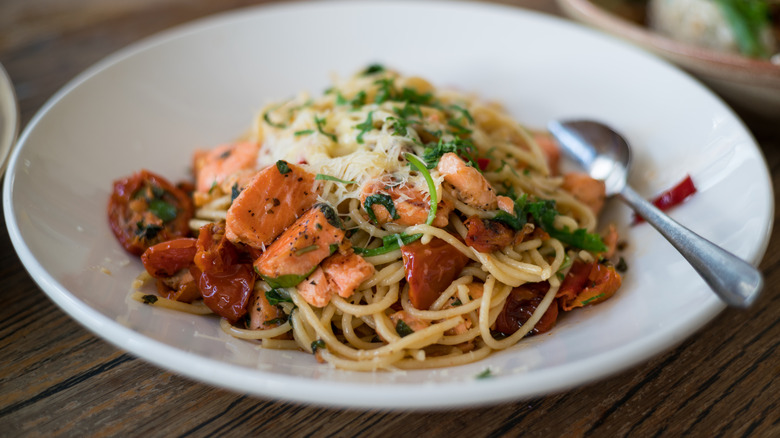
Van Olphen's favorite way to prepare salmon for a skeptic or first-timer is to make a tomato-based salmon pasta (our recipe uses smoked salmon, but unsmoked sockeye would also work). "Gently sauté shallots and garlic, then add capers, olives, and a can of tomatoes. Let it simmer, and about five minutes before serving, stir in chunks of fresh salmon and finish with fresh basil. It's simple, comforting, and not too 'fishy'," says van Olphen.
If you think it's better to start with a straightforward filet, van Olphen suggests a creamy sauce, saying, "Another great approach is to soften the flavor with a light cream sauce. Use a splash of white wine, sautéed mushrooms, and fresh herbs like tarragon or parsley. The richness balances the salmon beautifully, and it's a delicious way to ease someone into enjoying fish."
Make sure to remove the skin from the salmon before adding it in, and if sockeye is a bust, coho is another great option for anyone suspicious of fish, as is Atlantic salmon. If you are opting for Atlantic salmon, try to buy one that was farmed in Maine or the Faroe Islands, Denmark, as these are the only areas with sustainable farms that sell it in the U.S., according to Monterey Bay Aquarium Seafood Watch. Otherwise, buy wild salmon when you can.
Fresh salmon is usually better than frozen but not always
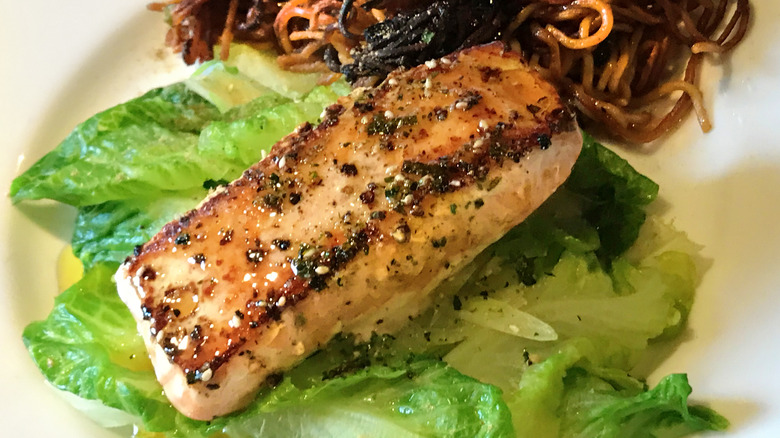
Another element of salmon that naysayers might protest about is the texture. Those who prefer the flakiness of white fish might be better off eating coho or pink salmon, which are softer, while those who want a meatier finish might like sockeye. Fresh is always best, as the taste and texture will usually be better.
Van Olphen says that frozen salmon is fine, as long as it was frozen right after it was caught. He says, "During freezing, ice crystals can damage the flesh, causing the fish to lose more moisture when cooked. The faster the fish is frozen, the better its texture is preserved. Some of the best-quality salmon out there is flash-frozen right after it's caught, which preserves flavor and texture incredibly well. That said, if given the choice, I would always prefer fresh salmon over frozen."
Use frozen salmon for burgers, pastas, risottos, or fried salmon tacos. For fish-centric meals, like simple baked salmon, opt for fresh. A miso salmon recipe is also ideal for newcomers, due to the strong flavors. Van Olphen says, "Many people enjoy the delicate Japanese flavors of soy, mirin, and ginger. Personally, I'm not a fan of overwhelming the fish with strong seasonings, but a mild curry can also work beautifully, especially for those trying fish for the first time."