

Stop Leaving These 10 Foods On Your Kitchen Counter
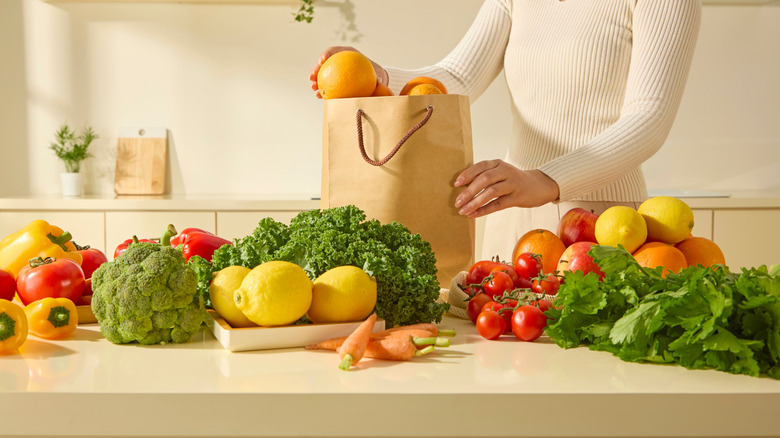
The kitchen counter is often the place where we leave foods that don't need to be refrigerated. Unfortunately, we might not know exactly which foods are safe to leave out and which ones are not. Correct food storage and safety is something we all need to get clued up on to prevent foodborne illness and food poisoning. Proper storage can also help food maintain its quality for longer, thus preventing food waste.
As a food business owner, I've undergone rigorous food safety training. Professionals know that proper food storage is important to protect ourselves and our customers, and many of these lessons can be adapted for the home cook. Many of us know that most cooked food shouldn't be left for long on the kitchen counter, but when it comes to produce, certain baked goods, dried foods, and other pantry goods, the rules aren't as clear-cut. You may be storing some foods all wrong. Here are some foods you need to stop leaving on your kitchen counter.
Rice
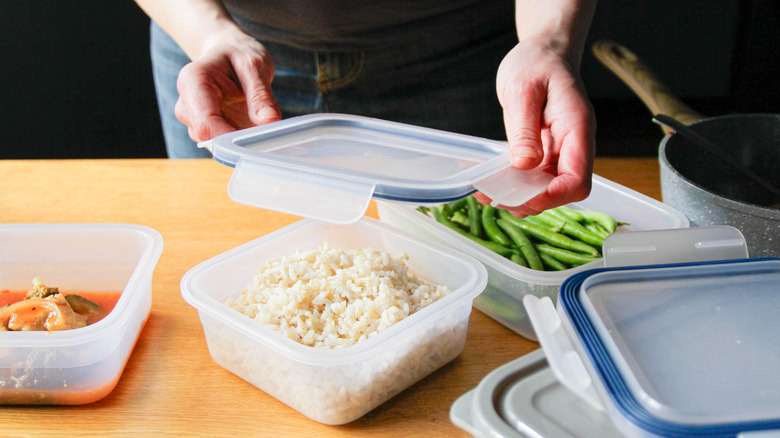
Cooked rice is a daily or weekly staple in many households. It's the backbone for many dishes, yet is seen as one of the more mundane things prepared in the kitchen. If your fridge is full, the first thing you might take out to make space is your leftover rice. It doesn't contain dairy or meat and is relatively dry, which is why many people think it's okay to leave out overnight on the counter. However, rice that has been left unrefrigerated for more than two hours is extremely dangerous to eat.
Rice contains a spore-forming bacterium called Bacillus cereus. If left at room temperature for too long, these spores will multiply and release toxins that lead to food poisoning if ingested. It's not dangerous to eat leftover rice, as long as it's been stored correctly. Once it's cooked, it should be left to cool before being moved to the fridge. If it's properly sealed, it can last three or four days after which it must be discarded. It may be a better idea to cook rice in smaller quantities that you can eat faster.
Potatoes
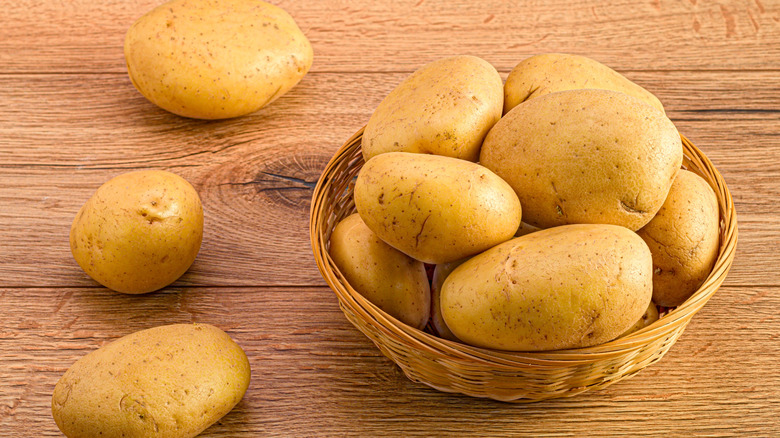
Potatoes are one of the most common foods kept on the kitchen counter. Out of all the foods in this list, it's definitely the one I've left on the counter the most. Most of us know we shouldn't refrigerate raw potatoes, but you may not be aware that they need to be kept in a spot cooler than on your kitchen counter. Everyone's kitchen is different, especially with seasonal and climatic variation, and there's usually some amount of sunlight shining into the kitchen. This creates light and warmth, two things that can cause potatoes to quickly deteriorate.
Too much light causes potatoes to turn green and produce a toxin called solanine, which can make the spuds bitter. At temperatures higher than 55 F, potatoes lose moisture and sprout. So, if you want your potatoes to stay fresher for longer, the best way to store them is to keep them in a cold, dark space, like the pantry. Keep in mind you shouldn't place potatoes in a bag, as they also need some airflow to prevent them from producing moisture. A basket or mesh bag makes the most sense.
Natural peanut butter
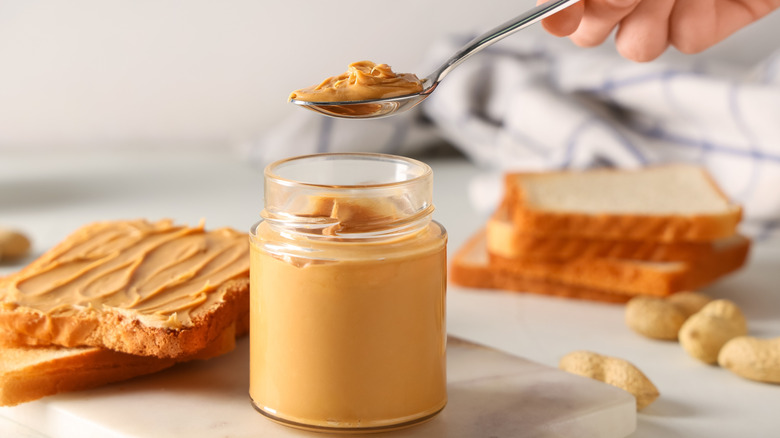
Peanut butter is one of the food products we can rely on to last a really long time. It's also commonly thought of as a pantry ingredient, rather than one kept in the fridge. While keeping it on the counter doesn't necessarily make it harmful, its quality may decline faster than if it were kept in the fridge. This is especially true for natural peanut butter, which doesn't contain stabilizers. Once your peanut butter expires, it will taste bad and have an unpleasant odor.
Of course, a sealed jar of natural peanut butter may be shelf-stable, but once opened, it has to be refrigerated. If you plan to finish the jar within a couple of days, you can leave it out on the kitchen counter without concern. However, if you plan on keeping your peanut butter for longer, you should stick it in the fridge.
Opened jam and jelly
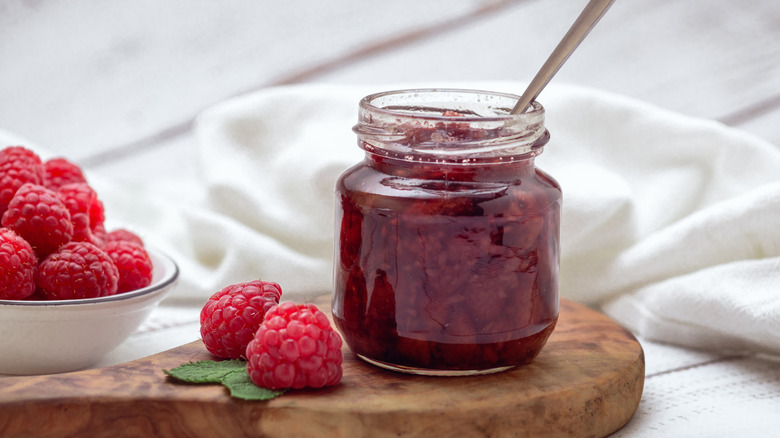
Toast with jam and butter is a great way to start your day. And if you're having it every day for breakfast, you may be keeping your jam or jelly on the kitchen counter. Unfortunately, this isn't a good idea. Although jam and jelly, like peanut butter, are found in the dry goods aisle in the grocery store, it still needs to be refrigerated. In truth, jam or jelly is only shelf-stable when it's sealed — not after it's been opened.
Leaving an open jar of jam out will cause it to spoil pretty quickly. In my experience, even refrigerated jam can grow mold over the course of a few months. This will happen sooner if kept unrefrigerated. To keep your jam or jelly fresh, make sure the kitchen utensil you use to get it out of the jar is clean, otherwise you can cause cross-contamination, which may make it spoil even faster.
Salami

Salami is a top-tier snack and the perfect addition to any charcuterie board. The fancy, cured logs of salami you often find hanging at a butcher or deli can make for a great gift or treat for yourself. While many varieties are dried and cured, and thus don't need to be refrigerated, if you take some home, it may be your best option to keep it refrigerated. I approach salami with a better-safe-than-sorry attitude, as different types of salami may need refrigeration, and others may not. Plus, opening or cutting salami typically causes it to spoil faster.
To soften the meat, you can always let it come to room temperature before slicing and serving it. However, I've found that even if the type of salami you get is safe to keep on the counter, storing it there will cause it to dry out and harden. Wrap it in cling film or keep it in an airtight container and it will stay fresh for months.
Pumpkin pie
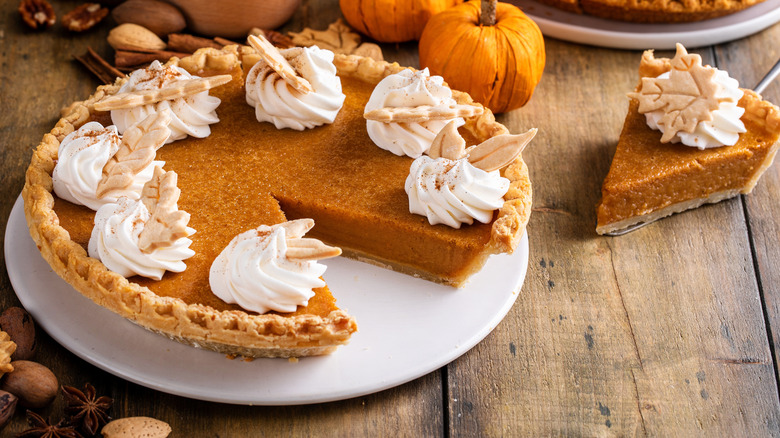
Pumpkin is top of mind for many during the fall season. And what better use of pumpkin than a delectable pumpkin pie? Whether you make your own or get a store-bought one, pumpkin pie needs to be refrigerated. Many of us incorrectly believe that all pie can be kept on the kitchen counter. However, this doesn't apply to pies that have eggs or dairy, like pumpkin pie, custard pies, and meringue pies.
As with most cooked food, pumpkin pie can only be kept out on the counter safely for two hours, after which it must be refrigerated. If your pie has just come out of the oven, let it cool down first before you place it in the fridge. Wrapping it can also help it last longer, but make sure it's completely cool before doing so, or condensation will form and cause your pie to go soggy.
Maple syrup
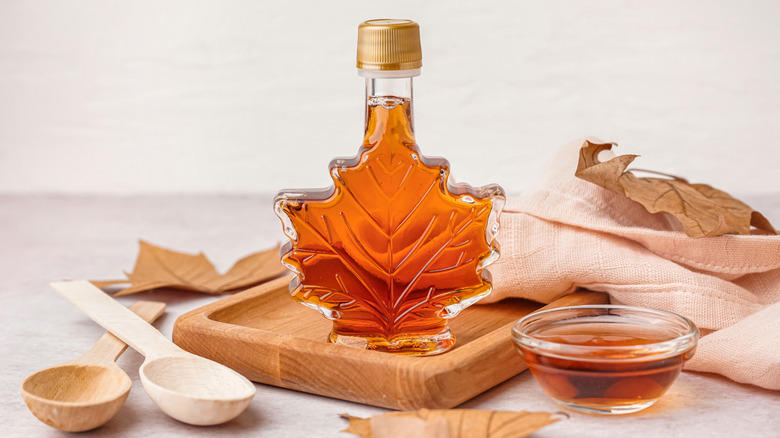
This was one of the most surprising food storage tips I learned when I started working as a chef, and it may astonish you, too: Maple syrup shouldn't be kept on your kitchen counter. This beloved breakfast staple is so good on pancakes, waffles, and even in lattes, but we're doing its quality a disservice by keeping it out. Although it's a shelf-stable food when unopened, it no longer is once you open it. It doesn't become unsafe if you leave it out, but the syrup's quality will deteriorate over time. Maple syrup can even grow mold if kept unrefrigerated for a long time.
Now, this may be a hard habit to kick, as most of us grew up with maple syrup being kept in the pantry or on the kitchen table. But you can break the cycle and keep your maple syrup good for up to two years by putting it in the fridge. Strangely enough, you can even store maple syrup in the freezer to keep it indefinitely.
Olive oil
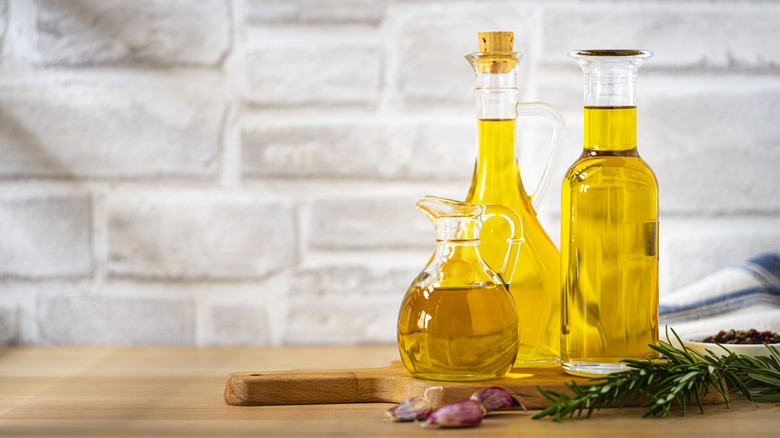
The thought of oil spoiling may be foreign to many people. In fact, oil is something you may assume would last forever. It's the liquid gold poured on salads and roasted veggies and it's a common ingredient, which is why it's often kept near the stove. In truth, unless you go through a bottle of olive oil quickly, it's not going to keep its quality stored on the counter. Olive oil will go rancid over time, but this process is expedited if olive oil is exposed to light, air, and warm temperatures, like on your counter.
Your olive oil will start to deteriorate once it's opened. This is when it's first exposed to air and the oxidation process begins. This might make you think it's a good idea to keep opened olive oil in the fridge, but unfortunately very low temperatures are also not good for it. In the fridge, the oil can congeal or thicken. Rather, you want to store your olive oil in a dark, cool cupboard, and only bring it out when you plan to use it. If you really want to keep your olive oil on the counter for ease of use, then decant a little bit at a time in a bottle.
Tortillas
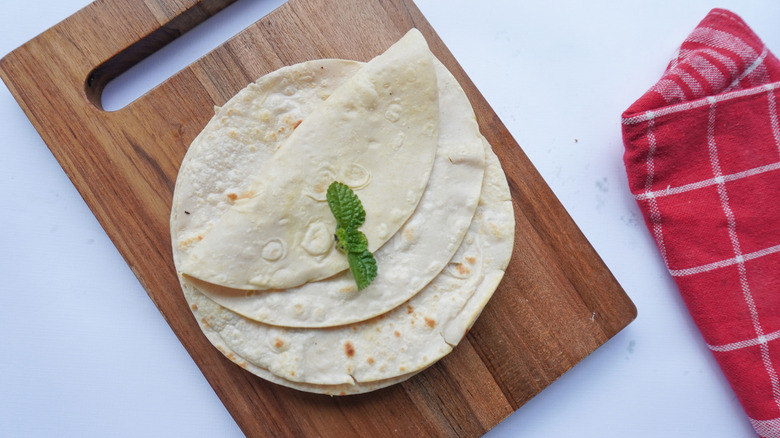
A packet of store-bought tortillas makes weekday meals even easier. You can wrap your eggs, beans, or basically any other food in them and call it a full meal. They're also great because you don't need to eat them immediately. This dry good can last a pretty long time unopened. However, once you open that packet, it's time to put it in the fridge. While tortillas are safe to leave on the counter for some time, they will develop mold and dry out rapidly. This will happen even faster if your tortillas are homemade.
Wrapping them up and storing them in a cool, dry place can help delay this process, and some tortilla brands even recommend that you refrigerate them after opening. I tend to place them in the freezer so they last even longer, then warm them up in a dry pan when I want to eat them.
Onions
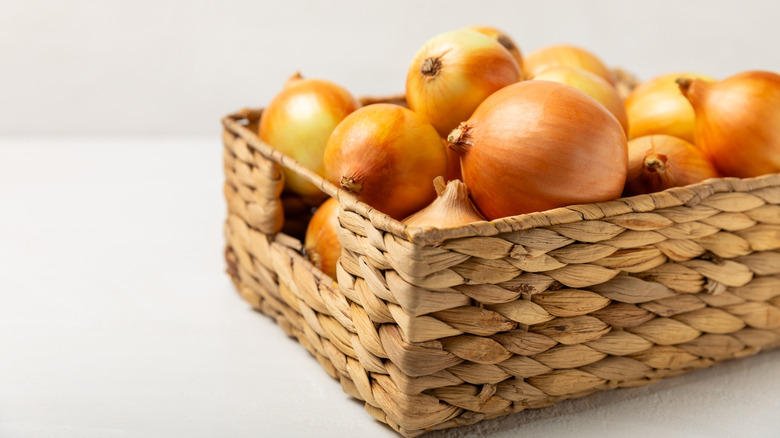
Another surprising food that you should stop leaving on the kitchen counter is onions. Until I learned otherwise, I always popped my onions in a fruit and vegetable basket on the counter. Then I wondered why they wouldn't last as long as I expected, especially for what I thought was a hardy vegetable. Onions, like potatoes, need to be kept in a cool, dark place or they will spoil quickly.
Light and warm temperatures can cause onions to sprout and start deteriorating faster, meaning they won't last you as long as if you keep them in a pantry. If stored in a cool, dry place with good ventilation, whole onions can last for several months. You may be tempted to keep your onions in the fridge, but this isn't recommended. The conditions in your fridge can cause your onions' texture to become soggy. However, once you cut an onion, you should place it in an airtight container in the fridge.