

Everything You Need To Know About Strong Flour (And How To Use It)

We may receive a commission on purchases made from links.
I could make a real case that there's never been a better time to be an enthusiastic home cook or baker. Ingredients from all over the world are available to us in season and out, bookstore shelves are thick with cookbooks, and our web browsers and TV networks can provide us with an endless stream of food-related content, instruction, and inspirational programming.
Of course, the flip side is that we'll often meet up with techniques or ingredients that aren't properly explained, especially on TV shows, blogs, and short videos on YouTube or TikTok. A good example is strong flour, which you'll hear mentioned frequently on baking shows and videos (especially if they're from the U.K.).
If you've heard that term before and wanted to know what strong flour actually is, here's your opportunity. Although I trained as a chef, not a baker, I've been baking bread for well over 40 years now. I've run an in-store bakery, made the bread for my own restaurant, and am also something of a food-science geek. So buckle up, while I explain what strong flour is and why it's different from other types of flour.
Why strong flour is strong
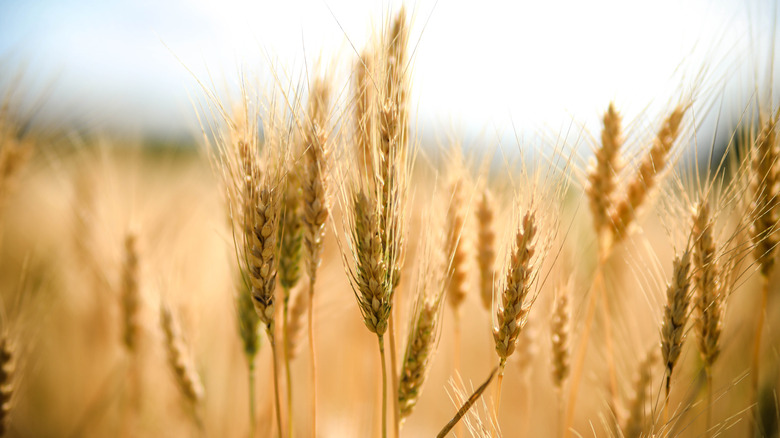
In my cooking classes, I've found that a lot of people are curious about the terminology we use in commercial kitchens, and how it came about, so I'll start by talking about why strong flour is called "strong."
It's because it's made from hard strains of red or white wheat, which tend to grow best in colder climates, like the great wheat-growing belt that spans the vast prairie region of the U.S. and Canada. Soft wheat grows better in warmer climates. The difference between hard and soft wheat largely boils down to their levels of gluten-forming protein. Hard wheat is high in gluten, and soft wheat is lower in gluten. That regional distribution, with hard wheat growing in the north and soft wheat in the south, explains why all-purpose flour is so variable from one part of the country to another.
So how does that translate to a flour being "strong?" Because a dough made with strong flour forms a sturdy, stretchy dough that holds together strongly when stretched, while a dough made with softer flour will tear. This has some big implications for your baking, which I'll circle back to shortly.
How strong flour is made
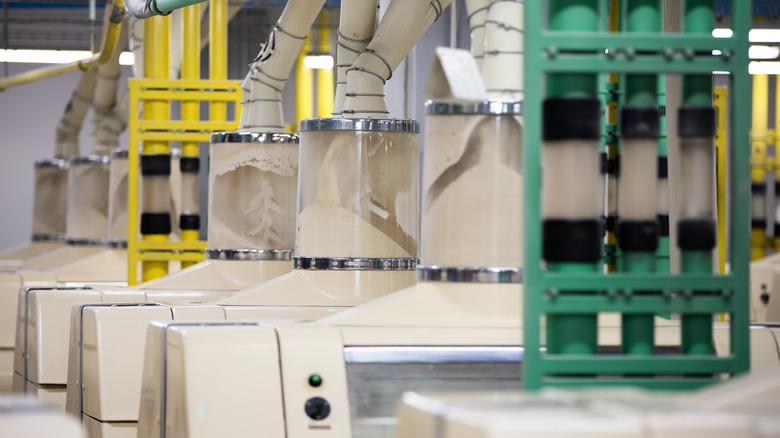
There are two ways wheat is milled. One is the traditional way, ground between stones. The other is modern high-speed milling. Strong flour can be milled either way, but in general, commercial flour almost all comes from roller mills.
So what's the difference between stone-ground flour and flour from a roller mill? A stone mill grinds the whole grain, complete with its bran and germ, and then for white flour the bran is sifted out (I've toured a modern stone-grinding mill, and it's fascinating to watch). The resulting flour generally has an off-white color and some residual wheat germ, and the oils in the germ become rancid over time, so it's best kept refrigerated.
Roller mills feed the grain through a series of fast-spinning steel rollers, where it's cracked into successively smaller fragments. The bran and germ are separated along the way, then added back in afterwards if desired (for whole-wheat flour). As a rule, stone-ground flour is more flavorful and a bit coarser, but roller mills are hugely faster and therefore more profitable. That's why the flour you'll find at the supermarket is always roller-milled, unless it's specifically labeled as stone-ground.
Why gluten matters in your baked goods
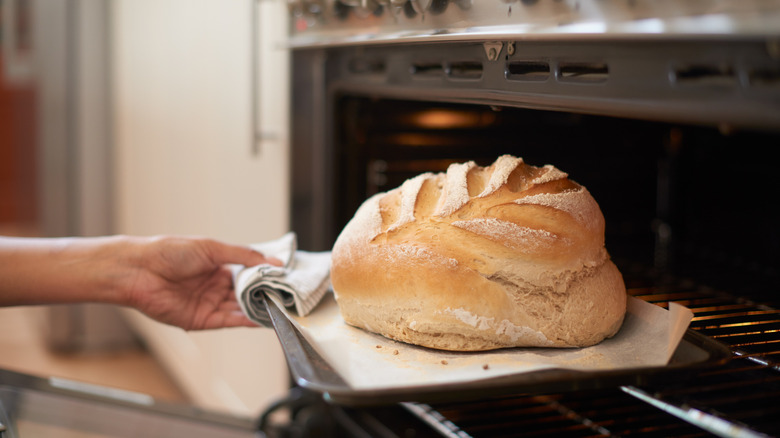
Having looked at the fundamentals of where strong flour comes from and how it's made, let's focus on its gluten content. If you only know of gluten vaguely as the stuff that some people are allergic to, you may not entirely grasp why it's so important to your baked goods.
I'm going to put on my science-geek hat here, but bear with me. Flour contains several kinds of protein, but gluten relies on two specific ones called glutenin and gliadin. When you moisten the flour with liquid, the two proteins' molecules unwind into gnarly strands that catch on each other. If you give them time, or stretch and fold the dough (usually both), those strands twine together and thicken, like thin fibers twisting into rope.
Each protein has a specific job. Gliadin makes the dough extensible, or stretchable. Glutenin makes it elastic. Together, they form the long, mozzarella-like strands you see in a sturdy dough. You can stretch it out, but it will also try to contract again afterwards. As a rule, the more gluten your dough forms, the stretchier and chewier it becomes. That's why high-gluten flour is best for sourdough, for example. It gives the bread its distinctive chewiness, and is also strong enough to stand up to sourdough's gluten-weakening acidity.
Are strong flour and bread flour the same thing?
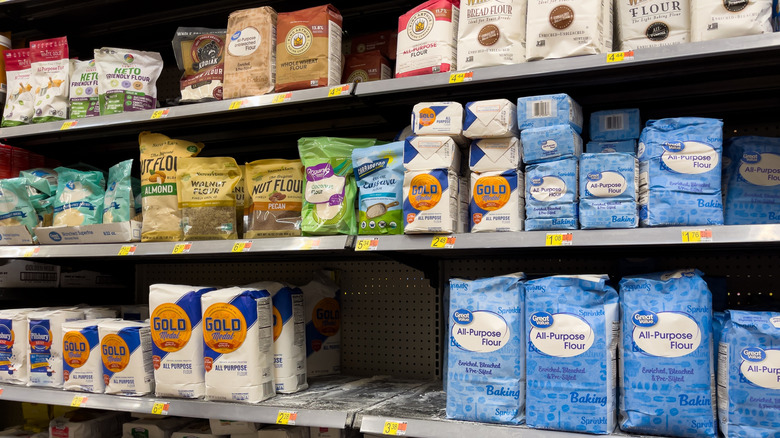
If you want to go out and buy some strong flour, you may be disappointed when you reach the supermarket. You'll see wheat flour, all-purpose flour ("AP," as pros call it), bread flour, cake flour, and ... well, you get the idea. But you probably won't see anything labeled as "strong" flour.
That's because on this side of the Atlantic, the term is mostly only used among professional bakers and millers. Strong flour is typically labeled as bread flour instead, to emphasize what it's best at. People try to parse out some differences between strong flour and bread flour, but they're really the same thing — except that it's higher in gluten than all-purpose flour.
When you see or hear someone recommend strong flour in a recipe, usually it just means that the baker (or influencer) in question is from the U.K. Brits speak of high-gluten flour as strong flour, and in North America, we say bread flour, but it's essentially the same thing.
How can I tell strong flour from all purpose?
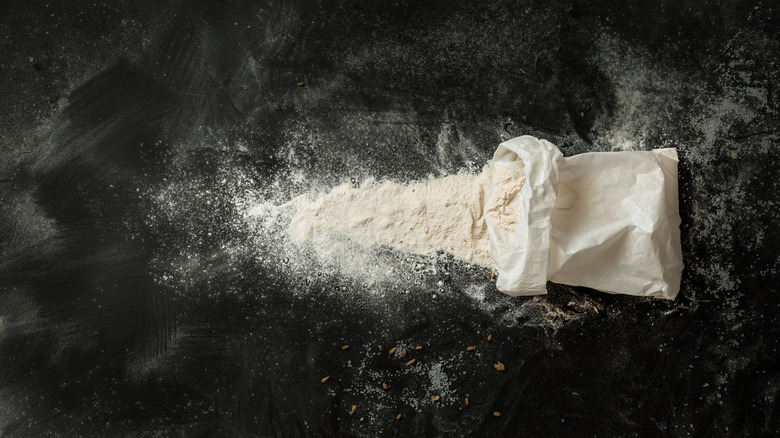
If you have some flour in a canister and you aren't sure whether it's all-purpose or strong flour (or if you have both, but they aren't labeled), you don't need to bake a test batch to find out which is which. There are some physical characteristics you can look for to differentiate between them.
In fact, this was a test that one of my culinary instructors loved. He would set out cups of flour and challenge us to distinguish between them. The key difference turned out to be their texture: Strong flour feels grittier than all-purpose flour, almost like a very fine sand as opposed to powder. All-purpose flour, in turn, isn't as powdery as cake flour. Take a pinch of each and rub it between your thumb and forefinger, and you'll see what I mean.
As a general rule, all-purpose flour is whiter than strong flour as well. That's not as reliable, because bleached flour will always be whiter than unbleached flour. Also, stone-ground flour will usually be darker than steel-milled flour. Ultimately, you'll see the difference in your mixing bowl, because strong flour makes a tighter, more elastic dough.
When should I use strong flour?
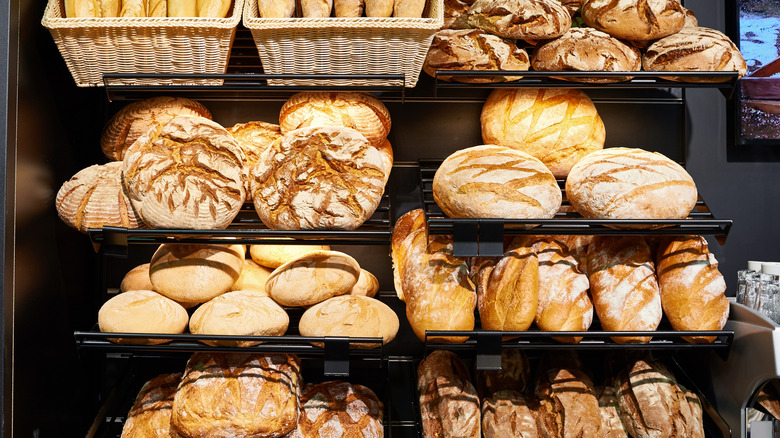
Obviously, your starting point should be the kind of flour that's specified in your recipe. There are reasons for that, which I'll touch on shortly. Usually, if it's not specified, the recipe probably assumes you're going to use all-purpose flour. But strong flour is better in some kinds of baked goods, and there are a couple of ways you can decide which flour is most appropriate for a given recipe.
One way is to consider the kind of goods you're baking, and what texture you're shooting for. Remember, gluten gives you a stretchy, elastic dough and a chewy texture in the finished product. That's ideal for bread, bagels, or pizza, for example, but not at all what you want in a delicate cake or a light and flaky biscuit.
Another option is looking at the kind of leavening in the recipe. While there are exceptions to this rule, if your recipe calls for baking powder or soda (cakes, biscuits, and anything else that's soft and fluffy), you're better off using all-purpose flour, or even low-gluten cake or pastry flour. If your recipe calls for yeast, you're more likely to use strong flour.
Do I need to change my recipe if I use strong flour?
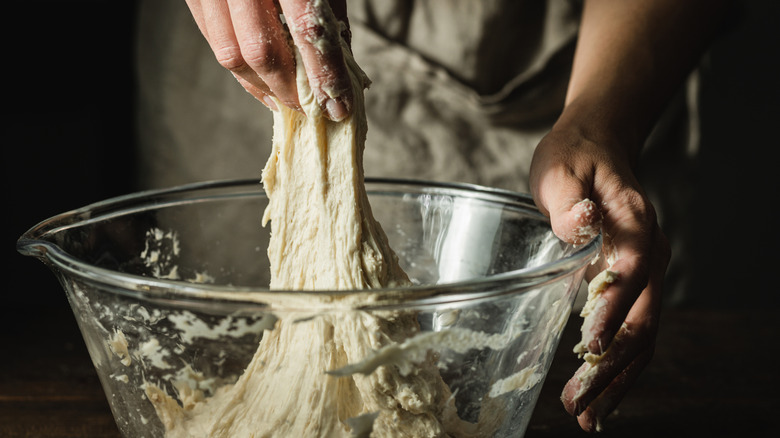
Assuming that your recipe seems adaptable to using a higher-gluten flour, the next obvious question is whether the substitution means you'll need to make other changes to the recipe. The honest answer, unfortunately, is "it depends."
The big practical difference between all-purpose flour and strong flour is that higher-protein flours absorb more moisture: The more gluten, the more moisture it'll hold. That's why it's almost invariably used in soft, wet, sticky doughs like some artisan breads, for example. So really, it comes down to your recipe. You'll often need to add slightly more liquid for your dough to have the proper texture. In this case, it helps if it's a familiar recipe, rather than one you're trying for the first time, because you'll have a benchmark.
Pro bakers tend to think of their ingredients in terms of percentages because they measure ingredients by weight, and it makes for easier math. You'll need to up your moisture content by about 5% to compensate for the added gluten, which translates to roughly 2 ½ teaspoons for every cup of liquid in the recipe. In a small batch, then (say, ¼ cup of liquid), you might not need to tweak the recipe at all. The larger the batch, the more important it is to add more liquid.
What differences will I see when I switch to strong flour?
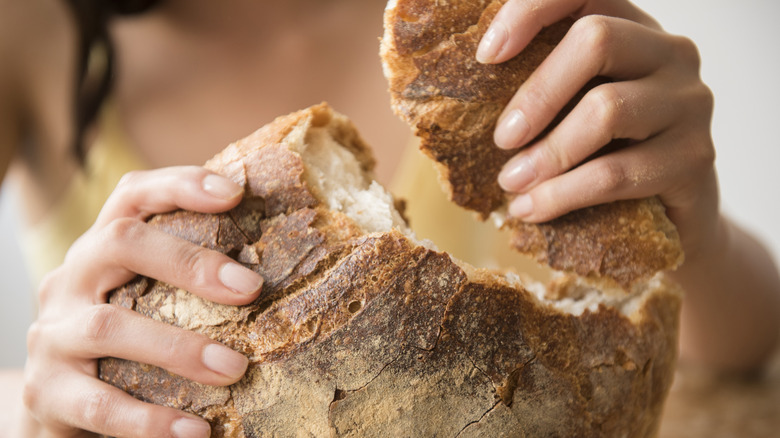
If you conclude that your recipe might just benefit from switching to stronger flour, it's only logical to wonder what differences you can expect to see. It's easy enough to tell you what extra gluten brings to the table (so to speak), though how much difference you'll see depends a lot on what kind of all-purpose flour you've been using previously.
Brands vary pretty widely in their protein content. Southern favorite White Lily is low in protein, which is why it's great for biscuits. King Arthur flour, like the Canadian all-purpose flour I work with, has a relatively level of gluten-forming proteins. Gold Medal falls in between. The softer your regular all-purpose flour is, the more difference you'll see.
Overall, you'll find that breads and rolls made with strong flour tend to come out with a better look and texture than the ones you've been making with all-purpose flour. They'll rise higher, form a better crust, and hold their shape better. If you've been experimenting with sourdough, artisan bread, or pizza doughs with lots of liquid ("high hydration"), you'll find that the dough becomes stretchier and easier to handle; once baked, it'll have the big, open bubbles and chewy crust you're looking for.
Whole wheat flour has high protein too, is it considered strong?
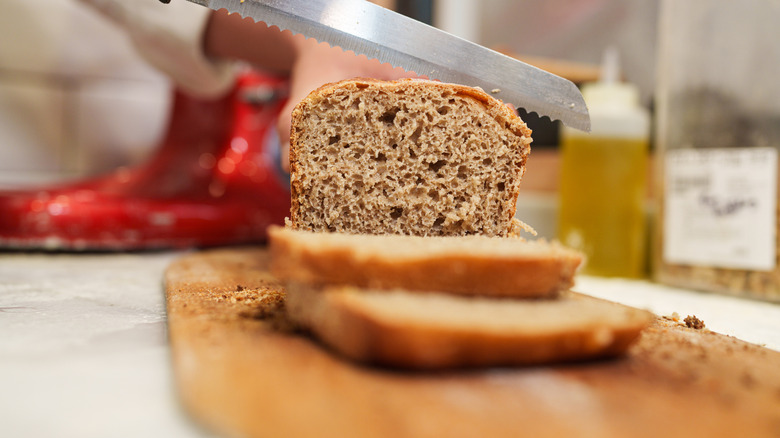
Whole wheat flour is an outlier as far as the whole "higher protein equals stronger flour" thing goes. Yes, it has lots of protein, and as with strong flour, your recipe will benefit from a small increase in the amount of liquid you use.
But in practical terms, wheat flour behaves differently when you bake bread with it. That's because it contains not only the flavorful and nutritious wheat germ, but also the grain's bran. That's positive nutritionally, because of the fiber content, but it works against you when we're talking about gluten formation. In a yeast dough, as you knead and shape it, those sharp-edged flakes of bran actually sever the gluten strands, limiting how far they can stretch and expand as your bread rises.
So you should be cautious about swapping all-purpose flour for whole wheat. There's a reason why so many 100% whole-wheat loaves are so dense, and you may need to experiment a little to arrive at a recipe that works for you. It can certainly be done, because I make a honey-whole wheat sandwich bread every week, and it's as light and soft as anyone could wish. It just takes some tweaking to get there.
Do I need strong flour to bake good bread?
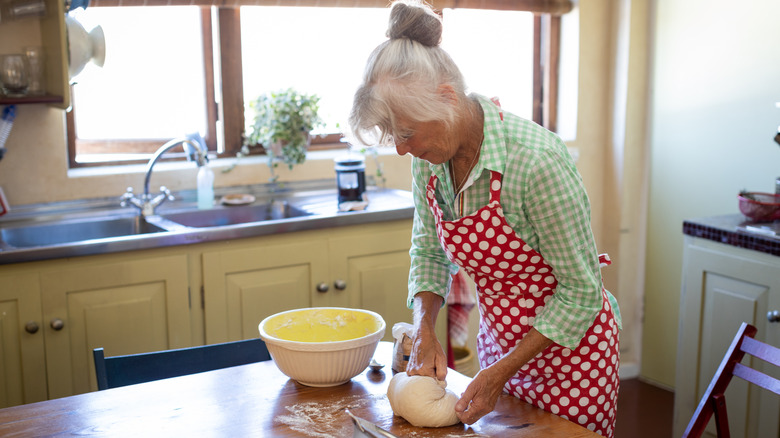
You can make good bread with ordinary all-purpose flour, for sure. You can even make artisan-style breads with it, though it definitely helps if you live in a place where the all-purpose flour is relatively high in gluten. The key is working to your own skill level, and the flour you have available to you locally. You can compensate for low-gluten flour, for example, with extra kneading for gluten development. You can also give your dough a rest after it's fully mixed, but before you knead it (the "autolyse," in bread-enthusiast lingo). That gives the gluten time to develop before kneading, which can be especially helpful in the case of sticky sourdough breads, or whole-wheat loaves with their gluten-slicing flakes of bran. More gluten development with less kneading, what's not to like?
It helps to choose bread recipes that work with the flour you have. Ordinary sandwich loaves come out just fine with all-purpose flour, so you won't see much difference with those. Pizza dough and most European-style artisan loaves benefit from strong flour, but focaccia is meant to be softer and fluffier, so it works with all-purpose flour. In short, all-purpose flour mostly lives up to its name. But for casual bakers, stacking the deck by keeping strong flour and low-gluten cake flour in your pantry means always having the best flour for the job.
Does it make a difference if I'm baking at altitude?

Yup, you betcha. Baking in general is a whole different ball game when you live above 2000 feet from sea level, and the higher you go, the more profound the effect becomes. In the case of breads and other yeasted doughs, strong flour can help your bread turn out better.
The highest elevation I've personally experienced was right around 2000 feet, so I did need to make some adjustments. The biggest thing about baking at altitude is that your leavening acts more powerfully, so you need to dial back on the yeast or baking powder. Otherwise, your baked goods will over-rise and then deflate, which for the baker is ... deflating. Using strong flour helps with that, because it makes a stretchier, more elastic dough. Keeping a close eye on the bread while it rises helps a lot, too. If you use a bread machine, check the manual for altitude-baking suggestions.
Despite that (pretty large) benefit, strong flour doubles down on another issue with high-altitude baking, which is the need for extra liquid. Moisture boils and evaporates at a lower temperature as you gain in altitude, so adding more liquid to compensate is key. Since strong flour already needs a bit more moisture, you'll need to add slightly more again. If you live in a mountainous region, by all means consult your local extension service for more detailed assistance.
Aside from bread, what's strong flour useful for?
Not going to lie, strong flour is a bit of a one-trick pony. It's all about breads and bread-adjacent baked goods, which is why it's usually sold as bread flour here in North America. So aside from breads in general, you'll mostly use it for things like dinner rolls, pizza dough, bagels, and old-school European-style pretzels. They're all meant to have a chewy texture and strong crust, which is where strong flour excels. Almost any recipe along those lines will benefit from using strong flour.
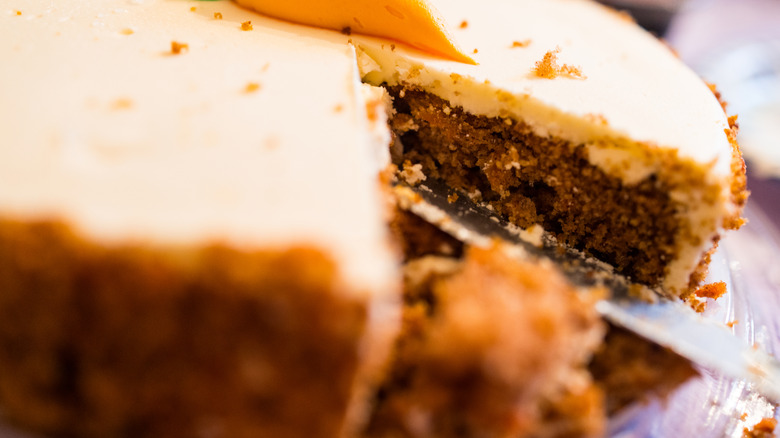
That said, there are a few limited use-cases outside of yeast breads and their kin. I've added it to some cake recipes, for example (I can think of a carrot cake and a gingerbread cake, without taxing my memory), that were so rich and moist that they tended to fall apart. Swapping in some bread flour fixed that. It can also be useful in cookie recipes where you're shooting for a chewy texture. I like it for shortbreads, where there's not a liquid ingredient to develop the gluten, and the slightly coarser texture of strong flour contributes to the cookies' signature dry, almost sandy mouthfeel.
Is there a substitute for strong flour?
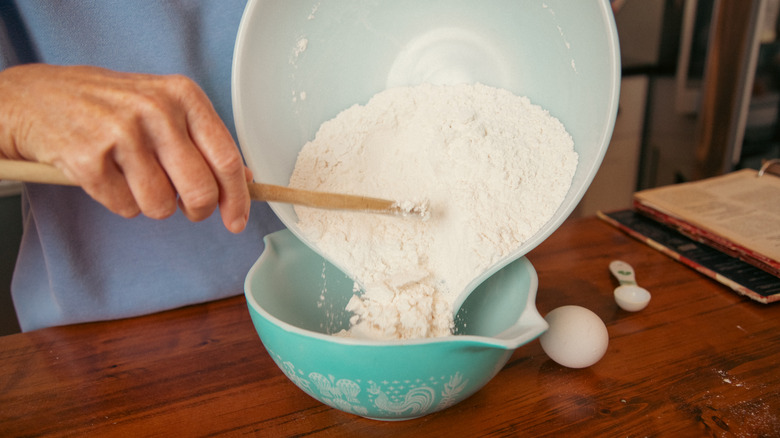
If you're limited in pantry space, you might not want to keep multiple kinds of flour on hand. In that case, you have a couple of options. One is simply to compare the brands of AP flour available in your area, and pick one that's higher in gluten-forming proteins. At 11.7%, for example, King Arthur's AP flour gets into the lower end of "strong flour" territory. If you bake mostly breads, rolls, and cookies, you can get by with that kind of flour. If you find that your cakes or muffins are chewier than you'd like, it's relatively easy to use one of the many cake-flour substitutes (like all-purpose flour mixed with cornstarch).
Failing that, you can go in the opposite direction and buy gluten flour, aka "vital wheat gluten," from online retailers or local bulk-food or health-food stores (the Bob's Red Mill brand is widely available). It's about 75 to 80% gluten by weight, so whisking just a small amount into your all-purpose or whole wheat flour can boost it into bread-flour territory. It's not a direct equivalent to strong flour, but it's close. I do this often with my honey-whole wheat bread, because the two main brands available to me differ in gluten content, and with one, I need to add about a half-tablespoon of extra gluten.