

This Humble Food Institution Got Many Americans Through The Great Depression
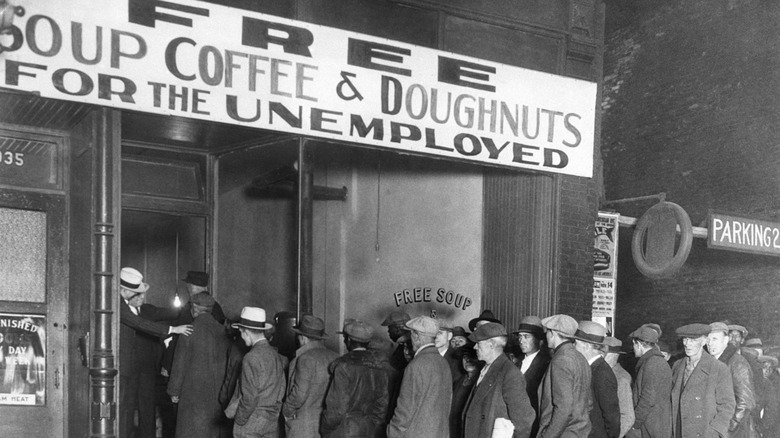
Meatloaf. Mashed potatoes. Breakfast all day, every day. A cup of coffee that always seems to be full. These are the menu hallmarks of the American diner. Throw in a countertop with stools, booths with laminate countertops, and a lot of stainless steel, and the nostalgic vibe is complete. The first iterations of diners popped up in the mid-1800s, and have been a national staple ever since.
To this day, we rely on diners for predictable comfort in both the difficult and joyful moments in our lives. In perhaps their greatest hour of need, diners were some of the core establishments that got Americans through the Great Depression from 1929 to 1941. Through affordable meals and a welcoming atmosphere that felt like home, families turned to these humble restaurants to fill their bellies and their hearts during this period of economic hardship.
The origin of the American diner
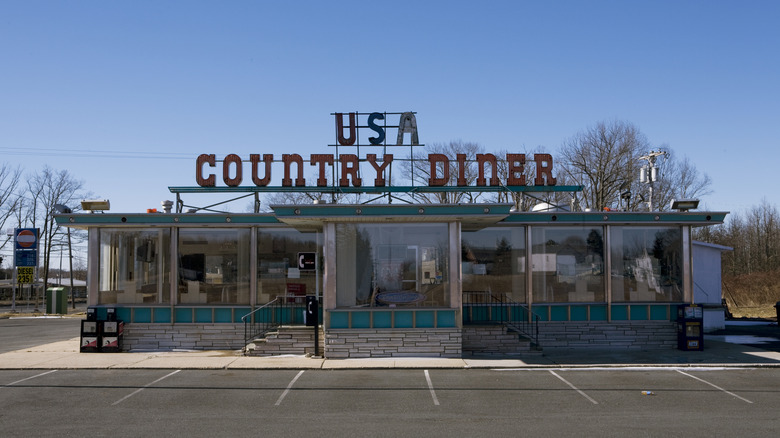
Like most good things, it all started with a sandwich. As the story goes, way back in 1858, a young man of 17 years old named Walter Scott began selling sandwiches and coffee to men outside offices and club rooms in Providence, Rhode Island. By 1872, Scott upgraded to a parked horse-drawn lunch wagon, also outside of offices, and also typically at night. While this is also surely part of the food truck's history, these wagons offered a quick and affordable meal, mostly to those in the middle of their long work hours. This appealed to the "working man" crowd because, at the time, laborers soiled from work wouldn't be welcome at a formal restaurant. Not only that, but formal restaurants typically charged steep prices and had limited opening hours. The early diner set the tone from its inception that anyone was welcome and anyone could afford to dine — a nod to the origin of the word "diner."
It didn't take long for others to copy this model, to the point that cities had to adopt new rules or outright ban these bustling "food wagons." Some cities tried to place restrictions on operating hours, so wagons were placed semi-permanently on the streets to bypass the rules. At the turn of the century, these wagons lost their wheels entirely and morphed into what we've come to know as the diner. At the time, they were often prefabricated structures erected in industrial areas to cater to the local workforce. A restaurant manufacturer named Jerry O'Mahony is credited with opening the first stationery diner in 1913.
Diners during The Great Depression
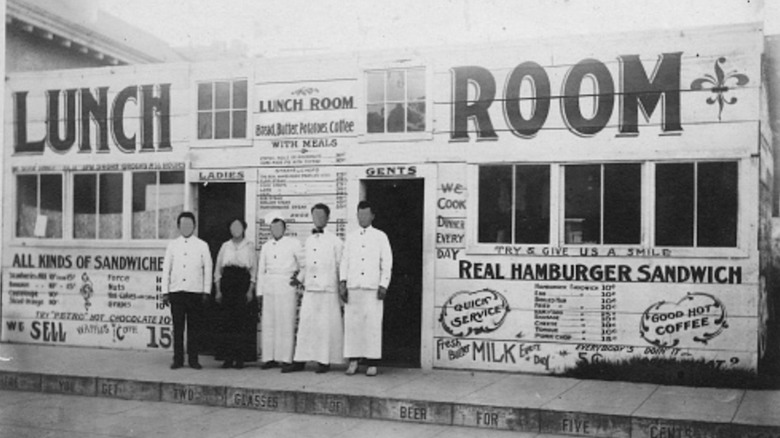
In the early 1900s, the diner solidified its place as an American staple. As World War I began, diners rebranded to attract women with new menu offerings and colorful decor. Around this time they largely looked like how we picture a typical diner today — bar stools, counter tops, and stainless steel. At this point, the menu started to solidify, including lunch foods as well as home-cooked favorites like meatloaf, traditional breakfasts, and of course, pie. Even now, many will say that these staples always taste way better in a diner than at home.
Then came 1929, and the Great Depression was in full swing. Many food establishments had to pivot in order to stay in business — for example, the Depression influenced Chock full o'Nuts to roast coffee beans. Diners, though, were thriving, thanks to their affordable meals that offered comfort and a sense of home. At this point in time, eating at a diner also became a family affair. Once mainly catering to laborers, the establishments now extended their appeal to the whole family. Throughout the Great Depression, many diners stayed in business because of their affordability, although some were forced to shutter.
Diner culture: Post-war to present-day
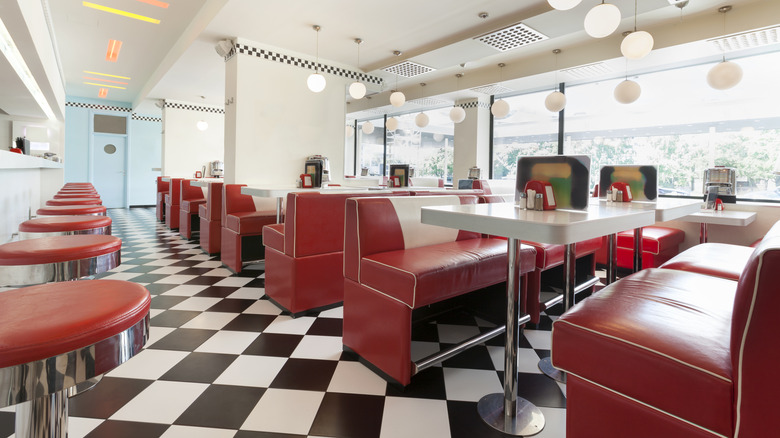
As with many industries, diners boomed after World War II. Business really took off in the mid-1900s. The evolution continued in 1953 with the very first Denny's restaurant in California, which allowed even more Americans to enjoy the comforts of the classic diner. Some establishments adapted to shifting design trends with new finishes and fixtures, but many remained the same. Features were added to cater to families, such as booths with leather cushions for groups to dine together. Then came the rise of 24-hour diners in the US, serving up bottomless coffee and breakfast at all hours of the day and night.
However, during the 1970s, diner popularity began to wane. In an effort to revive interest, some food establishments played up the nostalgia of the 1940s. The first-ever Johnny Rockets opened in 1986 in Los Angeles with a distinct old-school diner vibe that was an instant success, attracting massive crowds with its retro atmosphere, milkshakes, and cheeseburgers. The chain operates over 300 locations worldwide to this day. While there is far less enthusiasm about diners today than post-World War II, they have survived the fast food boom of the late 20th century and remain a beloved fixture of American restaurant culture.