

This Unusual Jell-O Snack From The '70s Was Layered With Texture
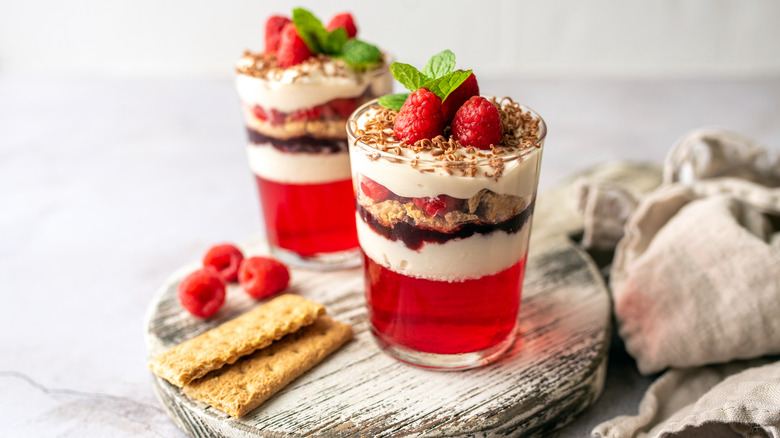
In 1969, Kraft launched a dessert that looked like a magic trick: one packet of powder, three distinct layers. Called Jell-O 1-2-3, it promised three tantalizing textures — mousse, custard, and jelly — all separating neatly in the fridge without any extra tricky technique or work. The result was a parfait-like tower of pastels which would be spongy on top, creamy in the middle, and wobbly at the base. For a culture already leaning hard into convenience, it was a giant leap for mankind.
The main part of Jell-O 1-2-3's appeal was its aesthetic. Mid-century America adored visual drama in its sweets, serving molded gelatin salads, checkerboard cakes, and brightly colored trifles. The space-age optimism of the era had found its way into food, where automatically engineered layering seemed futuristic. Jell-O 1-2-3 fit right in, because it was a dessert that looked time-consuming, but only asked you to stir, pour, and chill.
What made the trick possible was the science of plain old gelatin, a protein derived from collagen that swells and sets when cooled. When you first whisked the mix gently, the gelatin dissolved evenly into the hot liquid. A follow-up blitz at high speed whipped air into the mixture, creating different densities of foam. As the dessert cooled, those densities naturally separated. The lightest bubbles floated to the top and set into a mousse, the middle layer stabilized into a creamy custard texture, and the densest liquid settled into the familiar Jell-O layer at the bottom.
Three distinct layers
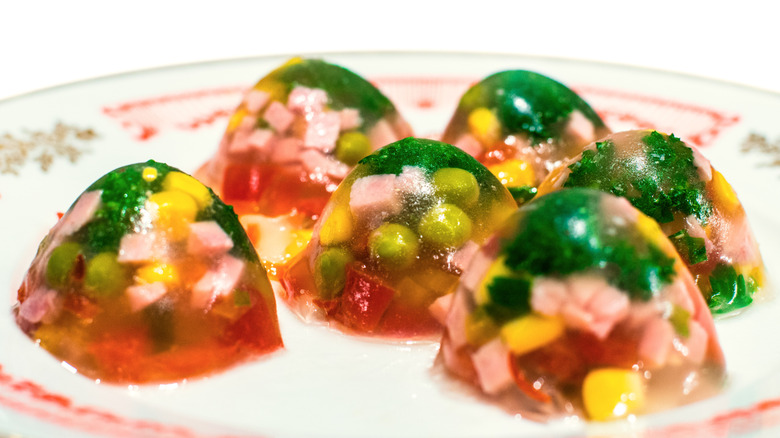
The lineage behind Jell-O's brightly colored, layered aesthetic is longer than Kraft's marketing blitz. Gelatin had been a sign of wealth and refinement for centuries, often molded into elaborate sculptures at banquets. By the mid-20th century, gelatin had been democratized — boxed, flavored, and endlessly marketed as both dinner and dessert. Aspics with floating vegetables held court in cookbooks, while gelatin rings encased canned fruit cocktail in every shade of neon.
Jell-O 1-2-3 played on that history while making the process and outcome feel more modern. Instead of the architectural molds and tricky technique of the 1950s, this dessert relied on parfait presentation, with straight-sided glass tumblers showing off clean striations. It looked elegant enough for dinner parties but simple enough for weeknight family dinner's dessert, and could be thrown together with no extra ingredients, right after getting home from work. Crucially, it aligned with the cultural penchant for the new technology of shortcuts.
Jell-O 1-2-3 marked a turning point between elaborate molded showpieces and quick-set, family-friendly sweets. Although it was discontinued in the mid-1990s, the dessert lives on in our memories, retaining a cult status in the canon of nostalgic retro sweets like vintage candies no one eats these days.