

What Do Hotel Buffets Do With Their Leftovers?

The hotel buffet is built on abundance: rows of chafing dishes endlessly topped up, live counters for stir-frys and sizzles, dessert counters that never seem to run out, and the promise that you can always go back for more. It creates the sense that food is limitless. But once the service ends and the dining room empties, that same abundance leaves behind a quieter question: what happens to everything that's left over? The problem of food waste is massive, and hotels are constantly looking for creative ways to deal with it.
According to one study, nearly half of all buffet food ends up discarded. In America alone, this adds up to an estimated 108 billion pounds of food, or roughly 130 billion meals that are tossed each year, amounting to over $408 billion in lost value. Environmentally, this waste carries a hidden cost: each kilogram of food thrown away generates almost two kilograms of carbon dioxide and equivalent emissions and consumes nearly three tons of natural resources, contributing directly to biodiversity loss. On a global scale, the United Nations estimates that nearly a third of all food produced is ultimately lost or wasted. Their advice to reduce food waste includes smarter shopping and ordering.
Hotels aren't blind to the problem, and many (including the most indulgent ones in Las Vegas) have started taking steps to address it. The first is measurement: by deploying tracking systems that monitor consumption patterns, restaurants are able to match supply more closely to demand. Basically, these tools help prevent waste before it even reaches the buffet counter.
Creative solutions to tackle food waste
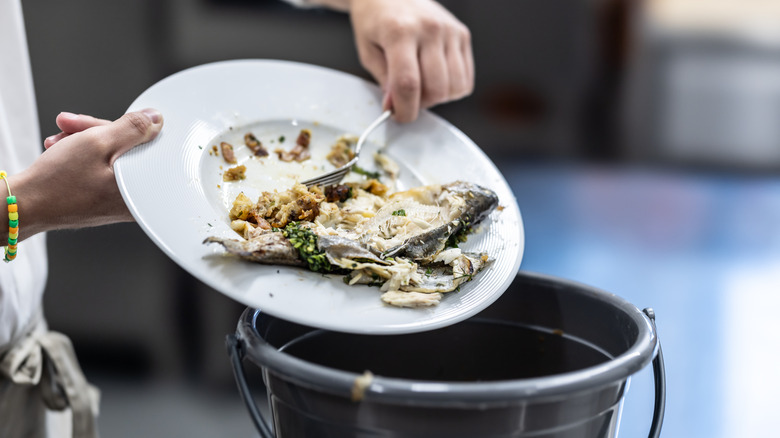
Outside of better planning, hotels are finding ways to close the loop on waste by looking outside their kitchens. Leftovers that can't be served again are increasingly being sent to local farms, where they're turned into compost to enrich the soil. Others work with charities and food banks to donate surplus meals, ensuring that what would once have gone into the bin instead supports nearby communities — always with strict checks to guarantee food safety.
Beyond community partnerships, innovation is reshaping how hotels handle excess, and the food waste management industry is set to boom. Certain resorts now convert food waste into biogas, producing renewable energy that can be used on-site, while in other cases, safe leftovers are redirected into animal feed to avoid landfill. Inside the kitchen, chefs repurpose ingredients wherever possible — transforming stale bread into croutons or overripe fruit into smoothies.
The wider food industry is also rethinking what abundance means. San Francisco–based Shuggie's Pizza, for instance, makes its crusts with upcycled ingredients like leftover oat milk flour and misshapen produce, turning what would have been discarded into a selling point. Nonprofits such as La Soupe in Cincinnati take the community route, rescuing edible ingredients and transforming them into meals for families in need. Each offers a glimpse of how the logic of excess can be turned on its head — from waste into resource. The buffet may always be built on abundance, but it doesn't have to end in waste. From smarter planning to community partnerships and upcycled innovation, the industry is beginning to show that excess can be managed — and even reimagined.