

The Steps To Take Before Adding Herbs To Simple Syrup So They Stay Vibrant
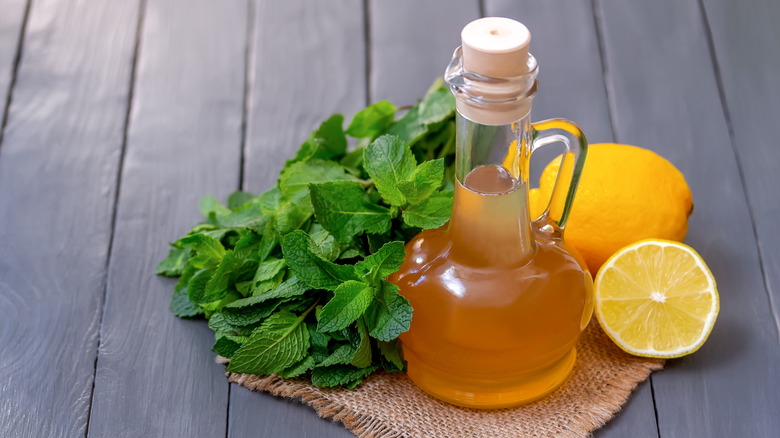
Simple syrup is usually as easy as the name implies, but try to add herbs and you might think "difficult syrup" is a more accurate name. If you don't follow the right prep steps, herbs can impart an unappetizing color and taste over time. To find out how to make better syrups for mixed drinks, we consulted Kaitlyn Stewart, author of the cocktail book "Three Cheers" (available on October 7).
Stewart explains that hard or "woody" herbs like rosemary and thyme "don't need any special treatment because they have enough structure to hold up in high temperatures." You can put them right into the hot syrup as it boils. Meanwhile, soft or leafy types like basil and mint are notorious for oxidizing and discoloring. A common solution is to blanch them, but Stewart advises caution. "They don't require a long cook time or they'll end up turning brown and give off a bitter taste," she says. "Blanching may help with this, but a quick steep is all you need."
To keep soft herbs vibrant in color and taste, Stewart advises steeping them "at a lower temp once the sugar has dissolved." Once your syrup looks smooth, take it off the heat, let cool slightly, then add the herbs and let them steep. To further protect against off colors and flavors or even bacterial growth, Stewart recommends removing the herbs from your syrup before storing it. Now you're all set to give your paloma an upgrade with fresh herbs or craft the perfect refreshing mojito cocktail.
Other expert-approved tips for making infused simple syrups
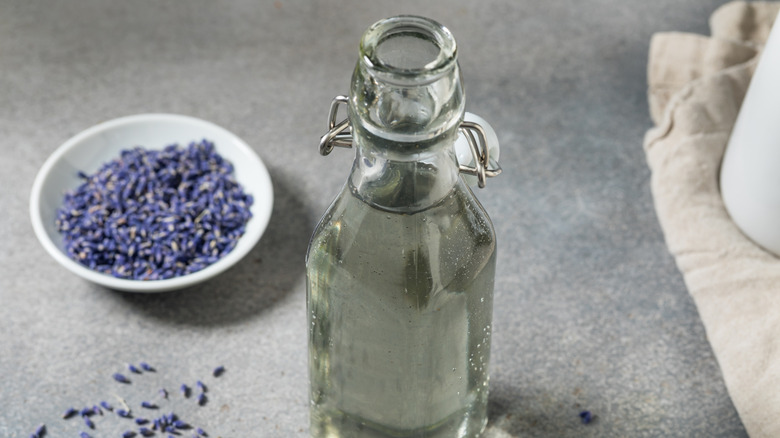
There are other ways to flavor simple syrup and keep fresh herbs nice and bright. Stewart suggests an easy, quick method: "Blend the fresh herbs directly into the simple syrup and strain through a fine mesh sieve." This is especially good for soft herbs, which won't get a chance to brown from heat exposure. Just boil and cool a basic syrup before whirling in a blender with your herbs, or start with a no heat, no fuss simple syrup recipe to make the process entirely no-cook.
If your syrups keep turning brown despite your best efforts, you can try the popular blanching method. Simply boil a pot of water and dunk soft herbs inside for about 15 seconds. Keep a close eye on them to prevent overcooking. The heat should deactivate certain enzymes in the plant that lead to browning down the road.
For deliciously floral drinks, try infusing syrup with two other botanical ingredients: tea leaves and edible flowers. Stewart advises brewing any kind of tea as you normally would; from there, most recipes remove the tea bag, add sugar, and boil the mixture until syrupy. As for blooms like sweet chamomile and violets, peppery nasturtiums, and calming lavender, "Cover the flowers in sugar in an airtight container and let sit for one to two days," Stewart says. "The sugar will draw out the moisture without making the flowers bitter." From there, add water to the flowers and sugar to make your syrup.