

The Reason Coffee Mate Is Banned In Multiple Countries
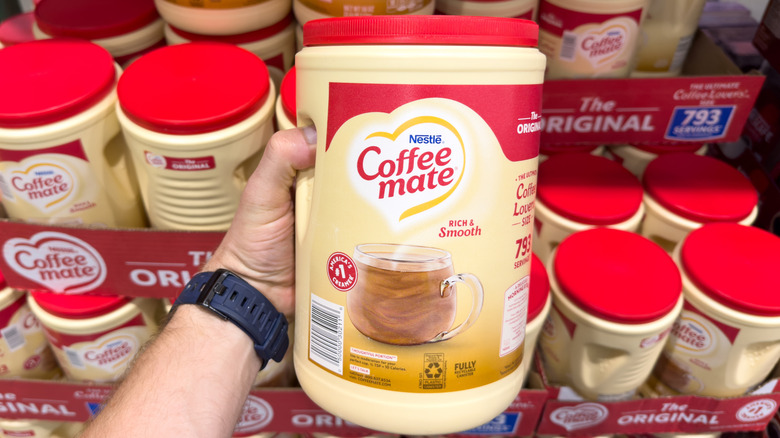
Since its launch in 1961, Coffee Mate has been a fixture in home kitchens, office pantries, and supermarket aisles — the go-to shortcut for a smooth, sweet cup of coffee. For some, it's so woven into the daily ritual that it feels almost synonymous with coffee itself (unless you're a third-wave purist, for whom it symbolizes everything wrong with commercialized coffee culture). So ingrained is this staple in American life that it comes as a shock to learn Coffee Mate is outright banned in parts of the world, thanks to a couple of controversial inclusions on its ingredient list.
The first is hydrogenated vegetable oils, which contain trans fats. These trans fats are so strongly linked to cardiovascular disease that the World Health Organization has called for their global elimination. The second is partially hydrogenated soybean and cottonseed oils — present in the liquid version of Coffee Mate — which are especially linked to raised LDL cholesterol (or bad cholesterol) and increased risk of heart disease. If you're going to use Coffee Mate, then you're better off with the powdered version than the liquid one. Denmark was among the first to outlaw trans fats in food products, a stance that was later adopted by the wider European Union. Today, Coffee Mate is also prohibited in countries such as Norway, Iceland, and Switzerland, which maintain comparable regulations.
Incidentally, Coffee Mate isn't the only American legacy brand to face such a ban overseas, thanks to the use of questionable food additives. In fact, one might even say Coffee Mate is in elite company, with Ritz Crackers, Twinkies, Skittles and Froot Loops facing similar bans.
Coffee Mate class-action suit
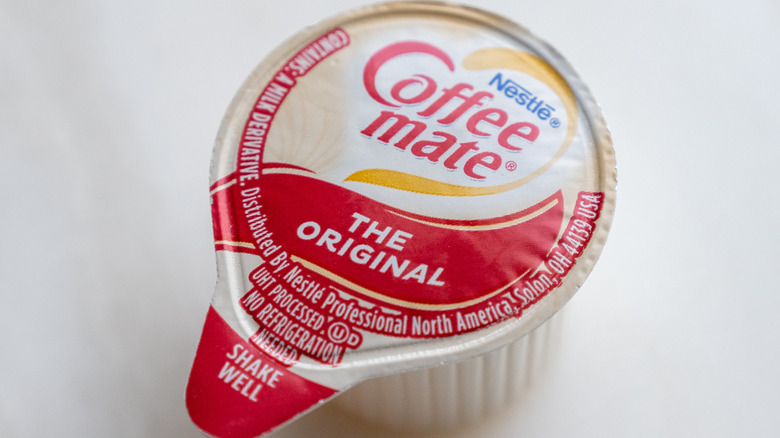
Incidentally, Coffee Mate's nutritional information states that their product contains 0% trans fats. This is because they found a loophole. Under American labeling laws, manufacturers are permitted to advertise a product as having zero grams of trans fat if a single serving contains 0.5 grams or less. With Coffee Mate's serving size set at just one tablespoon, the brand could legally market itself as trans-fat free. That gray area in labeling sparked a class-action lawsuit against Nestlé, with plaintiffs arguing the company misled consumers by promoting Coffee Mate as trans-fat free. At the heart of the complaint was a simple claim: Shoppers believed they were making a healthier choice, when in reality they were still consuming the very fats regulators were moving to ban. In 2020, Nestlé failed to get the class-action suit dismissed.
Dairy-free creamers remain popular because, unlike fresh milk, they don't spoil quickly. This makes them practical for offices, dorm rooms, or any place giving out free coffee. They are also a popular alternative among people who are lactose intolerant. Beyond convenience, flavored creamers gained traction as a way to mask the bitterness of mass-market coffee (Hazelnut and Italian Sweet Crème are two of Coffee Mate's most popular flavors). People find it so tasty that they're finding creative ways to use it, from blending it into smoothies to drizzling it over oatmeal, ironically adding a unhealthy dose of trans fats and additives to an otherwise healthy breakfast.